
Things to Do Near Bond Street
Date post added: 23rd April 2026
Tucked between the high street hustle of Oxford Street and the refined air of Mayfair, Bond Street’s where London turns up the glamour and prestige. It’s all glossy shopfronts, discreet doorways and sophisticated cocktails.
New York has Fifth Avenue, Paris has Avenue des Champs-Élysées and LA has Rodeo Drive (remember that shopping scene in Pretty Woman?). In London, you head to Bond Street for a luxury shopping experience. It’s been the go-to destination for high-end fashion since the 18th century.
But there’s more to this famous street than designer price tags and impeccable service. From world-class art to historic auction houses, elegant afternoon tea to exquisite hotels, Bond Street and its surrounding lanes offer a very elegant London day out.
A brief history of Bond Street
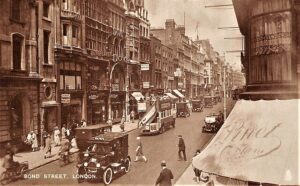
There’s a Roman stone that’s evidence of the area dating back that far. But Bond Street itself is a late 17th/ early 18th century construct. That’s certainly when it became synonymous with high society.
In 1683 a consortium of Georgian investors started to develop the area. They bought a site called Clarendon House on Piccadilly and knocked it down. On it, they built three streets, namely Albemarle Street, Dover Street and Bond Street.
Sir Thomas Bond was one of these developers and Bond Street was named after him. It soon became the place to be and socialites flocked there. If you wanted to make an impression in Georgian London, Bond Street was where you did it.
Bond Street itself actually comprises two streets. Old Bond Street originally ran from Burlington Gardens to Piccadilly. In 1720, New Bond Street was completed and that goes up to Oxford Street. Locals don’t like change much. An attempt to convert these two streets into a unified Bond Street was rejected out of hand in the 1920s!
By the Victorian era, Bond Street had cemented its reputation as one of the capital’s most refined addresses. It was a hub for art dealers, jewellers and luxury retailers. And that status has never been relinquished.
Where is Bond Street in London?
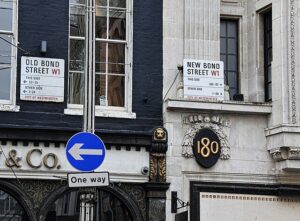
Old Bond Street, New Bond Street” by Duncan is licensed under CC BY-SA 2.0.
Bond Street sits in the heart of Mayfair, in London’s West End. It runs parallel to Regent Street and stretches between Oxford Street at the north end and Piccadilly to the south. Its neighbours include Soho to the east, Mayfair to the west and Green Park just beyond Piccadilly.
Its central London location makes it easy to access. The nearest tube stop is Bond Street (funnily enough!) which is served by the Central, Jubilee and Elizabeth lines. You can also reach it easily from Oxford Circus Underground Station.
Check our guide for fun things to do near Oxford Circus
What is famous in Bond Street?

“Mannequin’s Hats” by Garry Knight is licensed under CC BY-SA 2.0.
Celebrated for its sophisticated stores, designer fashion brands, art galleries, fine jewellery shops and antique stores, Bond Street is the destination for luxury shopping.
You won’t find Piccadilly Circus-style flashing billboards or high-street chains here. Instead, think immaculate window displays, suited doormen and some of the most exclusive brands in the world. It’s the kind of place huge sunglasses are worn year round, the shopping bags are enormous and the atmosphere’s quietly confident.
Bond Street’s also renowned for its art scene and auction houses. It draws collectors and enthusiasts from across the globe. And during Christmas, the lights are some of the most stylish in London. Think less flashing neon spectacle, more champagne shimmer.
Where can I shop on Bond Street?
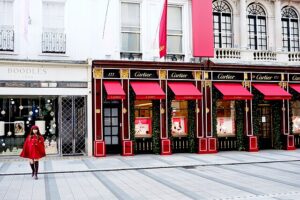
“Cartier Building, New Bond Street” by Roy Katzenberg is licensed under CC BY-SA 2.0.
If you’re coming for the shopping (and most people are), Bond Street delivers.
The Bond Street shopping district is home to one the biggest Louis Vuitton stores in Europe, along with the likes of Cartier, Ralph Lauren and Gucci. You’ll find British designer Paul Smith on Avery Row and Victoria Beckham on Dover Street.
New Bond Street is home to flagship stores from some of the biggest high end fashion brands. Old Bond Street leans slightly more traditional, with heritage jewellers and long-established boutiques. Gone are the days of prestigious department stores on Bond Street (RIP Fenwicks, 1890 – 2024). You have to head to Oxford Street or Carnaby Street for the last ones standing.
The original department store, Burlington Arcade was built in 1819. This attractive, covered shopping arcade at the end of New Bond Street is an architectural gem. Connecting Bond Street to Piccadilly, it’s home to exquisite boutiques, bespoke shoe makers, jewellers and patisseries.
You don’t have to splash out on a diamond necklace or designer shoes to enjoy Bond Street though. Window shopping here is an experience in itself. Displays are theatrically creative, seasonal collections are launched with flair and the interiors are often works of art.
Discover other famous shopping streets in London
Art and culture
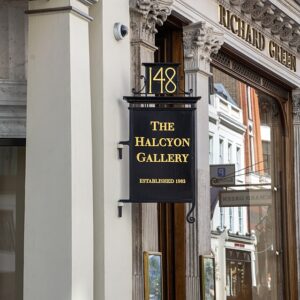
“Halcyon Gallery, 148 New Bond Street, London W1S 2TR” by Mark Morgan is licensed under CC BY-SA 2.0.
Bond Street isn’t just about shopping bags. It’s about canvases, sculptures and gavels too.
Just around the corner on Piccadilly, the Royal Academy of Arts hosts magnificent exhibitions alongside contemporary showcases. Its annual summer exhibition is legendary. It’s one of the best places in the city to immerse yourself in painting, sculpture and architecture under one grand roof.
Back on New Bond Street, Sotheby’s has been holding auctions since the 18th century. Even if you’re not bidding on a Picasso, you can often visit public previews and see extraordinary artworks up close.
The surrounding streets are dotted with private art galleries specialising in everything from Old Masters to cutting-edge contemporary art. Step inside and you might find yourself alone with a six-figure painting. No crowds, no fuss, just quiet appreciation. The Opera Gallery in Burlington Arcade is a special place, and somewhere to discover emerging artists alongside world-famous ones.
The Wallace Collection is a leisurely stroll from Bond Street. It feels like the kind stately residence you’d find in the countryside rather than in central London. And in nearby Hyde Park, the Serpentine Galleries showcase contemporary art and sculpture in inspiring surroundings.
Eating and drinking
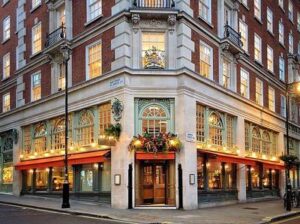
Fortnum & Mason by J c

All that browsing works up an appetite. As you may expect, Bond Street food is more silver service than street food trucks.
Claridge’s Hotel offers one of the most iconic afternoon teas in the city. It’s all silver teapots, delicate pastries and impeccable service. It’s refined without being overly stiff. That’s very much in keeping with Bond Street’s polished personality.
For something equally indulgent, Fortnum and Mason afternoon tea on nearby Piccadilly is a must-visit. You’ll find tiered cake stands, rare teas and a setting that feels wonderfully old-school.
For a combination of art and incredible dining, try Sketch. You can indulge in a Michelin-starred menu, surrounded by remarkable decor.
Mayfair’s side streets are filled with smart cafés, wine bars and restaurants perfect for people-watching. Whether it’s a quick espresso or a long lunch, you have plenty to choose from. And if you’re exploring London on your own, a coffee in a pavement cafe is an ideal pastime.
A favourite amongst Bond Street foodies, The Ivy Asia Mayfair on North Audley Street has the wow-factor. It’s not only the decadent Asian food that delights. The dramatic decor also tantalises the senses and stimulates conversation.
Looking for a chi-chi night out? Mr Fogg’s Apothecary on Brook Street in Mayfair serves an incredible array of cocktails. But if you want to spot celebrities and the well-heeled, private members’ club, Annabel’s on Berkeley Square has been a popular hotspot since the 1960s.
Hear the stories of this area on a London Walk
We visit New Bond Street on our Marylebone to Westminster walk through Central London. This new walk will reveal lesser-known stories behind some of London’s most famous streets.
Interested in more Central London sightseeing and historic tales? Our weekly Royal London walk takes in Buckingham Palace, Westminster Abbey, Downing Street and St James’s Park, and that’s just for starters.
For culture enthusiasts, you can join our tours of the British Museum, the V&A, The National Gallery and The Wallace Collection.

Pippa Jackson
Pippa is a word nerd and content aficionado with a background of working in TV on both sides of the globe. She loves to discover and share the diverse and wonderful stories of her much-loved London. When she’s not writing blogs and articles, you’ll find her walking beside the Thames or even paddleboarding on it (in the finest of conditions only!) or enjoying a coffee in the sunshine with a good book.

David Tucker
David – the Seigneur of this favoured realm – broods over words, breeds enthusiasms and is “unmanageable.”* He’s a balterer, literary historian, university lecturer, journalist, logophile and lifelong thanatophobe. For good measure, he’s the doyen of London guides.