
The Regent’s Canal Guide
Date post added: 23rd March 2026
London has famous shopping streets, grand boulevards and cobbled alleyways, but it also has towpaths. Walking along a canalside towpath gives you a totally different perspective on London life. And London’s Regent’s Canal offers a wealth of things to discover.
The Regent’s Canal is one of the most characterful London waterways. It flows through 8.6 miles of hidden London linking elegant Little Venice in the west to the River Thames at Limehouse Basin in East London. Along the way you’ll find colourful narrowboats, lively markets, peaceful green stretches, striking modern architecture and reminders of the city’s industrial past.
If the River Thames is the hugely popular blockbuster, the Regent’s Canal’s the cult classic. It’s lesser known with a smaller audience, but it’s totally captivating.
Where is The Regent’s Canal?
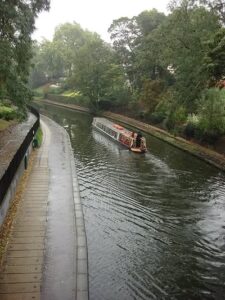
Regent’s Canal runs for 8.6 miles (13.8 km) across north London from West to East London. From Little Venice it flows through Regent’s Park, King’s Cross, Camden Lock and onto Victoria Park in the East End and out to Limehouse Basin where it joins the River Thames.
The Regent’s Canal forms part of London’s wider canal network, linking with the Grand Union Canal in the west and the River Lee Navigation in the east.
A brief history of the Regent’s Canal
The Regent’s Canal in London has a rich history dating back to the early 19th century. At that time, British industry was booming. The increased production of heavy goods meant there was a need for better transport to move goods from A to B. Roads and railways weren’t what they became later. So the transportation answer was by boat.
In 1812, the Regent’s Canal Company was created to form this new canal from the Grand Junction Canal’s Paddington Arm to Limehouse. It was done in sections and opened in its entirely in 1820. The waterway was designed to connect the Midlands’ industrial canals with the River Thames in London.
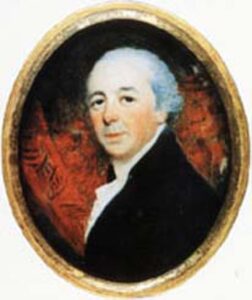
The Regent’s Canal was engineered under the guidance of John Nash who was reshaping much of north London at the time. It was named after the Prince Regent who later became King George IV.
Ships travelling along the River Thames would unload cargo at Regent’s Canal Dock (now known as Limehouse Basin) in East London. Then it was over to the canal boats and barges to transport the goods along the London waterway. In its day, coal, timber, ice, building materials and even zoo animals were carried along the canal.
In the 20th century, the development of roads and railways diverted this commercial traffic away from the canals. And in the last 50 years or so, waterside regeneration has transformed the waterway’s future.
Today, the Regent’s Canal towpath is one of London’s most loved walking routes. And for good reason. It’s a peaceful waterside path that’s home to wildlife, canalboat communities and such a wide range of eclectic local businesses.
What to see along the Regent’s Canal
There’s something special about walking beside water. We highly recommend it. There are so many interesting things to see along the Regent’s Canal. So whether you want a gentle wander or an energetic sightseeing walk, there are endless sights and sounds to take in along the way.
Here are some of the highlights you’ll find along the way.
Little Venice
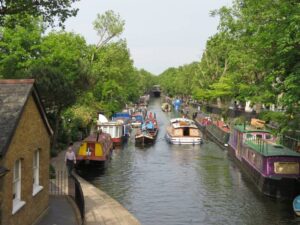
What a picturesque place to start. The Regent’s Canal forms a junction with the old Grand Junction Canal at Little Venice. In this pretty neighbourhood of Maida Vale, you’ll see elegant terraces, colourful houseboats and calm water. For a gentle start to your walk, enjoy a cuppa at the canalside cafe overlooking Browning’s Pool.
Just south of Little Venice is bustling Paddington. There’s been major redevelopment here recently. Paddington Basin is now home to a striking modern waterside development. Contemporary buildings sit alongside historic canal engineering. It’s here that the Regent’s Canal meets the Paddington Arm of the Grand Union Canal.
Regent’s Park

One of London’s most beautiful Royal Parks, Regent’s Park covers a whopping 395 acres (about 1.6 square kilometres). It’s not simply a green space. It’s abundant with flowers (over 12,000 roses for starters), as well as open air theatre in summer and London Zoo all year round. The Regent’s Canal towpath runs alongside the park. You could even catch a glimpse of a zoo animal as you walk past.
On the northern edge of Regent’s Park, look out for the brick arches of Macclesfield Bridge. It’s often called ‘Blow Up Bridge’ as a cargo of gunpowder totally blew up the bridge in 1874.
A highly recommended short detour from the canal; make the climb up Primrose Hill. You’ll be rewarded with one of the finest views across London.
Camden Lock
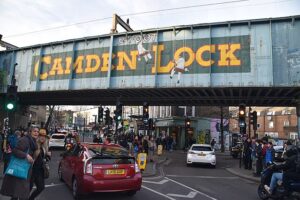
Did you know that Camden Lock doesn’t actually exist on the canal? It’s actually a combination of three locks – Kentish Town Lock, Hawley Lock, and Hampstead Road Lock
Bustling Camden Lock is creative and full of character. It’s alive with fragrant street food, a diverse music heritage and the famous Camden Market energy. There’s so much to see and do along this stretch of the Regent’s Canal that we wrote a whole Camden Lock blog about it.
King’s Cross
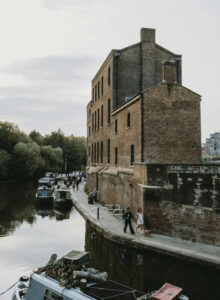
Like Paddington, King’s Cross has undergone a radical transformation in recent years. The former industrial wharves at Coal Drops Yard and Granary Square are now popular locations for shopping and dining. Old gasholders are now modern apartments overlooking the canal.
Just beside Granary Square, you must look out for London’s only floating bookshop. Words on the Water is a wonderful book store on a restored 1920s Dutch barge.
Nearby, the London Canal Museum is the place to learn about life on the water. You can take a boat trip from here and look inside a narrowboat. The museum is just off Battlebridge Basin on New Wharf Road. Incidentally, Battlebridge Basin has been a favourite mooring for residential narrowboats since the 1970s. The area gives you a true taste of canalside living.
Islington
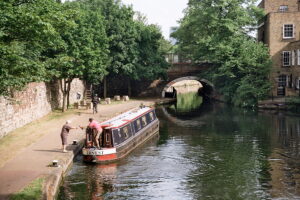
While busy pedestrians and drivers navigate the traffic on Islington Upper Street, they’re probably totally unaware of the canalboats calmly floating below them through Islington Tunnel. The tunnel’s a remarkable feat of engineering at 880 metres long.
The vibrant City Road basin is a great place to stop and watch the world go by in a canalside cafe. Then there’s nearby Wenlock Basin where historic industrial buildings have been transformed for waterside living. Here, you can enjoy a drink in the sun at The Narrowboat pub.
Victoria Park
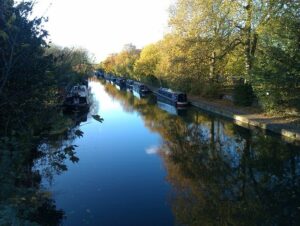
After winding through areas including Hoxton, Shoreditch and Haggerston, the Regent’s Canal splits in two. One branch flows into the Hertford Union Canal which leads towards Stratford and the Queen Elizabeth Olympic Park. The other flows out to Limehouse.
Victoria Park is a wonderful green space in East London, known as ‘the people’s park’. It’s surrounded by amazing places to eat. There’s a weekly food market as well as many, many artisan produce vendors.
To the south of the canal at Bethnal Green, you’ll find the V&A Museum of Childhood which is well worth a visit.
Mile End and Limehouse
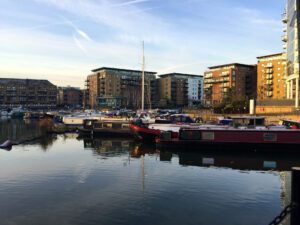
After Victoria Park, the canal flows on to Mile End Park. An East End favourite, the Roman Road market is not far from here. Right beside the towpath is the reconstruction of a Victorian classroom at the Ragged School Museum.
At Limehouse, the Regent’s Canal meets the River Thames. It’s a historic gateway between inland waterways and the sea. Limehouse Basin has a marina-like atmosphere. Yachts and marine boats start to outnumber narrowboats. It’s a lovely spot to end your walk at a good pub. Perhaps Sir Ian MacKellen’s boozer, The Grapes, which has a lovely terrace with views over the water.
For more ideas of things to do along Regent’s Canal, don’t miss Roger our canal expert’s guide to the top things to look out for along the Regent’s Canal path.
Our Regent’s Canal Walks
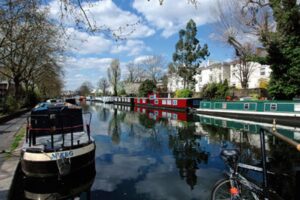
We aim to deliver high quality, fun and informative walks. To do just that, we offer 28 different canal walks in partnership with the Inland Waterways Association. It means you’ll be with an expert canal guide, a member of the IWA. Explore Regent’s Canal with them and you’ll truly start to understand this fascinating waterway.
For the latest availability and confirmed dates for these walks, please check the links below, as schedules are updated regularly.
The Regent’s Canal – King’s Cross & Canal Museum Circular Tour
Meeting point: King’s Cross station
This circular walk will give you a rich introduction to the canal’s history. It includes a visit to the London Canal Museum. You’ll come away with a real insight into the area’s transformation and what life living and working on the canal was really like.
The Regent’s Canal – River Tyburn to Little Venice
Meeting point: Baker Street underground station
Starting with Sherlock Holmes’ stomping ground, Baker Street, you’ll move on to Regent’s Park and then Regent’s Canal. This walk combines two waterways, both the River Tyburn and Regent’s Canal. You’ll discover some of canal’s most atmospheric stretches including the charming Little Venice.
The Regent’s Canal – King’s Cross, Granary Square & St Pancras
Meeting point: King’s Cross station
This walk makes for a fascinating look at our past whilst admiring the huge regeneration and modern living in this ever-changing area. Architecture, history, industry, transportation and even horses feature in the engaging stories from the King’s Cross section of the Regent’s Canal.
The Regent’s Canal – Mile End to Limehouse
Meeting point: Mile End underground station
You’ll be introduced to a London where time slows right down – to the pace of horse-drawn canal barges. Discover a London from 200 years ago. And then the gateway to the UK canal network at Limehouse. This walk only takes place occasionally, but we also offer it as a private tour.
The Regent’s Canal – Mile End to Haggerston
Meeting point: Mile End underground station
Run as a private tour, this walk uncovers endless delights in the East End. You’ll hear historic stories dating back to the Roman era and then fast forward to the 21st century again. Contact us if you’d be interested in a small group tour of this stretch of canal.
The Regent’s Canal – Little Venice to Camden
Meeting point: Warwick Avenue Station
Run as a private tour and often as a special group walk, this tour follows the Regent’s Canal from Little Venice to Camden, revealing a quieter, backdoor side of London. Along the way you’ll pass elegant canalside homes, leafy stretches by Regent’s Park and hidden waterside scenes before arriving at the buzz of Camden Market. Contact us if you’d be interested in joining a small group on this beautiful canal route.
The Regent’s Canal – King’s Cross to Camden
Meeting point: King’s Cross station
This walk is run as a private tour and occasionally as a special. It explores the Regent’s Canal from King’s Cross to Camden, revealing a fascinating mix of industrial heritage and modern reinvention. You’ll discover the story of Granary Square and its transformation, pass hidden stretches of towpath and urban nature, and finish amid the energy of Camden Market.
The Regent’s Canal – Islington to Kingsland Road
Meeting point: Angel station
This walk explores the Regent’s Canal from Islington to Hoxton, offering a striking escape from the bustle of Upper Street into a peaceful, tree-lined waterside world. Contact us to book a small group private tour of this beautiful route.
FAQs
Can you walk along the Regent’s Canal?
Yes, and we highly recommend you do. The towpath runs almost continuously from Little Venice to Limehouse. Some sections can be narrow, so take care and share the space with cyclists.
Where does Regent’s Canal start and finish?
It runs from Little Venice in west London to Limehouse Basin in East London where it connects to the River Thames.
How long does it take to walk the Regent’s Canal?
At a reasonable pace, it’ll be 3.5 to 4 hours non-stop. Most people allow half a day to enjoy stops, cafés and photo opportunities. Or you could walk it in sections, as we do on our guided walks along the Regent’s Canal
How long is the Regent’s Canal?
The Regent’s Canal runs for 8.6 miles (13.8 kilometres) from west to East London.
What are the main attractions along Regent’s Canal?
There are so many delights to discover along the Regent’s Canal. Highlights include Little Venice, Camden Lock, Regent’s Park and London Zoo, King’s Cross, Victoria Park and Limehouse Basin.
Are there boat tours available on Regent’s Canal?
Yes. Regular boat trips operate between Little Venice and Camden. Boat trips operate from the London Canal Museum at King’s Cross. Private charters are also available.
Join us on a canal walk
The Regent’s Canal is more than a route from A to B – it’s a living timeline of London. From 18th century ambition to industrial grit and modern reinvention, it tells the story of how London moves, adapts and thrives. It also shows a more hidden London. One that travels at a slower pace and stops to smell the roses. Sounds good doesn’t it?
Join us on a guided walk to discover the hidden details you might otherwise pass by.
Explore our Regent’s Canal walks and step off the pavement onto the towpath.

Pippa Jackson
Pippa is a word nerd and content aficionado with a background of working in TV on both sides of the globe. She loves to discover and share the diverse and wonderful stories of her much-loved London. When she’s not writing blogs and articles, you’ll find her walking beside the Thames or even paddleboarding on it (in the finest of conditions only!) or enjoying a coffee in the sunshine with a good book.

David Tucker
David – the Seigneur of this favoured realm – broods over words, breeds enthusiasms and is “unmanageable.”* He’s a balterer, literary historian, university lecturer, journalist, logophile and lifelong thanatophobe. For good measure, he’s the doyen of London guides.