
The Grand Union Canal Guide
Date post added: 4th February 2026
Stretching for about 137 miles from Birmingham to London, the Grand Union Canal meanders through city landscapes, rolling countryside, industrial towns and enchanting villages. The Grand Union Canal isn’t just the longest canal in the UK, it’s probably the most fascinating. It’s story reflects the rise, fall and evolution of British waterways.
What’s so grand about this canal? There’s so much to take in along the way. It’s a slice of English history and landscapes – the urban and rural, the traditional and modern, the tranquil and bustling, the domestic and the commercial. Centuries of stories flow along those murky waters.
Here, we’ll introduce you to this incredibly British waterway. We’ll guide you through its history, location, and importantly, where to walk canalside and what you might find when you do so.
Where is The Grand Union Canal?
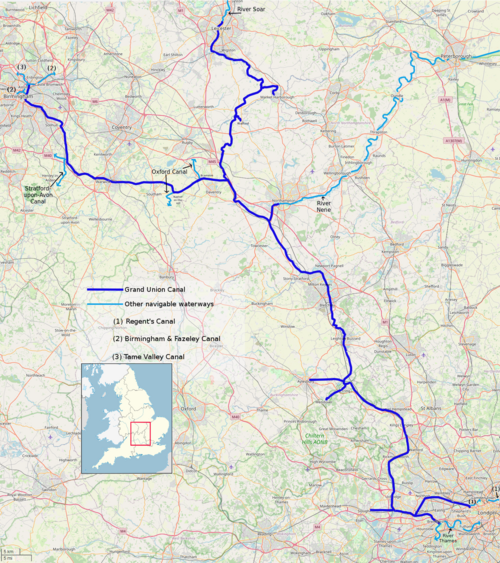
Grand Union Canal Map from © OpenStreetMap contributors
The Grand Union Canal links one major English city to another – Birmingham to London. The Grand Union Canal connects the River Thames at Brentford in West London to the Birmingham Canal in Digbeth. From the Midlands, it passes through rural Warwickshire and Northamptonshire and on to Bedfordshire and the beautiful Chiltern Hills.
There is another branch of the canal. As well as the Birmingham line, there’s the Leicester line. This has a couple of short branches to Market Harborough and Welford.
The Grand Union Canal doesn’t flow in isolation. It links with an array of other British waterways. That includes the mighty River Thames, the River Nene and River Soar. As for canals, it connects with the Regent’s Canal, the Oxford Canal, the Stratford-upon-Avon Canal, the Digbeth Branch Canal and the Birmingham and Fazeley Canal.
A brief history of the Grand Union Canal
Today, we tend to think of canals as a pleasant backdrop for a walk along the towpath. A place to paddleboard or kayak. A passageway for boaters. Perhaps even a place to live in your canalboat or narrowboat. But turn the clock back a couple of hundred years and canals were all about work rather than play.
Industrial Britain
Back in the late 18th and early 19th centuries, Britain was in the grip of the Industrial Revolution. The increased production of heavy goods meant there was a need for better transport. We weren’t yet at the point of having lorries thundering up and down the M1. Railways were only just emerging. Instead, the solution was to transport goods by water. And canals seemed the right fit – flat, quiet and ideal for moving heavy cargo.
So it’s at this time that various canals were constructed. The Grand Junction Canal was authorised in 1793 and completed by 1805. This canal provided a passageway between London and the Midlands. Throughout the 18th century, and into the 19th century, waterways like the Oxford Canal and Regents Canal were constructed. Barges laden with coal, iron and food would navigate these waterways daily.
This network of waterways operated independently for decades. But by the early 20th century, railways and road transport were becoming more popular. In the face of such competition, the canal systems needed to evolve. It was time for the waterways to get bigger and better.
Several canals, including the Grand Junction Canal and the Regent’s Canal, joined forces in the 20th century. This amalgamation became the Grand Union Canal as we know it today. It included:
-
Warwick & Birmingham Canal
-
Birmingham & Warwick Junction Canal
-
Warwick & Napton Canal
-
Leicester Canal
-
Loughborough Navigation
-
Erewash Canal
In addition, major engineering works took place to help the waterways compete with rail and road. Canals were deepened so large barges could carry heavier loads. Locks were upgraded. Most notable, the Hatton flight of locks with an impressive 21 locks in total. Other narrow locks were rebuilt to fit two or more narrowboats at one time.
Today, the Grand Union Canal’s managed by the Canal and River Trust. It’s really a piece of living history. It’s part industrial achievement, part rural retreat.
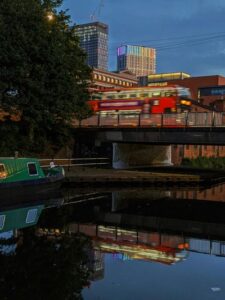
Birmingham
What to see along the Grand Union Canal
There’s plenty to see and enjoy along the Grand Union Canal. Take a wander or cycle along the towpath. Enjoy a cuppa in a canalside cafe. Look out for wildlife from the water’s edge. Or, our favourite, discover the area on an insightful, guided walk.
Historic canal features
Not just for canal buffs and engineering geeks, these points of interest along the canal are well worth a visit.
- The Hatton Flight of Locks: Nicknamed The Stairway to Heaven, this is the longest lock flight on the Grand Union with 21 broad locks. It’s an epic feat of engineering. Plus, you’re surrounded by glorious views of the countryside.
- Foxton Locks: Here, 10 locks are arranged as two staircases. It’s a lively hub for boaters and visitors to watch canal boats navigate the staircases.
- Watford Locks: This traditional lock is particularly tricky to coordinate. It’s also a wonderfully tranquil spot to relax and take in the surrounding countryside.
- Blisworth Tunnel: At a whopping 1.7 miles long, boaters need their headlights when they travel along stretches of total darkness. It’s atmospheric, slightly eerie and a top example of canal engineering.
- The Iron Trunk: From below, it looks like the Grand Union Canal is defying gravity. The canal literally floats above the River Great Ouse in a cast-iron trough – an eye-catching aqueduct.
- Norton Junction: This is where three major canal routes meet. The Leicester Line – Old Grand Union Canal. Main Line – Braunston to Norton. And Main Line – Norton to Gayton. Canal geography really comes to life at this key crossroads.
- Crick Tunnel: Crick and Husband’s Bosworth are super quiet stretches of water. You can’t help but go slow and enjoy the tranquil, rural surroundings.
- Cosgrove: One of the canal’s broad locks, originally designed for heavy working boats. A short way north along the canal is Cosgrove village, where a splendid stone Gothick-style bridge, unique among canal bridges and Grade II* listed, spans the canal.
Enchanting English towns and villages
The Grand Union canal runs through pretty country villages and historic market towns. Bookended by busy, commercial cities – London and Birmingham – you get a true taste of the diverse English landscapes.
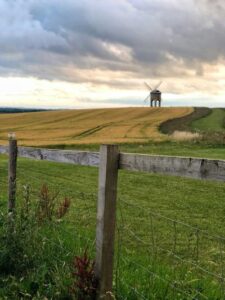
Royal Leamington Spa
- Royal Leamington Spa: This Warwickshire town’s famous for its medieval buildings and castle, as well as its smart Regency architecture.
- Braunston: This pretty Northamptonshire hilltop village has an interesting heritage walk. But it’s the marina that’s beloved by boaters, situated at the junction between the Oxford Canal and the Grand Union Canal.
- Stoke Bruerne: A classic canal village with traditional pubs and cafés. It’s home to the Canal Museum which is in a former corn mill. Discover amazing stories of working boat families.
- Bletchley: Just south of Milton Keynes, Bletchley Park is world famous as the place WWII codebreakers cracked the Enigma code.
- Leighton Buzzard and Tring: These popular market towns are where the canal opens out into the countryside of the Vale of Aylesbury.
- Berkhamsted: This chic commuter town is a popular place to stop. It combines Medieval history (the castle dates back to 1066), great food and waterside charm all in one charming town.
- Apsley: Historically known as Paper Valley, Apsley was once a major centre for paper production – everything from banknotes to stamps. Now, those factories and warehouses are stylish apartments, cafés and offices.
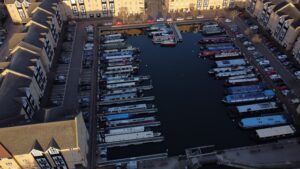
Apsley Marina, Hemel Hempstead
Our Grand Union Canal Walks
We offer 25 different canal walks in partnership with the Inland Waterways Association. It means you’ll be guided by a canal expert. All of our canal walks guides are members of the IWA. They know these canals, their history, secrets and tales from narrowboat and canal boat owners. Being London Walks, our guided walks focus on the stretches of canal in West London and immediate outskirts.
The Grand Union Canal – Uxbridge to Denham
Meeting point: Uxbridge tube station
Difficulty/accessibility:
We offer a private walk along this fascinating stretch of the canal. Starting at Uxbridge, which was a thriving market town on the road from London to Oxford for centuries. We end at Denham Village, a classic English village. It’s a total gem, complete with timber-framed houses and a 15th century church.
The Grand Union Canal – Little Venice to Paddington Green
Meeting point: Warwick Avenue tube station
Difficulty/accessibility: Gentle, flat walk along the towpath and pavements.
Discover the delights of this beautiful part of West London. We lift the lid on secret waterways, engineering marvels, aristocrats and private detectives.
We also offer a Little Venice canal walk

Paddington Basin
The Grand Union Canal – Kensal Green to Little Venice
Meeting point: Kensal Green tube station
Difficulty/accessibility: Gentle, flat walk along the towpath and pavements.
This canal walk is bookended by Kensal Rise cemetery and Little Venice – two extraordinarily lovely areas to explore.
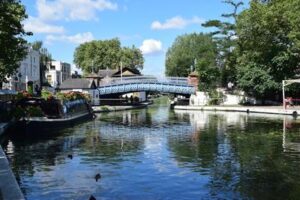
Little Venice
The Grand Union Canal – Uxbridge to West Drayton
Meeting point: Uxbridge tube station
Difficulty/accessibility: Tailored to your specific needs
From ancient coaching inns to World War II defences, there are myriad points of interest on this wonderful walk. Offered as a private walk, you’ll be enthralled by the tales from this canal bank.
The Grand Union Canal – Kensal Green to Alperton
Meeting point: Kensal Green tube station
Difficulty/accessibility: Tailored to your specific needs
So many tales of transport through the ages along one section of the Grand Union Canal. Offered as a private walk, we pack a lot of entertaining stories into this two-hour canal walk.
Contact us to book a canal walk or private tour of the waterways
FAQ
Where does the Grand Union Canal start and finish?
The Grand Union Canal runs from London in the south to Birmingham in the Midlands. In London, the main line officially begins around Paddington Basin and winds north west. It finishes in the Birmingham Canal in central Birmingham.
What are the villages along the Grand Union Canal?
As the canal threads its way between London and Birmingham, it passes through many lovely places. Key spots include:
- Little Venice: a picturesque waterside village in London
- Stoke Bruerne: explore the waterway’s history at the Canal Museum
- Braunston: a pretty place and boater crossroads
- Hatton: by the dramatic Hatton Locks.
Some have wonderfully British names too. Favourites include Long Itchington, Weedon Bec, Birdingbury and Radford Semele.
What to do at the Grand Union Canal?
The main thing is to look up and take in your surroundings. Canal walks are a wonderful way to wind down, explore and discover areas of living history and wildlife.
Canal towpaths lend themselves to gentle walking and cycling. From urban strolls around Little Venice to peaceful countryside loops near Rickmansworth and Stoke Bruerne, there’s something for every pace.
Hire a narrowboat or join a cruise to experience the canal from the water. Take in the sights and capture exceptionally photogenic spots.
How many locks are there on the Grand Union Canal?
There are 158 locks along the Grand Union Canal’s main line. Locks are a big part of canal life! Some stretches, like the famous Hatton Flight, pack a series of locks close together. They’re impressive mechanisms and well worth stopping to watch.
How long does it take to travel the entire Grand Union Canal by boat?
Around 7–10 days at a gentle cruising pace.
How can I plan a walking route along the Grand Union Canal?
Start with our informative guides. At London Walks, we have a 50-year heritage with canal walks. Plus, we work in partnership with the IWA (Inland Waterways Association). So, you know that our guides will really know their stuff and will take you on the best route possible.
A few tips:
1. Pick a section, not the whole thing. You could walk the entire 137 miles over time, stretch by stretch.
2. Use public transport access points. We start our walks at underground stations. They make ideal meeting points and starting points to your walk.
3. Towpaths are your best friend. The canal’s towpaths are generally well-signposted, flat and easy to follow.
4. Use a map app. A simple walking map or mobile map app helps you track distance, nearby facilities and landmarks. But it does mean that you’ll be looking down rather than up and around you. With a trusted canal walk guide, you can take in your surroundings and listen to stories rather than fiddling with an interactive map.
5. Leave it to the experts. Walk with our canal walk guides. They know these inland British waterways like the backs of their hands. There’s no better way to find out the fascinating history and tales from our canals.
Join us on a canal walk
To truly understand the history and importance of the Grand Union Canal, walk with our expert canal walk guides. We run a series of fascinating walking tours along the canal. Plus, we offer private tours that are tailored to your specific interests and requirements.
Chat to us to discover or create the best canal walk for your needs.
Discover secrets of London’s waterways

Pippa Jackson
Pippa is a word nerd and content aficionado with a background of working in TV on both sides of the globe. She loves to discover and share the diverse and wonderful stories of her much-loved London. When she’s not writing blogs and articles, you’ll find her walking beside the Thames or even paddleboarding on it (in the finest of conditions only!) or enjoying a coffee in the sunshine with a good book.

David Tucker
David – the Seigneur of this favoured realm – broods over words, breeds enthusiasms and is “unmanageable.”* He’s a balterer, literary historian, university lecturer, journalist, logophile and lifelong thanatophobe. For good measure, he’s the doyen of London guides.