
From the Rep Walks
 
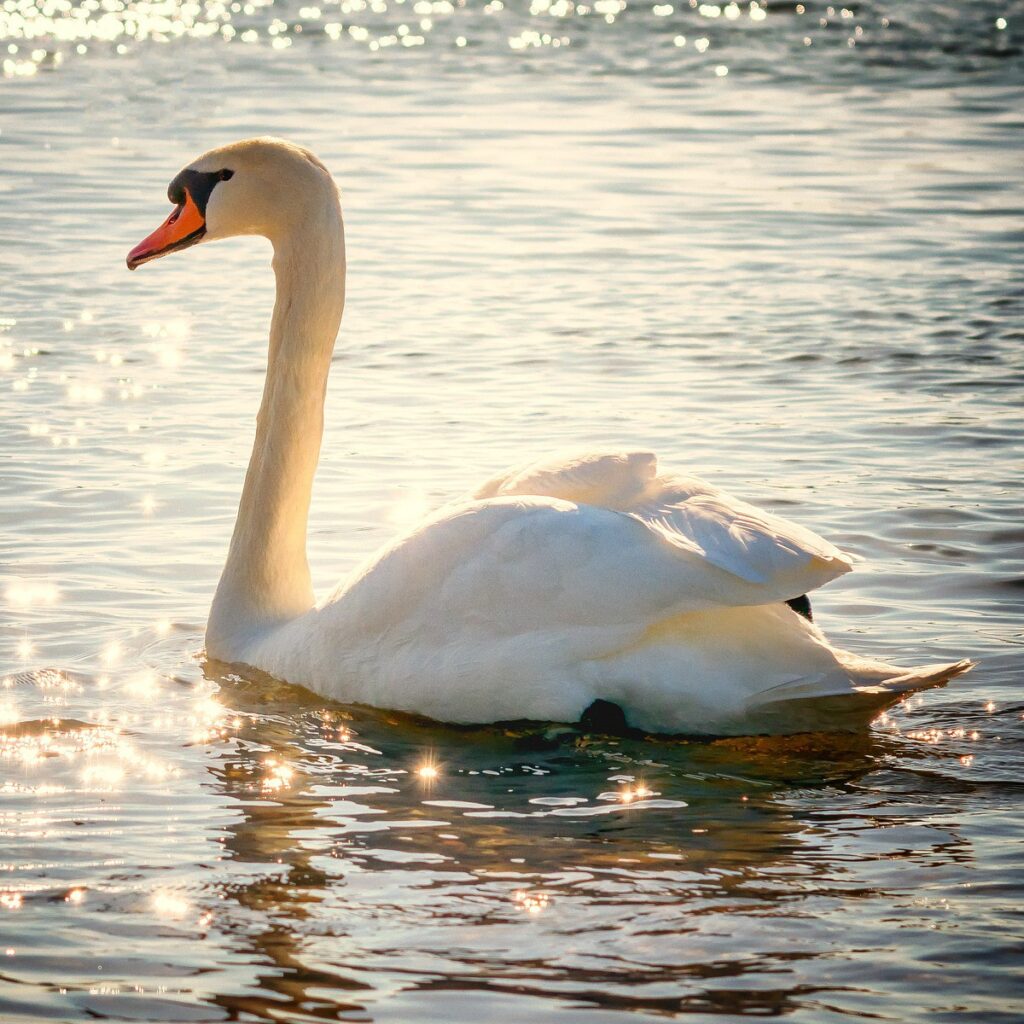
 Find one photograph to introduce - and sum up - the literally hundreds of London Walks From the Repertory Walks. An image that crystallises the Tour du Jour cornucopia. Surely an impossible task. Or so I thought. But London's an "inventory of the possible". And because it is London Walks has had the great good fortune to cross paths with Jon Block, who's taking photographs that are sui generis. And just so wonderful. This is one of them. And it does what I thought was impossible - until I kept the "inventory of the possible" faith, that is. It introduces - and crystallises - the hundreds of Tour du Jour London Walks. A Special Photograph for Special Walks. It's called The Meeting Place, St. Pancras. And, yes, we do a From the Rep walk there.
 
And on that note, Additional Information Anyone?

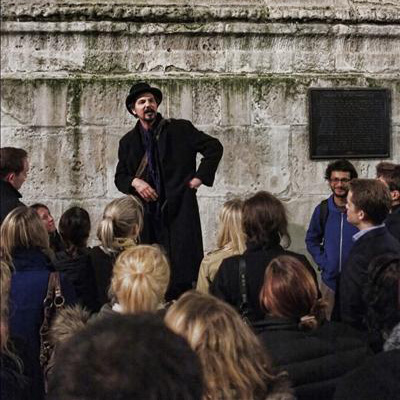
User's Directions: This "page" is a two-parter. First, some prefatory, explanatory notes. Further down you get the "blurbs" for lots of our From the Repertory and Special Walks. (Don't know what a From the Rep walk is? - well, click here for a backgrounder pop-up.) What I'm saying is, if you want to go straight to the "blurbs" you have to scroll down past these introductory remarks.The photo of Mike and a group of walkers on a Beachcombing Walk is the "bridge" between the two halves.

We get a ton of requests for "additional information" about the From the Repertory Walks. Haven't been able to meet that request on the leaflet because there are over 300 different walks in the full London Walks repertory and there's only so much room on a piece of paper and the document already runs to 21,000 words. Well, you'll get my drift...

But cyber-space "bends" space. It's elastic. You can stretch it. So here on the website at any rate we can meet that request. And we're doing so. We got this particular ball rolling just over a year ao. And have made a good start on it - as you'll see if you scroll down. But there's still more to come - so please do be patient - it's going to take a longish while to get the full complement up here. Not least because there are over 300 different London Walks. In short, it's not all down to my innate dilatoriness!

And the other thing to stress here is that these entries are very much in the way of "additional information". Each of them is a "blurb" about a given From the Repertory or Special Walk. Initially we were also "inputting" here the dates that any given From the Repertory or Special Walk would take place. We've rethought that "strategy" though - simply because it was so time consuming to stay on top of those dates...putting them in, taking them out when they'd been and gone, etc. etc. And if one got away from us - well, it was problematic, to say the least. Simply because the date referred to may have been from a previous year - a walk that was, well, "history". In short, there was a danger of people getting the wrong end of the stick.
 
So we've simplified. No dates here, just "background information". For the dates of any given From the Repertory or Special Walk you need to go to those sections - they're laid our as "tables", so you can scroll down through them very quickly. And if you find one there that you'd like to know more about - and if there is a "blurb" for it - well, double click on the link and that will take you to the entry here in this section.

Oh and I suppose the other thing to mention here is that any of these From the Repertory or Special Walks can be done as a private walk. So we thought this "set of rooms" on the website might be useful for "group leaders", teachers, etc. who were interested in "further reading" - i.e., finding out more about the full range of the London Walks programme - with a view perhaps to booking one of our more exotic "blooms" for a private walk.

And just one or two other bits and bobs...

John has done a heroic - a sterling (now there's a word that's brilliantly rooted in London history, as those of you who have been on my Along the Thames Pub Walk know) - job of chasing down the guides, shaking some "blurb dust" out of them, and shaping and baking it into tasty and helpful "brownie blurbs".

And I think you'll like the "add-ons" John's come up with. Namely where each of the From the Repertory walks ends - the closest Tube Stop - and a "Latecomers Catch-up Point". Can't be bad.

And now it's down to me, David, to keep on tweak'en 'em and getten' 'em up onto this page.

Which I've been plugging away at for a good few months now - and will be doing for a good few more. To start with I was trying to roll them out as they hoved into view. But in the end I switched over to listing them alphabetically. As you'll see, so far there are about 30 of them up here and strutting their stuff.

But that's enough foreplay. Let the parade begin...

Now about Karen's tour of little-known Hampstead Garden Suburb...  That one, in a word, is a homecoming for The London Tourist Board's Guide of the Year winner. A homecoming because conducting that walk Karen is leading a tour of the corner of London in which she was raised. Here she is…

“There are those – the great Peter Ackroyd among them – who would deny the existence of ‘village London’. A conceit, others say, concocted by estate agents to pass off downmarket areas as quaint and cultural.

And there’s a part of this Village London concept that I, too, would quibble with. The enclaves and quarters, the different “manors” (to use Cockney parlance) and neighbourhoods are often too complex to be encapsulated by the boundaries of a mere village.

The famous square mile, the City of London is, despite its diminutive size, is obviously not a village – from some angles it even seems more than a mere City, coming over more as some independent city state. In turn, the myriad exoticisms of Soho could never fit into a village. That fabled quarter – also roughly a square mile – is more a Peoples’ Republic – i.e. a quarter that welcomes the peoples of the world of all creeds, colours and sexualities – than a village.

If you want a citadel, we’ve got one of those to spare here in London, too: the rarefied academic halls and spires of Harrow on the Hill, especially when approached on foot from the east via the Capital Ring, resembles nothing less than a stronghold. Viewed thus it’s little surprise that Harrow brought forth Churchill.

There’s one more for the “more-than-a-village” category: Hampstead Garden Suburb. Conceived as a retreat from the onset of the urban sprawl in the early 20th Century, this deliberately well-hidden corner of north London is undeniably ‘villagey’ in both feel and look – and that, indeed, was one of the founding principles of the place, foremost in the mind of its creator Dame Henrietta Barnet.

The result – the quiet lanes, the proximity of the Heath, the veritable festival of English domestic architecture, the fruit tree in every garden, the world-renowned girls’ school, the parish church by Lutyens – surpasses even the original high ideals of its conservationist foundation.

More than a village, more even than London’s most beautiful village (for such a term is too subjective), Hampstead Garden Suburb is nothing less than the Model Village.

Such village perfection as was only imaginable in 1907 made real – and never yet surpassed.”
 
To go on the Local London – Golders Green & Hampstead Garden Suburb walk meet Karen at Golders GreenStation.
 
(David here, chiming in. I've been known to describe Karen as The Figurehead of the Good Ship London Walks. The figurehead because she was the guide we chose for the very first film we made of one of our walks. Chose her for the same reasons that Travel & Leisure gave her the ultimate accolade: "the world's best tour guide". Chose her for the same reasons the London Tourist Board crowned her with its Guide of the Year Award. Chose her, in short, because she's a spellbinding guide: soaringly intelligent, consummately professional, vivacious, great sense of humour, fun, warm – a real sparkler. When Karen guides it's rainbow, rainbow, rainbow. The plodders in this industry think a guided walk is a route and some memorisation. They don't get it. Aren't capable of getting it, let alone doing it. Virtuoso guides like Karen operate on a completely different level: they understand that a great guided walk is a composition – and a performance.)
 

Mike W. and Walkers "Beachcombing" on the Thames


500 Years of Black London

Black Londoners - famous lives: politicos and writers, servants and masters, wits and wenches, freaks and curios, haunts and habits...we'll be looking back at the first traces of the black presence in London and the continuing themes it evoked.

There was a growing black presence in London as far back as Tudor times (1485-1603) right the way through to the 1950s, when the post war labour shortage tempted thousands to come over from the West Indies, on to vibrant present day multi-cultural London where the black community plays an ever more vital role in the life the capital.

To go on the 500 Years of Black London Walk
meet Steve M. just outside
exit 4 of WestminsterTube.

The "Late Comers Catch-up Stop" is King Charles Street, Whitehall.
 
The walk will end near Covent GardenTube.


Alfred Hitchcock's London - More than 39 Steps!
For almost half his life (and nearly half his movies) Alfred Hitchcock was based in London. Even when he went to Hollywood he continued to use British characters and themes. This walk is an affectionate celebration of the London he knew and locations used in his films from the 1920s to the 1970s. The theatres associated with his stars like Robert Donat, Tallulah Bankhead and Ivor Novello. One of his favourite restaurants. Locations for sequences in his silent classic The Lodger, his first sound film Blackmail, and others, including his terrifying farewell to London in Frenzy. It’s the story of his life and work, and how his early brilliance as a director almost ended his career. All this, plus following in the footsteps of a tour Hitch himself gave to Ingrid Bergman back in 1948. A tribute to the Master of Suspense in the city he knew best. Here's a soundbite from the walk.
 
To go on the Alfred Hitchcock's London walk meet the seriously talented Richard IV outside the main exit of HolbornTube.
 
The "Late Comers Catch-up Stop" is the stunning Sicilian Avenue, followed by historic old Bloomsbury Square.
 
The walk ends near EmbankmentTube (and Charing CrossTube).
 

ALL CHANGE AT ST. PANCRAS*

“We’ll give London Walks access to parts of the station
that aren’t open to the public.”**

Well, we weren’t going to say no to that offer, were we! Weren’t going to say no to it because: “St. Pancras is the most significant urban structure built by the railways. Both its engine shed, the inelegant name given to the
enormous glass and iron shelter over the platforms… and the Gilbert Scott hotel would be notable individually, but together they create a world-class terminus… The sheer scale is breathtaking in itself as the station is 150
metres wide and twice that distance long, but the Gothic design, with its exaggerated features such as the clock tower, numerous spires and the large statue of Britannia glaring over at King’s Cross make it one of London’s greatest landmarks” (from Fire & Steam by Christian Wolmar). And that’s just the centrepiece! There’s also the oldest church in Christendom Britain (and its extraordinary churchyard), a stunning roof-top view, and “the mind and memory of the nation!”

*Bottom line: this is the most significant new walk to be added to the London Walks repertory in the last 25 years! 

**We couldn't get specific about this one - had to hold back wth this blurb - because some of these particulars were still in the "development stage" those first couple of months after the station opened. But it looks like the "access" spun gold is coming together now. I.E., we think - we hope - we'll be good to go on that particular count from here on out. Drop us a line - or give us a bell - or indeed check back here in due course and we'll let you know for sure.

And there's no reason to be coy about the genesis of this walk. The plain fact of the matter is St. Pancras has really pulled out the stops for us - including being shown round the redevelopment by the architect himself! As you know, we set a lot by "insider information" and "local knowledge" - and it doesn't get much more "insider" and "local" than a private tour given by the man who spent nine years bringing the project to fruition! And embarrass des riches, the next couple of ones we're going to do are timed to "feed into" at walk's end a lecture that Alastair, the architect, is going to give there at the station. And - for the proverbial cherry on top of the Sunday sundaes, these next two walks will be guided by Steve, who's an architect himself (he does the Frozen Music - the City of London and West End architecure - walks that come up occasionally in our From the Repertory slots.

Guided by Tom, Brian, Richard III or Steve.

To go on the All Change at St. Pancras Walk meet the guide just outside the Euston Road north exit of King’s CrossTube.

King's CrossTube is on the Circle, Metropolitan, Northern, Victoria & Piccadilly Lines.


Amazing Grace

A Walk to Celebrate the Abolition of the Slave Trade

Pace Winston Churchill...this may have been London's finest hour!

Their names ring down the centuries, the great and the good who fought for freedom: Wilberforce, Wedgewood, Wesley, Blake, John Newton, Cowper. And that's not to forget the lesser known who began the cause: Granville Sharp, Thomas Clarkson, James Phillips and Oladouh Equiano.

Truly, here in the bosom of the City beat the heart of compassion, answering the slave's cry, "Am I not a man and a Brother?"

Amazing Grace indeed.

"Spots of time" (and place) don't come any more important than this one. Which is why it's important to go and see where - to go over the ground, literally and figuratively -  to travel back...to bear witness.

The starting point for The Amazing Grace walk is MonumentTube.
Meet Jean just outside the Fish Street Hill exit.


The Amazing Old Shops Walk

Attention shopaholics! Get ready for some high class retail therapy. And where the prices are stratospheric...well we'll indulge in a peck of window shopping and a pack of what-might-have-been!  Credit cards at the ready...

Here's what's on our "shopping list": some of the oldest and most fascinating establishments, all decked out in their Christmas finery: shops which supplied the real Evita with perfume, the suffragettes with food hampers and the Duke of Wellington with books. Shopers where you can buy an Eton College boater, antique toy soldiers, the best selection of the finest cheeses, handmade shoes - and a great hangover cure!!!

The Amazing Old Shops Walk for last minute you know what!
 
normally takes place about a week before Christmas. It's often
the From the Rep Walk - either 10.45 am or 2.30 pm - on the
Saturday before Christmas.

To go on it meet Judy just outside Green ParkTube.

The "Latecomers Catch-up Stop" is
the corner of Old Bond Street and Burlington Gardens.

The walk ends near Green ParkTube.


Anarchy in the UK
Consider the tale of Russian anarchist Wilfred Michael Voynich.

In the 1880s he was thrown into a gloomy Siberian prison where his gaolers thoughtfully arranged his cell so that the window faced the gallows, allowing him a good view of watching his friends die.

Somehow Voynich escaped and made his way to Hamburg where he sold his coat and glasses to buy some bread and herring, and a ticket on a boat bound for England. He was penniless, hungry and spoke no English, but what the hell? – he was now in the same city as his comrades!

Most of the leading east European anarchists had come to London as here they could organise and agitate with far more freedom than they could on the Continent. In London Voynich wanted to find the anarchist leader, Stepniak. How could he do that in a city of seven million? His solution was inspired. After getting off the boat near the Tower, Voynich walked around the East End, stopping passers-by at random and thrusting into their face a piece of paper on which was scrawled Stepniak’s name . . . in Russian. It didn’t take long before a Jewish student knew exactly what this dishevelled creature wanted and took him to meet the great man.

Voynich eventually became a great success, but not at anarchism. He acquired a proper job, working as an antiquarian bookseller on Shaftesbury Avenue near Piccadilly Circus where with his stooped back, caused by the cramped conditions of his Siberian cell, and engaging line in seductive talk he became a West End institution.

In 1912, the year when Stepniak was killed by a train Voynich’s life took a surprise turn.

In a secluded Jesuit monastery in Italy he found a remarkable mediaeval document illustrated with fantastic decorations, strange plants and astronomical drawings written in a hitherto unknown language.

No scholar could explain its contents. The finest cryptographic minds have still failed to solve what is now known as the Voynich Manuscript. The British government once even put its entire MI8 department onto the task of unravelling the esoteric incunabula, to no avail, an ironic twist given that the secret services had been engaged in watching Voynich’s political activities only a few decades previously.

Yes, it’s that kind of London walk. We’ll not only be talking about the esoteric like Voynich and Stepniak, we’ll also be discussing the brightest stars in the revolutionary firmament: Lenin, Stalin, Mussolini and even Hitler. All have raged and raved, preached, practiced and propagandised in this part of London.

Viva la Walks revolution!
 

The Backstairs Belgravia Pub Walk

London's drawing room. That's where we're headed. And first things first: There's no other neighbourhood in London like this. It looks different. Sounds different. Feels different. All pearly stucco and cut glass accents and blue blood...the place simply breathes money. The people who live here are people who could live anywhere. Which is why they live here. Here in this movie-set corner of London. Here in Upstairs-Downstairs land, so profoundly English, but also, somehow, exotic. And what a cavalcade of residents: Baroness Margaret Thatcher, David Niven, Vivien Leigh, Lord Lucan, Mozart, Andrew Lloyd Webber, Omar Shariff, and other rare plumages. After tonight you'll be able to do some world class name dropping! And because we're going to see it through the peep-hole - threading our way through its cobbled little lanes and mews - past secret escapes and vistas of sudden surprise - we'll make some wonderful discoveries. For good measure we'll call in at a couple of pubs that are small masterpieces - the haunts of those who know! (Food is available.) 


Bauhaus to Our House -
Modernist Architecture in Olde NW3
 
Eighty years ago the German Bauhaus movement of art, design and architecture shook the world. From the designs of BMW to the shelves of IKEA, its influence is still very much with us. Hampstead - NW3 - has some of the most visually exciting Bauhaus buildings in the UK: the now sadly neglected Isokon building, Maxwell Fry's Sun House, and Erno Goldfinger's 1-3 Willow Road. Three indelible gems to reminds of the legacy of the school which was closed down in Berlin by the Nazis in 1933 and scattered its creative talents to the USA, Britain, and other countries.

The Bauhaus to Our House Walk is guided by the distinguished London Historian Ed Glinert, the author of London: Exploring the Hidden Metropolis, The London Compendium, and A Literary Guide to London.
 
To go on the Bauhaus to Our House Walk
meet Ed just outside Belsize ParkTube.

The "Latecomers Catch-up Stop" is at
the junction of Downside Crescent and Lawn Road.

The walk ends at HampsteadTube.


Beat London - Kerouac, Ginsberg & Dylan
Fifty-two years ago, in the face of public outrage in the U.S. at the publication of his On the Road, Jack Kerouac adhered to the first rule of pyrotechnics. Having lit his fabulous yellow roman candle, he stood well back: in Tangier (with erstwhile Londoner William Burroughs), in Europe and, for a brief few days, London. His account of this stay can be found in the 1960 collection Lonesome Traveller. The great surprise, from the man who arguably fathered the 21st Century concept of hardcore Traveller over sedate Holidaymaker, is that his London highlights – pea-soup fog, policemen’s helmets, pints of bitter beer – read more like a checklist of touristy ephemera than a cache of rare gems unearthed by a seasoned traveller. But the sheer, childlike glee with which Kerouac announces each “discovery” is infectious stuff. From St Paul’s (for a Good Friday performance of the Matthew Passion) to the Old Vic (for The Taming of the Shrew), Kerouac – a man patently in thrall to the city before he’s even stepped off the train at Victoria – finds his London of the imagination perfectly in rhythm with the real thing. Perhaps it was the dignity of old lady London, despite her still-ragged post-war weeds, that delighted the so-called King of the Beats most of all. Was there a city more Beat than London in 1957? Where better for Kerouac to live out his last few days of obscurity before heading into the teeth of the Beat Generation storm?
 
Only a couple of things to add. The "blurb" you've just read is a straight lift from the London Walks blog - http://londonwalkblog.blogspot.com/ - proof, if any were needed, that the blog's a great read. And indeed is doing something very different from this, "the mothership", the main London Walks website. In short, it's lasering in - one snippet of marvelous London information per bite-size "post". A sort of tapas of the London tapestry, if you please. Anything else? Yes, it's got great imagery. And it's Adam - the best writer on the team - at the helm. So it's a can't-go-wrong. And as long as we're in that particular purlieu, Adam's created and guides the Beat London Walk, so that in itself is your 24-carat GUARANTEE of a really fun, very interesting London Walk. One of those "change the way you see" London Walks!
 
To go on the Beat London Walk meet Adam just outside the exit of EmbankmentTube
 

Behind the Termini Walks
The Behind the Termini Walks are exactly what the portmanteau term says. They're a series of walks – created and guided by Rachel – that explore the "back yard" of the great London Railway Stations: King's Cross, Victoria, Paddington, Liverpool Street, Waterloo, etc.. Rachel's written a short "blurb" for each of the walks. And of course the date, time and meeting place particulars are also set out here. Simply scroll down for each of them.
 
Liverpool Street – Where The City meets The East End
Not in the Summer 2013 programme but can be booked privately
Built on the site of 'Bedlam',  Liverpool Street station straddles three very different worlds, the original City, the new Broadgate development of offices and shops and the station itself. There is wonderful modern architecture to admire, public art to consider, a Turkish Bath which has somehow survived  but also poignant stories too of The Elephant Man and the 1930s Kinderstransport.
Meet: Outside McDonalds, Liverpool Street Railway Station

Wonderful Waterloo
Sunday, October 13th (2013) at 2.30 pm
Described as being for 'a better class of commuter'' Waterloo provides an opportunity to hear the stories behind not one but seven stations and from one,  The Station of the Dead, there were no return journeys! Behind the station you will discover  wonderful artisanal housing, the theatre that went from music hall to temperance to being one of London's top theatre venues and the site of London's Cans Festival.
Meet: Beneath the central clock on main concourse, Waterloo Railway Station
  
All Change at King's Cross
Sunday June 16th (2013) at 2.30 pm
This is the site that everyone is flocking to since the arrival of the Eurostar at St Pancras station. Explore the newly renovated station and unlock the secrets to the surrounding area. Once London's most notorious red light district this area has undergone a transformation. Two Victorian railway stations, the gothic splendour of the old Midland Grand Hotel,  regeneration projects, a German Gymnasium, film locations, a canalside nature reserve and the church which gave the area its name with several notable burials, all feature.
Meet: Outside Post Office on Euston Road, opposite King's Cross station

Victoria – Gateway to the Continent
Not in the Summer 2013 programme but can be booked privately
Two stations built side by side, eventually merged in the 1920s and for many people Victoria was from where they embarked on their first continental journey. With the Night Ferry, the Orient Express, the Imperial Airways Terminal, Victoria had glamour and the excitement of foreign travel. In and around are delightful backstreets, almshouses and the Byzantine extravaganza of Westminster Cathedral.
Meet: Outside big WH Smith on main concourse of Victoria Railway Station 
 
Paddington – Home to 'The Holiday Line'
Sunday, August 11th (2013) at 2.30 pm
With its canals, trains, trams and the Underground Paddington became a vast transport hub, home to the GWR, 'God's Wonderful Railway'. Nearby, a messy laboratory led to the discovery of penicillin and today, the massive rail goods and maintenance yards for so long hidden from public view have been transformed with canalside waterways and three quirky but functional bridges. 
Meet: By Paddington Bear statue, inside Food Court, at Paddington Railway Station
 
And Two New Ones...
 
Marylebone – Antiques, Beatles & Cricket
Sunday, July 14th (2013) at 2.30 pm
"Blurb" to follow... 
Meet: Marylebone Railway Station (upstairs concourse, by the entrance to the Tube)
 
Charing Cross – Secrets of the Strand
Sunday, September 29th (2013) at 2.30 pm
"Blurb" to follow... 
Meet: Charing Cross Railway Station (by entrance to Charing Cross Hotel)


Bethnal Green - The Lost Village in Londn's Backyard
Originally a green and pleasant area attracting wealthy residents, by Victorian times the Bethnal Green district had become the poorest in London. The housing and sanitation were appalling. TB was rampant. Needless to say, the area was transformed following the Second World War bombing, subsequent slum clearance, and the rise of the big housing estates. All changed. Changed utterly. Or is it? Which is by way of saying, if you know where - and how - took (and Hilary certainly does) there are enough interesting hints and glimpses of the bad old days to take us back down the corridor of years. Let alone prompt some gob-smacking stories! In short, this one's very much of the beaten tourist track. It's Londoners" London. Which makes it a Snap! when you hear that it was here that Samuel Pepys stashed his dirary away during the Great Fire. Oh and another shining thread...children of all ages, including seniors, will delight in the Museum of Childhood.

To go on the Bethnal Green -
The Lost Village in London's Backyard walk
meet Hilary just outside the exit of Bethnal GreenTube.

The Latecomers Catch-up stop is in the park next to the station.

The Bethnal Green walk ends back at Bethnal GreenTube.


Betjeman's London
 

Summoned by bells we are. Not to attend church but to hear beautifully crafted verses from John Betjeman, Britain’s best-loved poet. Betjeman wrote with such affection about north London – about “Delaunay-Bellevilles crawling up West Hill in bottom gear”, about being “safe in a world of trains and buttered toast”, about Zwanziger the baker's, and the Bon Marché, and the terrace “blackish-brown, and the curious Anglo-Norman parish church of Kentish Town” – and we'll be following in the great man’s footsteps, to the places he wrote about, the houses he lived in, the churches he prayed in, the railway stations he dreamed in.

• Notice how the walk starts at Kentish Townstation, not for instance South Kentish Town station. That closed some time ago. It was also the setting for Betjeman’s great long-lost short story about a clerk who gets off the train when it stops by chance in the disused station after the doors accidentally open. It’s a wonderful ghost story, the perfect cure for that post-Christmas hang-over. Bit like this walk really. Guided by Ed
 

The Bloody City -
Rulers & Rebels in Mediaeval London
 
Take a walk through through the dark side of London’s history where anyone who practiced freedom of speech usually lived to regret it...

Follow in the footsteps of martyrs at a time of vicious persecutions; discover the fate of one king murdered for his religious beliefs and another killed on the orders of his wife.

Other highlights include one of London‘s churches which gained a reputation of bad luck for anyone who tried to shelter in it, the site where the Gunpowder plotters met; where the City backed the rebellion against a king; where a discredited nobleman led an army against his queen.
 
And, hey, this year, 2007, there's even the frisson of an appropriate anniversary - the walk will take place on the anniversary of Bloody Mary’s death. Needless to say, we'll see the gatehouse where legend has it she sat knocking back the wine and feasting on roast chicken while watching Protestant martyrs being burned alive outside. 
 
And another "frisson": the walk's been created and will be guided by an award-winning Blue Badge Guide who, into the bargain, can read Egyptian hieroglyphics!  Her name's Vicky.
 
The Bloody City  Rulers & Rebels in Mediaeval London


Bohemian Fitzrovia - Pub Walking in London's Old Latin Quarter
The Fitzrovia Pub Walk is built along those same classic London Walks lines that the Rotherhithe Walk is. Namely, it's very very central but socially it's on the edge, on the margin. And that's a potent combination. A potent combination because it means the area has always attracted "misfits" – artistic and literary and musical "misfits". (Let alone odds and ends like the last hangman in Britain or Alasteir Crowley, the black magician.) Attracted them because the area was cheap, it was affordable.

So it's a real "find". It's got great pubs, great history – it's chock-a-block with those "moments" London Walks specialises in. Those I-never-knew-this-was-here – never-knew-that moments.
 
To go on the Fitzrovia Pub Walk meet David just outside the exit of Goodge StreetTube.
 
The "Late-Comers Catch-up Stop is by the American Church in London. It's just 50 yards up Tottenham Court. Come out of Goodge StreetTube, turn left, go past the big mural (it'll be on your left - and it, incidentally, is the second catch-up stop), and hey presto, there's the church (and right beside it, a highly visible piece of early 1940s history that's, well, extraordinary). That's where we'll be fifteen minutes or so in to the walk.
 
The walk ends near Oxford CircusTube.
 

"Bond, James Bond"
The London of 007 and Ian Fleming
 
"Shaken not stired" ........ahhhhh how those words have become intertwined over the years with a do-or-die world of magnificiently malevolent villains, seductively sensuous sirens and reckless romances in exotic locations. Visit the sites that played an important role in the life of Ian Fleming. His place of birth, his clubs and his shops. As for 007 himself, much of what made the man - the gun, the gas-guzzler, the gambling and the grooming all took place around Mayfair and St James'. If he existed that is. Maybe he did. Maybe he does. Want to find out what personalities and events in Fleming's life inspired the characters and plots of Bond? Curious about how relevant 007 is post Cold War? Keen to hear more about their superhuman capability to absorb ridiculous amounts of alcohol and tobacco? Then leave your weapon at home and come and find out. Tux not compulsory.
The meeting point for the "Bond, James Bond" walk is just outside exit 2 (the Park Lane exit) of Marble ArchTube.
 
Meet Justin - who bears a remarkable resemblance to the gentleman in question (James Bond, NOT Oddjob) - just there, just outside exit 2 of Marble ArchTube.
 
And as long as we're at it, here's a rather nifty little home movie of the walk.
 

X-RATED! BONKING LONDON X-RATED!
Here's one that'll flutter your wind-chimes! It's the real, x-rated London you've never - make that NEVER - imagined! From the covered-up scandals of Parliament to the OPENLY practised perversions of the aristocracy, from Harrison's List of young ladies fresh from the country and ready and willing to the "actresses" and rakes of Haymarket, from the "nuns" of St. James's to "below the counter" in Soho. You'll need a stiff drink - if not a dose of smelling salts - after this lot!
 

Charles Dickens's Christmas Carol & Seasonal Traditions
All the delights and delicacies of a London Victorian Christmas with Charles Dickens's famous story The Christmas Carol as your route map and inspiration.
 
 
We'll deck the streets of London with balls of jolly. Scrooge and Marley and the Cratchits... they're all here. This was where Dickens's imagination took wing and where the characters did their thing. And as we make their acquaintance we'll spice things with warming seasonal stories of turkeys and boars" heads, Christmas puds, mince pies and pantomimes; cards, crackers, Christmas trees and mistletoe. Let alone the bells that rang out on Christmas morning to wake Scrooge up – a much changed character.
 
HAPPY CHRISTMAS EVERYBODY!

Charles Dickens's Christmas Carol & Seasonal Traditions
 
makes several appearance in the From the Repertory programme
from late November onwards..

To go on the Charles Dickens's Christmas Carol & Seasonal Traditions walk
meet just outside the exit of Tower HillTube at the appointed hour and date.

The "Latecomers Catch-up Stop" is in Trinity Gardens.

The walk ends near St. Paul'sTube.
 

The Christmas Cockney London Walk
You've probably just about recovered from the Christmas blow-out festivities - now's the chance to gently walk it off, and at the same time, learn about a Cockney Christmas past.  And if we're lucky enough to have a white Christmas, the old City of London will be the perfect Christmas card setting for this walk through 800 years of history including the Black Death, the Second World War blitz and the rise and rise of the modern rebuilt parts of the City.  And unlike HM The Queen, you don't have to ask the Lord Mayor's permission to enter it!
 
It's the working haunt of rich businessmen and bankers but it's also a favourite with all types of Londoners, including of course, the Cockneys - especially the 'Pearlies'.  There's plenty to interest Londoners and tourists alike; plenty to take a good 'butcher's hook'  (look!) at.

Your host and genial guide for this morning's walk, our very own Londoner par excellence, Jean, will be decked out in her Cockney 'glad rags' - her splendid Pearly Queen costume.  With stories and snatches of popular songs from the nostalgic age of the Victorian and Edwardian Music Halls, she'll be telling you the colourful story of London and its inhabitants.  You'll be welcome to sing-along-a-Jean if you want to, and if the festive mood really grabs you, a little gentle knees up Mother Brown would go down a bundle too!
 
We think it's the best city in the world.  By the time Jean says Goodbye and a cheery Happy New Year to you all, we hope you do too!.  

To go on the Christmas Cockney London walk
meet just outside exit 2 of St. Paul'sTube.

The Latecomers Catch-up Stop is St. Mary-le-Bow,
which is about a hundred yards along Cheapside, on the right.

The walk ends back at St. Paul's.


Keep Smiling Through

In the summer of 1940 Winston Churchill said, "This is a war of unknown warriors - the entire population, men, women and children. The fronts are everywhere, The trenches are dug in the streets, Every village is fortified. Every road is barred. The front line runs through the factories. The workmen are soldiers with different weapons but the same courage."

In her book The People's War, Juliet Gardiner wrote, to "dig allotments, pin up blackout, make do and mend, give up iron railings, saucepans and tin baths for munitions, billet troops and evacuees, queue for hours, feed a family on nothing recognisable, keep them warm with more dust than coal, clothe them on few coupons" and above all 'Keep Smiling Through', this was fighting for Victory at home.

That is what this walk is all about in an area which, as they say, "caught a packet" from the Luftwaffe. So dig out your uniforms and your 40s gear, bring your gas masks and, when you have walked the walk and sung the songs visit the 1940s Exhibition in The Imperial War Museum where the tour ends.

The meeting point for the Keep Smiling Through walk is OvalTube.
 
The walk ends near Lambeth NorthTube. 
 

Detectives' London
Naturally Miss Marple is on the case today and in neat no nonsense costume for the occasion. For crime and private eye fans this walk repays a little gentle investigation...The Ladykillers, a host of female detective story writers and their immortal character creations. Murder most elegant for those of a fine mind; slaughter in St. James's for the rest of us.
To go sleuthing with Miss Marple (aka Jean) meet her just outside the north exit of Green ParkTube.

The Latcomers Catch-up point is on the north side of Piccadilly, just across the way from the Ritz hotel.

This is one of our circular walks - i.e., it'll end back at Green Park
Tube.


Dial M for Murder
 
      “You are 14-years-old. You walk down the Charing Cross Road. You are accosted by a man wearing a flashy tie. The rest follows on from there.” So explained Frank Norman, the Barnardo’s boy who became an unlikely celebrity after writing his prison memoirs.

       This is the world the West End villain enters, one of dazzle, glitter, glitz, glamour. But there’s also a dark side. Occasionally things get out of hand. Someone dials “M”. On the other end of the line is a representative of Murder Incorporated. Soho is that kind of place, or at least it was. Or as Scotland Yard’s Ted Greeno put it, “in the West End you could buy anything and see everything; and you could get your throat slit more promptly than in a pirate ship on the China Seas”.

        Don’t worry. It was all long ago. Murder Incorporated has closed down, and its directors are now so much dust, but the fascination for their stories remains. And what stories. Like how Soho’s Jewish and Italian gangsters fought like tigers during the Second World War, culminating in the fatal stabbing in 1941 of Harry “Little Hubby” Distleman, doorman of the West End Bridge and Billiards club. Like the tale of how the owner of a deli on Old Compton Street planned the assassination of none other than Benito Mussolini – Il Duce himself – in Rome (all this from Soho) and nearly got his way.

     Make an appointment to Dial M for Murder. Meet the guide, the distinguished London historian Ed Glinert, at 2.30pm outside Oxford CircusTube (Exit 6). Probably just as well though if you don't tell Jack Spot, Darby Sabini, Reggie Kray, Billy Hill, Jack the Stripper or Moishe Blueball that you're swanning around "sight seeing" on their patch!


The Edward Petherbridge Theatreland Walk

As one American lady put it, "my Gawd, it's like being shown around Manhattan by Dustin Hoffman." To which Edward - in his inimitable, dryly witty way - responded, "Dustin would be glad to know he's got that to fall back on to."

But seriously, it's a real treat this one. Edward Petherbridge is one of the great classical stage actors of our time - and it's tough to beat a wee stroll through his patch - theatreland - with him for a couple of hours of a Sunday morning (or very occasionally, of a Sunday afternoon). People fork out 40 quid to get a stalls seat to watch him in a West End show and here you can be at his elbow and indeed shoot the breeze with him for six quid. Or a fiver for concs. Forget hanging around outside the stage door in hopes of getting an autograph. That's for chumps. The real deal is to go on his walk. It's like joining Edward - and chilling - in the green room. Or like being shown around Manhattan by Dustin Hoffman!


"England Expects - The London of Admiral Nelson

This one's soaked in memories - and haunted by ghosts...

Who would have thought that, on this walk we should, so often, encounter the "Nelson Touch"?  Indoors and out we find memories of "The Hero",as he was simply known, from monuments to portraits, his homes  - with Lady Nelson or "Dearest Emma" - the Admiralty, the Navy Board, to his final resting-place in the heart of the City.

N.B., this is one of our "anniversary walks" - i.e., we try to run it on (or right around the time of) Trafalgar Day!

The starting point for the "England Expects" - The London of Admiral Nelson Walk is EmbankmentTube.

The Latecomers Catch-up Stop is in St. James Street.


Epicurean, Gourmets', Foodies' London
Here's a taster – written by the High Priestess of all things Foody-Londony – Ann herself. Well, three tasters. Because Ann's created three Foodies' London walks. Epicurean, Gourmets', Foodies' London takes in Borough Market (well, it's the centrepiece of the walk). Foodies' London – the West End gourmandises (so to speak) in, yup, the West End. And Ann's Pie Crust to Upper Crust walk wafts and taste buds its way along the Strand and in the Covent Garden area. Oh, and for dessert, she's created a Chocaholics' London walk. That one, alas, doesn't run publically. But people do, very understandably, book it privately. And as long as we're at it, by all means do take a look at the little film we made about the first of the Foodies' walks, Epicurean, Gourmets', Foodies' London. It's here.
 
 
EPICUREAN, GOURMETS', FOODIES' LONDON
 
What did Londoners eat in the Middle Ages? Why was fish almost always on the menu – and what happened to you if you decided a nice piece of pork was just what you fancied to eat in Lent?  This walk will tell you about our food history from the Middle Ages to the C20 – taking in along the way the London docks, the railways, and the first tin factory in the world.
 
And then there's Borough Market, now a world famous foodie destination, but selling fruit and veg before the Normans arrived here in 1066. You’ll want to end your walk by going shopping there,  and Ann – who likes nothing better than doing some research in your behalf – will give you lots of suggestions for stalls to visit. Award winning cheeses and the Platonic Ideal of the cheese sandwich, wonderful cakes, delicious chocolates at a bargain price – make sure you bring your shopping bags.
 
 
FOODIES LONDON – THE WEST END
 
So why is the Ritz called the Ritz? And what were diners served at the Ritz’s opening banquet?  Ann will be listing all 11 courses – so take your notebook and you can create your own grand banquet at home. This walk is a mix of London foodie history in the C19 and C20, with a generous helping of  small C21 independent shops selling wonderful food. We’ll be passing Fortnum and Mason – who have had many royal customers over the years, and claim to have invented the scotch egg-  and the shop where Winston Churchill bought his cheese.
 
Down secret alleyways in darkest Soho you’ll see  Italian family run delis, the ‘Armani of bread’, and the shop selling what one recent walker described as ‘the best chocolates in the world’. Plus foodie titbits - the firm that gave Lady Thatcher her first job, trying to put more air into ice cream. And how that delicious cup of coffee you drank the C19 may have had an extra ingredient – dried horse liver.  We end in London’s Chinatown where at the right time of year, and if you’re brave enough, you can buy some durian.
 
 
PIE CRUST TO UPPER CRUST
 
Take a walk along the Strand. 140 years ago the lower classes bought ham sandwiches in the street here, while the upper classes were eating the magnificent delights prepare for them at the Savoy Hotel by the king of chefs and chef of kings, Auguste Escoffier. You’ve eaten the peach Melba he created – Ann will give you some more of his glamorous peach recipes to run up at home. 
 
This walk covers London’s foodie history around the  Covent Garden district, best known nowadays for shopping and eating, but for centuries the biggest market in the country for fruit and veg. The first tv chef, the best selling cookery author of all time, the muffin man of Drury Lane all make an appearance, as does that iconic English – dish roast beef. We’ll avoid the crowd by taking some of the peaceful back streets and alleyways, and if we’re lucky we may end with a real cup of  English tea.     
 

Foodies' West End
 
What did Oscar Wilde have for lunch? Who bought their beef tea at Fortnums? Which king took a roast chicken to bed for a night time snack (and that's after 11 courses at dinner). For the answer to these and many other foodie questions – and for a visit to a street market and a foodie look at Chinatown, join Ann's walk looking at how Londoners dined downtown in the 19th, 20th and 21st centuries.
 
 
Meet Ann just outside the Green Park exit of Green ParkTube.  (Within snapping-our-fingers-distance-at-the-Head-Waiter of the Ritz Hotel, of course. And what gourmet dish was invented at the Ritz? Well, come and find out.)
 

Gangs of the East End
In USA say gangster...think Al Capone and Chicago.

In UK say gangster...think Kray Brothers and London's East End.
 
The three Kray brothers - twins Ronnie and Reggie and older brother Charlie - were the most infamous gangsters this side of the Atlantic since World War II. In the 1950s and 1960s London was awash with prostitution, gambling, fraud and protection rackets. There was serious money to be made and some very unsavoury characters - and the gangs they were associated with - got their snouts into the trough, big time. They had their own turf - their own "exclusive" territories (manors in their argot) - and the Kray brothers ruled the East End with razor-edged violence right-the-way through to murder.
 
So, step this way, ladies and gentlemen. Let's walk some of the meanest streets in London...byways where the knives of the Krays once glinted and many a villain passerby sported tell-tale scars between prominent cauliflower ears.
 
To go on The Gangs of the East End - Krays & Capers, Diamond Geezers & the Profession of Violence Walk meet Ed Glinert - the distinguished London historian - just outside ShoreditchTube.

For the Latecomers Catch-up Stop go north up Brick Lane into Back Street and then to St. Matthews Church.
 
The walk ends near WhitechapelTube.


George Orwell - Big Brother Is Watching You
George Orwell’s 1984 is a bleak portrayal of a nightmare world in which a brutal totalitarian government keeps tabs on its citizens at all times, ruthlessly stamping out any form of dissent. Er, not quite. 1984 is one of the funniest novels ever written, the sharpest of satires, but its humour is so black, so subtle, it is missed by most readers. Yes, this is a most misunderstood book, but it won’t be if you come on the “Big Brother Is Watching You” walk
 
We meet outside Oxford StreetTube, Exit 6, telescreen or not
 
The George Orwell - Big Brother Is Watching You walk was created and is guided by the distinguished London historian, Ed Glinert.
 

George Orwell's London
War is Peace; Freedom is Slavery...

Guided in the compelling spirit of 1984 this walk is through London's "West End" where Orwell worked, drank and gained inspiration. It's a rich repast - everything from the church which inspired the Ministry of Love in 1984 and Keep the Aspidistra Flying to the skyscraper which provided the model for the Ministry of Truth. And that's just the Orwell! Which is by way of saying, Ed's spiced the thing with a ton of accompanying material...in the shape of non-Orwellian dubious but intriguing outriders and delights!

The George Orwell's London Walk is guided by the distinguished London historian, Ed Glinert, the author of London: Exploring the Hidden Metropolis, The London Compendium, and A Literary Guide to London.

To go on the George Orwell's London Walk meet Ed
just outside exit 6 of Oxford Circus
Tube.

The walk ends near Russell SquareTube.


Practicals first...
 
In the Summer 2013 London Walks programme – which kicks in on May 1 and runs through October 31 – the Olympics London walk will take place every Thursday and every Saturday at 2.15 pm.
 
In the Winter-Spring 2012-2013 London Walks programme – which ends April 30 –  the walk takes place every Monday, every Thursday & every Saturday at 1.45 pm
 
The meeting place is just outside the exit of West HamTube
 
The "names over the marquee"the guides – are Julianne, Andy, Brian, Judy, Mary, Anne-Marie, Sue, Harry or Chris. Over the marquee because they'll light the place up for you like – well, like an Olympic Torch!
 
And just a reminder, another very good resource for "all the particulars" is the London Walks Calendar.
 
N.B. There are no public "facilities" at or near West HamTube. But tons of them where the walk ends. So perhaps tip a kidney before you get to West HamTube!


Ok, it isn't a helicopter arrival with 007 and Her Majesty. Comes a close second, though.* Because the wonder of it is still there. There in the spiky white steel stadium. There in the glide and soar of the shiny aluminium Aquatic Centre. There in "the Copper Box." There in the ArcelorMittal Orbit. There in Gold Medal-winning sports info and back stories and whys and wherefores. There in the neighbourhood's pastscapes and futurescapes. There in that astonishing panorama - it's like being out on a tether looking back at the London Milky Way. There where the Olympic Torch entered the home stretch. (The path of the climacteric – and, yes, we'll walk there.) There in the buzz. The buzz that's still there. There in hard-earned, beyond-price local knowledge.** Yeah, you got it. I. Loved. This. Walk. Who wouldn't? It was the Olympics. See. It. In. 2013. While the glow is still there. 
 
*Sports metaphor time: this approach – these vantage points – it's like making your way down to a ringside seat. Stepping into the ring will come in August (2013), when the Olympic Park is opened to the public.
 
Part way through the walk we take a short journey on the DLR so you'll need an Oyster or 3-Zone Travel Card. We take that DLR journey because it gives us some additional great views of the Olympics site. And because it leaves us off right by the Olympic Village (it swooshes us into the Hi-tech station built specially for the Olympics – the station the athletes, officials and VIPs arrivee at, the station built to take the ultra high speed and appropriately named Javelin trains!). And because it saves us having to make a long dreary walk along a busy, nothing-to-see-but-plenty-of-fumes-to-breathe road. Local knowledge. London Walks knowledge. You can't beat it. It kicked in from the get-go: "no question about it, West Hamis definitely the best place to start the Olympic London walk." As that American tourist said on the walk (you can hear him – and Julianne – here): "if you weren't on a London Walk you wouldn't know..."
 
And while we're at it, a couple of "additional information" tidbits:
 
This one's another one of those London Walks trifectas – or I suppose in this case you could say, Winner's podium, uppermost step. Winner's podium, uppermost step because 1) Julianne, who masterminded this one, is a top flight Blue Badge Guide; 2) she's local; and 3) it's Gold Medal Award-winning London Walks. Enuf said? No? Okay, scroll down – there's lots more about this one further down the page. And for a hear, click here!
 
And the starting block? The meeting point for all of the Olympics London walks is just outside the exit of West HamTube.
 
West HamTube was a "gateway station" to the Olympic Park, so we walk the route that lots of spectators walked this summer.
 
And look, Julianne and co. are not going to be dishing out the sort of information you get on a "Highlights Summary Card". The walk is better than that. A whole lot better.
 
Better because you'll get a feel for the whole neighbourhood – past, present and future. In short, Julianne and Co. "context" matters for you.
 
Stratford and East London have a long, eventful, rich history, a history that ranges back over the centuries (one of Chaucer's pilgrims – the Prioresse – learned her "Frenssh" at Stratford!). We "take you through that history", right down to the present day – and yesterday. Yesterday being what's arguably the most extraordinary industrial history in London. That "past" is still very much there. But of course it's very long in the tooth. Which is one of the reasons the area was chosen for what amounts to London's most spectacular "regeneration" in a very long time.
 
Long in the tooth – but, in places, gob-smacking. I'm thinking in particular of the "Gothic Cathedral". A cathedral not to God, but to the sewage of Londoners. It's worth the trip just to see it!
 
What else? Well, should go without saying – the walk will be a crash course in the history of the Olympics. Especially the London Olympics – 1908, 1948 and now 2012. Yup, the greatest city on earth is the only city that's hosted the Games three times!
 
And howzabout some stats? To wit: 30 new bridges, half a million plants, a new park for London, 1.4m tonnes of contaminated soil cleaned.
 
And: 26 sports Olympics, 9.2m tickets, over 20,000 journalists, 4bn people watching world wide, 14 million meals served.
 
The Olympic Park itself – we get great views of it and its "gem stones" (the stadium, etc.) – runs to 2.5 sq. kms. (Here's a Nov. 2011 "image update" from a New Yorker who  recently went on the walk and took some happy snaps.) N.B. we do not go inside the Olympic Park itself – for security reasons, etc. there is no public access to the Park until August, 2013.
 
Last but not least maybe pack a sandwich and a bottle of water. This isn't "a Starbucks every 50 yards" territory. Which in itself is a recommendation. At least by my (David's) lights!
 
The walk ends at the Olympic Village, right by Stratfordstation.
 
Enjoy!


Gracious, Gorgeous, Georgian Canonbury - The Pub Walk

Think of the oldest buildings in the capital: the Tower of London; Westminster Abbey (parts of, anyway); Temple Church, Guildhall…No one ever thinks of Canonbury Tower. Very few ever see it, unless they live in the area, and even then it’s not easy to spot. Less than 5 minutes walk from busy Highbury & Islington station, which tens of thousands use a day, is this ancient, bizarre and lofty structure. It truly is an astonishing sight to see a squat brick building evidently dating back to the early 16th century built so high. They didn’t do towers in those days. Yet Canonbury has Roman origins and was rebuilt in 1373 as well as 1520 and several times since. Why a tower? Prior Bolton, who was in charge of the place, had received astrological warnings of an imminent flood, so he built up and up. If it fell down, at least he would be dry in the meantime. He stocked it with food to last two months, but the flood never came.

Another reason for Canonbury Tower’s anonymity is that it’s not exactly open to the public. It is used as a research centre by the Freemasons. And that’s only one of the strange things connected with the place. It used to be the home of Francis Bacon, the 17th century Lord Chancellor and creator of the modern day notion of “science”. Some literary experts believe he may have written the plays attributed to his contemporary, one William Shakespeare. The Bard’s works allegedly containing cryptograms that suggest Bacon was the author. Bacon is also said to be the founder of modern English Freemasonry and was its first Grand Master.
In the 18th century the estate around the tower was built with the most elegant Palladian architecture. This new estate was given the exact dimensions of Solomon’s Temple – the outbuildings, the walls, the proportions…an exact replica. That’s a bit strange. It’s not the kind of thing that happens in the typical London synagogue, for instance.

Inside the Tower are grandiosely decorated rooms featuring much wood panelling. Behind one section lies a bricked up passage sealed up in the 1940s “because of the bad air”, as the caretaker told a group of American tourists. The passage leads to a tunnel which is believed to be connected to St Bartholomew’s Hospital (Bart’s) nearly two miles south.

Oh, I’m spoiling it all now. You’ll have to turn up to find out more. We’re meeting outside Highbury & Islington tube at 7.15 and will be visiting some cracking pubs en route so that at least you’ll be fuelled up if we get to sample that bad air or those dank tunnels.

Editor's note: yes, this one's another Ed Glinert "special".


Harrow on the Hill - Views & Vistas, Byron & Bygones
 
Say the words Harrow on the Hill and ask people to free associate and likely as not you'll get the following three gorgeous plumages coming into view: the HILL, the young WINSTON, and the famous SCHOOL. Those are rich pickings...a lot of time past and history to catch up on. So just to throw down some markers for you...the 12th-century church of St. Mary dominates - and graces - the area. Location, location, location...yes, it's perched high on Harrow Hill. The great event in Harrow's history was the founding of Harrow School in 1572. Winston Churchill and other British Prime Ministers were educated here. As were Lord Byron and untold legions of noblemen. And hats off as well to its mixture of tones. In short, the highlights are only part of the story. Which is by way of saying, Harrow's also an attractive, unspoilt, literary village - it was home to Matthew Arnold and Anthony Trollope - complete with village green and even a Court of Pie Powder!
 
To go on the Harrow on the Hill walk meet Sue just outside the Marylebone Road exit of Baker StreetTube.
 
To get to the "Latecomers Catch-up Stop" take the lowland exit out of Harrow on the Hill  Railway Station, walk to Harrow Road,
cross to the green and turn left.
 
The walk ends at Harrow on the Hill  Railway Station.

Hell's Kitchen - Murder, Mystics, Mayhem & Mosley
The shirts were black not brown. And - thank goodness - the outcome was different. But in other respects...well, welcome to the cauldron - to the sump. This was where Fascism strutted its stuff in London in the 1930s. Demogoguery and depression, anti-semitism and agitation, social tensions and pseudospeciation...it was the same witches' brew that was swirling through the nascent Third Reich. In the East End of London it came to a head in 1936. Mosley's Fascist black shirts decided to march through Cable Street come what may. Left wingers and local people manned the barricades to stop them. Serious fighting broke out. It was a tiny, terrible foretaste of what was to come. In short, it's hardly an exaggeration to say that the Battle of Cable street was the English-speaking people's first foray into the valley of the shadow of death that convulsed the world in the months and years ahead.
 
In short, this is another one of those London neighbourhoods where the "sense of place" is redolent of the past. And make no mistake the texture here isn't just 1930s newsreel. The Ratcliffe Highway Murders, riots at St. George's church, the custom of opium smoking in Shadwell, wave after wave of immigration...are all part of the warp and woof of London's Hell's Kitchen.
 
To go on the Hell's Kitchen - Murder, Mystics, Mayhem & Mosley walk meet Ed just outside the exit of Tower HillTube. 
 
The "Latecomers Catch-up Stop" is at St. Katherine's Dock,
just downstream from Tower Bridge.
 
The walk ends at Shadwell Station, which is on the Docklands Light Railway.


The Hidden West End

There’s been a cover-up.
 
(And for an uncovering - here's a neat little photo essay of some of the "seasoning" you get on this walk.)
 
Someone doesn’t want us to know what once went on here in this, the most obscure triangle of central London. The tempestuous history of a London quarter that stretches back beyond the Plantagenets has been buried under a welter of anonymous Victoriana and scorched earth brutalism. What we want to know is: why?

To find out we must fall between the cracks of bureaucracy, between polite borough boundaries of modern Camden, Westminster and Holborn, Down there we will root around beneath theatres playing jolly musicals, behind the bars with their cocktails and doormen. We will end up knee-deep in poisoned gin and prostitution. We’ll rub shoulders with murderers and executioners. We’ll dig around that most lethal ground – the plague pit.
 

We’ve called it The Hidden West End – Gin City, Seven Deadly Dials, the Slum of Slums. On the map it’s called St Giles. St Giles is the patron saint of lepers. Lepers and outcasts.

I walked the route the other day and something odd hit me: no statues. Not a one. Odd, that, on a London Walk. Usually we end up with a list of the great and the good to rival the cast list of a blockbuster movie. Here, we compile a roster of the wild and the wicked. Not the sort that end up commemorated in bronze.

The Hidden West End – Gin City, the Seven Deadly Dials, the Slum of Slum. Meet Adam just outside exit 3 of Tottenham Court RoadTube.
 
And as long as we're at it, here's a bit of "backgrounder" voice. It's not Adam, it's me, David. Well, me, Dorothy George and various blasts from the past, the 18th century past.


Hie to High Barnet

Jean takes us to the top of that Cresta Run that swoops down to London Town - but, unlike Dick Whittington , we will not 'turn again' to the City, but to Chipping Barnet - the Market town - Barnet Fair, notorious Costermongers' Carnival;  Barnet's Battle, where the King of the White Rose overcame the Kingmaker of the Red; Barnet's Benevolence - almshouses for 'ancient women' so they be not "beggars, drunkards, backbiters,talebearers, scolds, thieves or witches". And not forgetting Boozy Barnet, another sobriquet that High Barnet acquired on its rollicking, roiling, royal way!

To go on the Hie to High Barnet Walk meet Jean at High BarnetTube.

The Latecomers Catch-up Stop  is up the hill, by the Red Lion Pub.

The Hie to High Barnet Walk ends back at High BarnetTube.


Historic Barnes
Barnes. Ah, Barnes. It'll steal your heart away. It's very much a down-by-the-river kinda place. A leafy countryside beauty kinda place. A charming village kinda place. You go there you've opened a magic casement on a different time and place...and the wonder of it of course - well, one of the wonders - is that you're still in London.
 
But let's narrow the focus. One of the walk's highlights is the house where Gustav Holst composed 'The Planets'...and from Planet suite to planet sweet - well, planet present day world. Which is by way of saying, along the way you get an ecologist's expert view on this most picturesque but fragile part of the planet during a visit to the area's wonderful Wetlands Centre.
 
To go on the Historic Barnes walk meet Janet at Waterloo Railway Station (we'll be going to Barnes Bridge  Station so we'll meet up by Platform 16 of Waterloo  Railway Station).
 
The "Latecomers Catchup Stop" is along the the riverside by the Thames...just by Barnes Bridge Station.
 

Into the Twilight Zone
Ley Lines, Mystics and the Occult in the Unreal City
 
The nearest staging post to old London on the Great North Road, the Angel was an especially welcome stopover place for travellers at night when fields towards the City were dangerous and warranted armed patrols. And if you know where to go and what to look for...that "vibe" is still detectable. And there's an equally disturbing minor key here. Not to put too fine a point on it, the area's landscape and street names have occult resonances. So if you like your London weird...well, wizards, mystics, pagan sites, the imaginary birthplace of Frankenstein and the terminus for Hogwarts all feature in this spooky cocktail shaker of a walk. Guided by Jean.
 
The Into the Twilight Zone walk starts at AngelTube.

The Latecomers Catch-up Stop is in Pentonville Road.
 
The walk ends at King's CrossTube.


Jane Austen's London
Add to "Basket"
 
With your guide Janet suitably and impeccably dressed for the occasion as Jane Austen herself, walk daintily in the footsteps of the famous author who visited London as a young woman from her parish home in Hampshire. It's all "Sense and Sensibility". Not least because it takes in the area in which she set her London house parties in the famous novel. Some say her life was "notable" for its lack of events. Don't you believe it for a second. This after all was the lady who dropped her "Pride and Prejudice" at the invitation of a Prince (Regent). Ms. Austen - what would she have made of that linguistic fig leaf? - attended the beautiful St. James Piccadilly church...and you will too. For the record, it's the only one of Wren's London churches to be built on an entirely new site and it became the prototype for most 18th-century urban churches.

To explore Jane Austen's London meet Jane -
Janet or Jean, I mean - on the corner just outside
the north exit of Green ParkTube.

The "Latecomers Catch-up Stop" is in Mayfair Place.

The walk ends near Covent GardenTube.

Walkers recommendations
Write your recommendation

Karl Marx in London
Walkers of the World Unite!

MAY DAY and MARX! Forward comrades! Through the barriers and into the barrios (of the past)...thanks to the stories and many of the Marx sites (and sights!) in London, ending at the magnificent British Museum Reading Room where the great man wrote the world shaking Das Kapital. So where are we? And when? Well, Soho and Bloomsbury a century and more ago. Marx came to live in London's Soho in 1849; he died in 1883.
 
Today saucy Soho is best known for its sex industry. Not too many punters strollings its pavements are aware - or care - about its unique place in the history of political and revolutionary thought.
 
The walk takes in the place where he was asked to write the Communist Manifesto in 1850; the site of the German-owned hotel where he was thrown out for not paying the rent. Then on though chinatown to Dean Street where the Marx family lived for six years in what he described as "bourgeois misery"...many times reduced to living on bread and potatoes.
 
It was here in London that Marx found - in the the words of a leading German Socialist - what he was looking for: the "bricks and mortar" for his ideas in Das Kapital, which some say could only have been written in the London of his time. A time of booming raw capitalism which promoted the accumulation of great wealth - but into the bargain, the abject misery and poverty of the workers.
 
Mind you, that other great Soho denizen - the London poet and visionary artist William Blake - got there first...and managed to light up that particular landscape - the corruption of inequality -in a way that didn't lead to the deaths of millions.
 
                                          Pity would be no more,
                                          If we did not make somebody Poor...
 
To go on the Karl Marx in London - Walkers of the World Unite! walk meet just outside the Subway 1 exit of Piccadilly CircusTube.
 
"The "Latecomers Catch-up Stops are: Glasshouse & Sherwood Street


Limehouse & Old China Town -
Mysteries of the Orient

The Mysteries of the Orient in London's dockland; the ghostly lit mean streets; the opium dens and the damp causeway that slinks its way from West India Dock Road to the dark dank waters beyond.

London's Chinese community first settled here in the 18th-century. And if that sounds ho-hum think again, ladies and gentlemen. Because we're talking about a colony of sailors who built up Chinatown and ran the exotic legendary opium and gambling dens for their compatriots. Consider the street names: Ming Street, Canton Street, Pekin Street, Nankin Street. What's in a name? Well, hold onto your hats folks because London doesn't get any more exotic than this.

To go on the Limehouse & Old China Town walk meet your guide - Ed Glinert, the distinguished London historian (he's the author of London: Exploring the Hidden Metropolis, The London Compendium, and A Literary Guide to London) - just outside the main exit (NOT the Bank Street exit) of Canary WharfTube.

There's no "Latercomers Catch-up Stop" on this one...because if you're late we're going to be well nigh impossible to find!

The walk ends near Limehouse station. It's part of the Docklands Light Railway (DLR) system, which, if you think about it, makes for an almost dizzying transformation: from 18th-century opium dens to cutting edge 21st-century London. The DLR is a completely automated, elevated whoosh - with lots of Wow! factor - through the largest urban redevelopment in Europe. And if you've got a 2-Zone Travel Card, well it's a "ticket to ride" on the DLR.


London on Film - from James Bond to Bridget Jones
Alec Guinness and a daring escape from the police in The Lavender Hill Mob. John Wayne starting a fight in a famous pub in Brannigan. The scene of an audacious robbery by the original League of Gentlemen in 1960. Where Sophia Loren (or at least, her stunt double) jumped into the Thames in The Millionairess. Bridget Jones’ flat, and just how far she ran through the snow in her knickers… Where James Bond chased downriver and Sherlock Holmes pursued Jack the Ripper. The church that provided the scene for a (literally) fairytale wedding in The Slipper and the Rose. The unlikely place where Stanley Holloway began his career, long before My Fair Lady. The dramatic opening of one classic Hitchcock, and the conclusion of another. This walk is an enthusiastic celebration of London movie locations, following in the footsteps of Peter Sellers, Jack Hawkins, Sharon Stone, Uma Thurman, Eric Idle, Ralph Fiennes and a host of others. Oh, and not forgetting how Harry Potter found his way to Diagon Alley…
 
To go on the London on Film - from  James Bond to Bridget Jones walk meet the soaringly talented Richard IV outside exit 3 (by the Wellington statue) of BankTube Stop.
 
The "Latecomers' Catch-up Stop" is at the back of the Royal Exchange - along Cornhill, outside the Mont Blanc shop.
 
The walk ends near London BridgeTube Stop.
 

The London by Gaslight Pub Walk

Palaces & Pubs; Gaslit Lanes & Theatreland;
Phantoms & Flashbulb Moments*

This is a great pub walk. It's vintage London, vortex London. It's "downtown" at its best. It's 18th-century gas-lit lanes and an ancient square and the oldest theatre in London. It's tucked-away, much-loved - and very old - pubs. It's where Londoners come to play. It's where visitors searching for the holy grail of Newsweek's "coolest city on earth" come closest to finding it. It's where high spirits and history rhyme. It's where the heart of this great city beats. It's where, more than anywhere else, you're going to feel London in your veins. (Food is available.) Guided by Richard III or Fiona.
*E.G., raising a glass - which we'll do - with the orchestra of the Royal Opera House!
 

The meeting point for The London by Gaslight Pub Walk is just outside the exit of EmbankmentTube.

EmbankmentTube is on
theCircle
, Bakerloo, District & Northern Lines


London's War Against Terror
Lurking around every corner, hiding under every street, listening on every phone line is a secret world of spooks, spies, saboteurs and subversives. Those on the wrong side of the War against Terror. The capital is full of them, or at least stories about them, as you can discover on Sun 10 May.

The walk, which forms up outside the Thistle Hotel right by Charing CrossTube, is led by a man who has read too many dodgy dossiers labelled “Top Secret! Confidential!” and watched too many films with soundtrack supplied by John Barry. You WILL be taken to the Nazis’ embassy on the Mall to hear how the German ambassador was assassinated on Hitler’s orders; to a site above the government’s not-so-secret Pindar bunker; to the Whitehall office where the government established the “Flying Saucer Working Party”; and to the early home of MI6 where the director-general used to stab his wooden leg with a pen-knife to test the nerve of potential recruits.

And even when you head of home your mission may not be over. If you take the Victoria Line you will be using a route built secretly by the government to link major strategic sites across the capital. Above the line stands the new home of MI6, Buckingham Place, the Queen’s war-time bunker and … [the rest of this communication has been inexorably censored for reasons of security. Only those who need to know, or those willing to part with seven pounds* may proceed …]
 
*Or the "concessionary fiver".
 
The London's War Against Terror London Walk has been created by - and is guided by - the distinguished London historian Ed Glinert.
 

The Lord Mayor's Day Cockney London Walk
            
It's the City of London's biggest day of the year.  The new Lord Mayor has been sworn in at the Royal Courts of Justice; the pageantry of the big parade is over for yet another year - the 783rd!  Londoners are ready to let their hair down and enjoy themselves.
 
The new Lord Mayor is not the only diamond geezer all decked out in his finery. Jean, your very own guide, is all pearled up for the occasion in her traditional Pearly Queen ensemble, ready to give you the highlights, lowlights and insights on the colourful history of London's citizens - Cockneys included! - in story and in song.
 
Join in some of the old favourite Music Hall choruses of yesteryear - sing-along-a-while-with Jean, and if the fancy really takes you, try a little gentle knees up even! Work up a thirst - and quench it with a nice cuppa Rosie Lee. You'll then be well fortified for the big day's grand finale - a good 'butcher's hook'  (look!) at the spectacular fireworks fired from a barge in the middle of Old Father Thames. 

The Lord Mayor's Day Cockney London Walk is usually the 2:30 pm From the Repertory offering on the second Saturday in November, which is Lord Mayor's Day.

To go on it meet Jean
just outside exit 2 of St. Paul'sTube.

The "Latecomers Catch-up stop is St. Mary Le Bow Church,
which is about a hundred along Cheapside, on the right.

The walk ends back at St. Paul'sTube.

St. Paul'sTube is on the Central Line


Mediaeval London
 
"When the world [and London] were half a thousand years younger
all events had much sharper outlines than now.
 
"The distance between sadness and joy, between good and bad fortune, seemed to be much greater than for us; every experience had that degree of directness and absoluteness that joy and sadness still have in the mind of a child....There was less relief available for misfortune and for sickness; they came in a more fearful and more painful way. Sickeness contrasted more strongly with health. The cutting cold and the dreaded darkness of winter were more concrete evils. Honour and wealth were enjoyed more fervently and greedily because they contrasted still more than now with lamentable poverty. A fur-lined robe of office, a bright fire in the oven, drink and jest, and a soft bed possessed a high value for enjoyment that would be inconceivable in the 21st century.

"All things in life had about them something glitteringly and cruelly public. The lepers, shaking their rattles and holding processions, put their deformities openly on display. Every estate, order, and craft could be recognized by its dress. The notables, never appearing without the ostentatious display of their weapons and liveried
servants, inspired awe and envy. The administration of justice, the sales of goods, weddings and funerals--all announced themselves through processions, shouts, lamentations and music. The lover carried the emblem of his lady, the member the insignia of his fraternity, the party the colours and coat of arms of its lord.
 
"In their external appearance, too, town and countryside displayed the same contrast and colour. The city did not dissipate, as do our cities, into carelessly fashioned, ugly factories [and shopping malls] and monotonous country homes, but, enclosed by its walls, presented a completely rounded picture that included its innumerable protruding towers. No matter how high and weighty the stone houses of the noblemen or merchants may have been churches with their proudly rising masses of stone, dominated the city silhouettes.


"Just as the contrast between summer and winter was stronger than in our present lives, so was the difference between light and dark, quiet and noise. The modern city hardly knows pure darkness or true silence anymore, nor does it know the effect of a single small light or that of a lonely distant shout."
 
Okay, that's enough mood music. Here's some nuts and bolts. This corker of a walk explores - and explains - how the City is still fundamentally mediaeval in its street plan (and indeed its street names), its government, its ceremonies, its traditions. And how it's all underpinned by the power of the great mediaeval livery companies.

Highlights includes the mediaeval wall; the Tower of London; mediaeval churches; mediaeval livery companies (and their delightful traditions); the Lord Mayor, Sheriffs and Aldermen; traces of mediaeval wharves; reminders of the importance of fish in a Catholic City.
 
It's heady stuff; packs a lot of wallop. In essence we're looking at the skull beneath the skin. Or - if you prefer - think of what grave goods can tell us about, say, a 6th-century Anglo-Saxon...or what a tree ring can tell us about how hard a certain winter was ages ago.

And to get under the skin of the City - so apparently modern today and bristling with wealth - to see how it still rests on mediaeval foundations and has always been shaped by commercial imperatives...well, it'll rewire you. The place will never look the same.


To go on the Mediaeval London walk
meet Sue just outside Tower HillTube.  
 
 
The "Latecomers Catch-Up Stop" is in Coopers Row, by the stunning section of Roman and Mediaeval London Wall at the back of the Grand Hotel.

The Mediaeval London walk ends near St. Paul'sTube.


Mr. Penton's "Ville"
Healing Wells to Filthy McNasty's
 
Pentonville is widely known to Londoners for its prison - but happily we won't be going there today! Instead with a large slice of Memory Lane and a bundle of excellent stories we'll explore some of the lesser known parts of Pentonville. The overall character of any area is the sum of the detail and in this area - one of London's earliest planned suburbs - it was first laid out in 1773! - there's no shortage of fascinating detail: a secret garden, tales of many a Victorian eccentric, a village street with antique pharmacy, 18th-century pleasure gardens, England's greatest clown and hopefully even a peek inside a very special oak panelled 17th-century courtroom. And along the way there'll be three cheers for the far sighted Hugh Myddleton, first Baronet member of the English Parliament, and his great liquid legacy to Londoners. YOUR VERY GOOD HEALTH, SIR! Guided by Jean or Hilary.
 
The Mr. Penton's "Ville" -
Healing Wells to Filthy McNasty's
walk starts at AngelTube.

The Latecomers Catch-up Stop is by the Tom Paine memorial, at the back of AngelTube.

Musical London - Baroque to Rock
                            Here's your Chopin Liszt!
                            Seeking Haydn?
                            Want a handle on Handel?
                            Bop or Hip Hop?
 
Stroll through London's West End with Corinna and discover five centuries of music and musicians, past and present. See theatres, churches, concert halls and dwelling where the chrysalis for Puccini's Butterfly began, where Beatlemania started and where music halls of yesteryear still ring with modern musicals.
 
Hear where 16th-century Tallis flourished and Tavener follows on today, where Mozart's virtuosity shone aged seven, where Mick Jagger still rolls on and Elton John sings for the nation. Find out where opera and operettas make and break aspiring singers, where dancing feet are shod and where Haydn and Handel lived and composed.
 
Find out where Queen Victoria's parrot had to go, what Elgar's dog did, where sopranos sparred and flocks of sparrows took flight. Your personal guide to your imagination - soaring on wings of song - is Corinna. She's a West End and Royal National Theatre actress who sings as well (and into the bargain is a professionally qualified City of London guide). Enthused (it's a great word, enthused...its Greek root means "breathed into by God") by music, with luck she'll sing you a snatch or two...
 
To go on the Musical London - Baroque to Rock walk meet Corinna just outside the exit of Leicester SquareTube. You want the exit that's right by Wyndham's Theatre.
 
The "Latecomers Catch-up Stop" is along St. Martin's Lane (toward Trafalgar Square).
 
The walk ends at the Handel House Museum - aka Jimmy Hendrix's pad. Which is close to both Oxford CircusTube and Bond StreetTube.
 

London's Secret War
 
Bunkers, Blimps & Bombs
 
Like a giant iceberg, there's so much of "government London" that's below the surface. during the World War II blitz and bombing raids, government had to be able to operate underground if necessary in Whitehall and Westminster.
 
Not to put too fine a point on it, this area's honeycombed with secret passages to secret bunkers; some are fact, some are still Top Secret and shrouded in myster; some are probably fiction. But there's nothing fictional about the big government bunker under Whitehall and the surrounding area. there's even a so called Royal Family Escape Tunnel under St. James's Park from Buckingham Palace to the Downing Street area. It was to be put into use should enemy soldiers ever come calling between 1939-45.
 
And here's still more information about this one...
 
The London' Secret War walk starts at
TempleTube.

The Lost World of the River Fleet
 
River or sewer? Through the centuries the historic Fleet has never been quite sure. It's one of the capital's underground rivers. Well, it's underground today...but in the middle ages they were sailing boats up it as far as King's Cross. Not to put too fine a point on it, the Fleet is London's second most important river. Indeed, it's a large part of the reason London is where it is! It rises in North London at Kenwood and Hampstead ponds and flows down to the Thames.

This walk is part dowsing, part water-witching, part urban geography. It goes without saying that we'll discover the above-ground clues as to where the river now flows beneath the surface. We'll discover to dis-cover. We'll see what's there today...and see what was there. Because Sue's going to "summon up spirits from the vasty deep" of London's history. You'll hear tales about the many famous buildings - priories, prisons, gardens, a market, a nunnery, and water wells - along the Fleet's banks. And they're not just "free floating" tales. Which is by way of saying, those structures weren't there by chance. By walk's end you'll understand the "whys" as well as the "wheres" and "whats". You'll have the Fleet in your veins...the pulse of centuries. You'll be able to navigate - surely the mot juste - past those priories, prisons, gardens, water wells, etc. And understand how they relate to this critically important river in London's history. There's more. Getting really down and dirty we'll discover why the Fleet is buried beneath the surface and how it makes its presence felt even today. All told it's a mucky, murky tale - and all the more fascinating for being so!

To go on The Lost World of the River Fleet walk meet Sue just outide exit 2 of St. Paul'sTube.


Merrie Islington

Ah, Islington! No question about it, there's one special buzz here. And it's not just that this is one of the trendiest parts of London. It's also the rustle of the past. And little wonder, because Islington has seen it all. London lineages don't come much older. Or prouder. How far back do you want to go? How's an Anglo-Saxon village grab you? St. Mary's is 7th century. And the wonders the whirligig of time works - because it was at St. Mary's that John Wesley was kicked out for daring to suggest that the souls of the rich were no better than the souls of the poor! God knows what historical zeitgeist Wesley may have tapped into just then - thoughts of "good shepherding" and Gadarene Swine might well have come naturally to him in Islington because the place grew up around the oldest droving route in the world. What must it have been like? Thousands of bellowing cattle and clacking geese and squealing porkers. And drovers bearing news and gossip. And constant fresh milk and cream for London markets. And buzz past and buzz present because when they reached the old Angel Inn - near where we start - they knew they were on the threshold of London - almost there! Their final destinatioin was of course Smithfield. Think of Dickens's Oliver Twist - those fateful words: "where London begins". And right away - a quintessential London Walks detail: the pavements of Upper Street - the main street - were raised to protect passers-by from the churning mud. And - quick intake of breath here, because history has just laid its gloved hand on your shoulder - look, look there... look at those raised pavements, raised way up they are. And just like that you're into a "double vision" moment: you're looking at trendy, cutting edge, 21st century Upper Street but you're simultaneously also seeing, as if, in a magic lantern...16th and 17th and 18th and 19th century Upper Street and wave upon wave of drovers and their beasts. How did Shakespeare put it? "Like as the waves make toward the pebbled shore, so do our minutes hasten to their end, each changing place with that which goes before...all forward do contend." So, yes, our turn now to "do" Merrie Islington.

And doobie doobie do, why not look this way. What's this? Rather more agreeable, isn't it? It's a village whose history is "writ in water". Canals and the 17th century New River carrying fresh water to London. And a village whose springs and wells gave rise to fashionable tea gardens and theatres. 

Which is by way of saying, Islington perhaps more than any other London village has danced the dance of seven veils. And one of its most brilliant veils was the "backgarden playground of London". Or you can think of - indeed  behold - the village green, with the famous Collins Music Hall, where Charlies Chaplin, Tommy Trinder and Marie Lloyd performed. A venue that reverberated across the theatrical ages...because Olivier drew on it for his performance in The Entertainer.

The show goes on. Because here's the King's Head theatre pub, arguably the most important fringe theatre in London. It was the King's Head that revived the idea of a pub and dining theatre. Funky doesn't come any more star-dusted than the King's Head: Hugh Grant, Tom Stopard, Victoria Wood, John Hurt, Sheila Hancock, London Walks' Mary...they all worked their magic here. And what's not to love about a pub where the takings are still rung up in pounds, shillings and pence? 

What else? Well let's fan through the deck: there's the Regent's Canal, lined with narrow boats; there's the antiques market; there's the toniest restaurants in town, let alone Tony's and Gordo's little tete-a-teterie; there's - more whirligig this! - a milieu that can embrace, across just a decade or so, the red flag flying from the Town Hall to million pound properties; there's the favoured home and haunts of writers and celebs such as Stephen Fry and Boris Johnson and Salmon Rushdie. No surprise that, since the likes of Joe Orton, Evelyn Waugh, George Orwell and Charles and Mary Lamb also put down here.

Well, you get the idea - this is one special London village.

To go on the Merrie Islington walk meet Sue
just outside the exit of AngelTube.

For the Latecomers Catch Up stop, come out of AngelTube, turn right, go (north) up Upper Street,  turn right along Duncan Street and stop at the junction of Colebrooke Row.

The walk ends near Highbury & IslingtonTube.


NAUGHTY NINETIES
Costers, Cockneys & Champagne
 
A saunter back to Great Granddad's London. He may have been a "swell", a "masher", a "Stage Door Johnnie" or a "Champagne Charlie" – or indeed a coal-heaver, a cobbler or a cats'-meat man. Whatever he was, he knew how to live – just like "good old Teddie", the Prince of Wales himself at Rules, Romano's or the Empire Promenade. Knew how to turn his working-class worries into things of fun at the Music Hall, where the songs mirrored his life. "Extraordinary how potent cheap music is, "don't let them die", come along and "sing us one of the old ones" with Jean.
 

Not Fit For A Pig Live In
"The whole Marylebone and Paddington border was like the Wild West, full of turbulent building, fighting navvies living in temporary shacks giving each other battle every Saturday night, chicken-stealing and drink."
    Yet here were the homes of the good and the great,  Mrs Siddons, William Pitt, the Landseers, Browning George Eliot and Dickens.  The Prince Regent's Park and Thomas Lord's Cricket Ground divided the gentry from the unwashed - the "undeserving poor" of the likes of Liza Doolittle's dustman father.
 
Jean, who guides the walk, has ancestors with a foot in both camps.    Meet Edgware RoadTube, Bakerloo line exit.


Notting Hill Gate & Old Holland Park Pub Walk
This is a collector's item of a pub walk for a Saturday night out in an area that's zoomed upmarket in recent times. Three very different pubs with some fine ales to sample, locations from the move "Notting Hill", the market, fine houses, graceful streets, Churchill memorabilia, and even chamber pots aplenty! Who could ask for more? Nightcap anyone?
 
To go on the Notting Hill Gate & Old Holland Park Village Pub Walk meet Alison just outside the north exit of Notting Hill GateTube.
 
The "Latecomers Catch-up Stop" is at the Ladbroke Arms Pub, which is in Ladbroke Road.
 
The walk ends near Notting Hill GateTube.


OFF THE BEATEN TRACK IN ST. PANCRAS
 
 The streets are paved with tales of yore in St Pancras, south of the new Eurostar terminus, heartland of writers, artists and dilettantes, stamping ground of mavericks, intellectuals and Bohemians. Outsiders like Ignatius Trebich-Lincoln, spy, forger, prison breaker and Presbyterian minister. (What sort of job is that for a nice yiddishe boy?). Odd-bods such as Jeremy Bentham, the philosopher who bequeathed a large of sum of money to University College on the condition that the college authorities preserve his skeleton and display it every year at the annual general meeting.  

We’ll be going to his pub, the Jeremy Bentham. We’ll also be going to the Queen’s Larder which takes its name from the generosity of Queen Charlotte, wife of the troubled king George III who was receiving treatment for his apparent insanity at a nearby doctor’s house in the square. She helped nurse him back to health by renting a small cellar beneath the pub, where she kept special foods for him. Sadly all the food is now gone, but there’s plenty of beer, fine conversation and bonhomie on the Off Beaten Track in St Pancras Pub Walk. Meet me, Ed Glinert, at Warren Streettube, before last orders, and preferably before 7.15 p.m.


Old Brompton
Mews, Mansions & Monuments
 
This walk explores West Brompton, a delight part of London with a top drawer roll call of residents past and present. If you're into celebrity spotting this is fertile territory. The rich pickings here includes movie stars, show biz types, authors...let alone a nod to royalty of the not too distant past.
 
Here's just part of the Hit Parade:
 
* the flat where Princess Diana lived before her engagement to Prince Charles
* the flat where Andrew Lloyd Webber wrote Jesus Christ Superstar
* the cottage where Agatha Christie wrote The Mousetrap
* the coffee house where Bob Dylan once performed
* the birthplaces of the great actor Sir John Gielgud and the author
   Beatrix Potter, creator of Peter Rabbit
 
And that's not to mention in The Boltons** themselves the homes of Hugh Grant and Liz Hurley
 
And by way of a counterpoint, you'll also learn the gruesome secrets of 79 Gloucester Road, now home to Kentucky Fried Chicken. It's a scary thought.

**The Boltons are two drop dead handsome facing crescents. They're arguably the most exclusive patch of real estate in London!

To go on the Old Brompton and the Boltons - Mews, Mansions & Monuments walk meet Helena just outside the exit of Gloucester RoadTube.
 
The walk ends almost back at Gloucester RoadTube.


Up and Down the City Road - That's the Way the Money Goes

"Try to follow the golden thread, however thin,
because it's the city's real lifeline."

So where does the golden thread take us? Into the least known quarter of this ancient city, that's where. Into nooks and crannies where London's wondrous strange past rises up like a mirage. Here a stretch of the old Roman wall with its bastions and fort makes a defiant last stand. There venerable livery halls of the City Guilds - galleons lying at anchor - attend to business, as they've done for centuries. Round that corner an ancient church or two - flinty sentinels and signposts to the eternal landscape of the past - keep the 21st century at bay. Hard by, John Wesley's house and London's eeriest old graveyard weather the ages. And everywhere, the rustle of the shades and the voices - like distant drums - of Roman centurians and town criers and cockney flower girls.In short, this one's all about contrast: the ancient past nestling amidst the glass Temples of Mammon, of 21st century London. Guided by Jean.


Up and Down the City Road Walk goes from just outside exit 2 of
St. Paul'sTube.

The Latecomers Catch-up Stop is at the Wesley Flame, near the Museum of London.

The Walk ends at Liverpool Street Station.


Old Dulwich Village
OLD DULWICH VILLAGE - "a green thought in a green shade"
 
It's a gem. Village life inside the big metropolis. An unspoilt Georgian village...unique because it's so close to the centre of London.
 
The village is dominated by Dulwich College, founded as College of God's Gift by Edward Alleyn, a rich actor who was a contemporary of Shakespeare. P.G. Wodehouse attended this school. As did Raymond Chandler. Which, if you think about it, means Dulwich College was nursery to Bertram Wooster, Esq. and the archetypical, hard-boiled L.A. Detective Philip Marlowe. Go figure.
 
What else? Well, how does the last toll gate in London grab you? Let alone one of the finest small art galleries in the world? That wonderful bequest of paintings - it came at the end of the 18th century - did the College a power of good. And the gallery itself - the building I mean - is a wonder in its own right. Designed and built by Sir John Soane, it's coming up to 200 years old now. And with all of that, well, there's no need to enjoin you to Enjoy! You will.
 
To go on the Old Dulwich Village walk meet Sue at VictoriaTube Stop (meet just outside the exit to the mainline Victoria  Railway Station).
 
For the "Latecomers Catch-up Stop" turn right out of West Dulwich and walk to the junction with Alleyn Road
 
The walk ends at West Dulwich  mainline Railway Station; the train ride from there back to Victoria station in central London takes just ten minutes. 
 

OLD FULHAM

OLD FULHAM - Village on the River, Palace in the Park

This is how Fulham began.


OLD SHOREDITCH VILLAGE & HOXTON

London's Hippest Triangle

Shoreditch occupies a special slice of the history of London's great theatre tradition. It was the site of the very first playhouse in England: The Theatre, founded in 1576 by James Burbage. In more recent times Shoreditch played a significant role in the development of the Music Hall tradition, so popular with "ordinary" people. Pioneers in medicine and gardening also had roots in this area. On the down side, Shoreditch was the site of the most notorious slum in the whole of 19th-century London. But times change. Which is by way of saying, today Shoreditch is London at its most happening. It's galleries, bars and restaurants galore...London doesn't come any trendier than today's Shoreditch & Hoxton.

To go on The Old Shoreditch Village & Hoxton walk meet the London Tourist Board's Guide of the Year Judy just outside exit 3 of Old StreetTube Stop.

The Latecomers Catch-up Stop is within sight of exit 3 of Old StreetTube Stop.

The walk ends at the Geffrye Museum, which is a very short bus ride from Liverpool StreetTube Stop (and Railway  station) and/or Old StreetTube Stop.


OLD SPITALFIELDS - Riches to Rags
 
Old Spitalfields is one of those London neighbourhoods where some of the "tributaries" lead straight into the 17th-century! One of those London neighbourhoods that's a palimpsest. In short, it's re-invented itself many times but if you know where to look - and how to look - you can effectively drill down and "sample" layer after layer of this great city.

Its roots are mediaeval. But its great shimmering past - which floats up before us in everything from street names to houses to Hawksmore's great church to weavers' windows - was its days as the historic centre of the silk industry in London. The industry was established already when the great influx of Huguenot refugees came from France after the revocation of the Edict of Nantes in 1685. (The great thing about a walk like this is that suddenly those dry-as-dust old historical terms are suddenly real, meaningful, human.) Their extraordinary weaving skills gave Spitalfields its great 18th-century reputation as a European centre of production of fine quality silks. (In passing, you might just think about the international implications: England's gain was a huge loss for France. So much for "rulers" pandering to ignorant prejudices!
 
Well, you can guess the rest. The walk chronicles the lives of the silk weaves from refugee rags to riches and back again. How their early Georgian houses were built and lived in - and the modern day fight to preserve what's left of them in a fast changing multicultural area.
 
To go on the Old Spitalfields - Riches to Rags walk meet Sue just outside the Bishopsgate exit of Liverpool StreetTube.
 
The "Latecomers Catch-up Stop" is the Broadgate Centre Arcade.
 
The walk is more or less circular. I.E., it'll end near Liverpool StreetTube.


Old Twickehham – Riverside Villas, Rhythm and Blues & Rugby

The sounds of Rhythm & Blues, national anthems and a ‘sweet chariot swinging low’, scrums and tries, eel pies and a cabbage patch, a royal mistress’s house and A. Pope, the French connection and a famous tea trading family, an Indian Industrialist and Statues to make you Blush! These, along with stunning riverside walks, pubs, parks and gardens are some of the joys of Twickenham.

 
Old Walthamstow Village
 
Walthamstow? Well, it’s the market, innit? Some market. In short - short? - Walthamstow boasts Europe’s longest street market! But if you thought Walthamstow was just shopping and dogs, you're in for a couple of hours of well I nevers. Because late Victorian streets are by no means the whole story in E17. In short, inside Walthamstow - the effect is like those nesting Russian dolls - an ancient Essex village survives - and thrives! We're not talking one - we're talking two sets of almshouses and the half-timbered Ancient House. So, rest assured, we'll nook and cranny aplenty. But we'll also take in London’s finest municipal set piece, let alone end up at the home of Walthamstow’s most  famous son - no, not Brian Harvey but the poet, designer and socialist William Morris. Anything else? Yes - and it's hugely important: the walk is guided by a Walthamstowite! Local knowledge - you can't beat it.
 
To go on the Old Walthamstow Village walk meet Steve just outside the "Bus station exit" of Walthamstow CentralTube stop. Walthamstow CentralTube is on the Victoria Line.
 

"On the Square" in Freemasons' London -
Secrets, Rituals & Cabals


Imagine all the knowledge in the world...

The knowledge that was, the knowledge that is, the knowledge that will be. The knowledge saved by Noah before the Flood. Knowledge recorded on two indestructible pillars, one of marble, which could not be destroyed by fire, the other of brick that could not be dissolved by water.

What has happened to this knowledge? Who guards it?

The smart money is on the Freemasons.

Forget the hackneyed image of the Freemasons as a secret club engaged in bizarre rituals. This is the Freemasons as a movement reaching back centuries before the birth of Christ, whose members had been instrumental in devising fundamental architectural and geometric measurements...and had been responsible for preserving that knowledge during the Dark Ages.

Oh, okay. It's also a strange body of oddly-dressed geezers clad in aprons and leather chanting bizarre rituals and indulging in strange phenomena, as we'll discover when we get well and truly into our lid lifting!

And by all means limber up those "secret handshake digits" - because anyone who can prove they are an “18-degree Knight of the Pelican and Eagle and Sovereign Prince Rose Croix of Heredom” might be eligible for a £1 discount on the cost of going on the walk! Mind you anyone who really was an “18-degree Knight of the Pelican and Eagle and Soverseign Prince Rose Croix of Heredom” wouldn’t let anyone else know outside their local lodge.
 
To go on the "On the Square" - the Secrets of the Freemasons walk meet just outside the exit of Covent GardenTube.

N.B., This is an Ed Glinert-created and Ed Glinert-guided walk!
 

Passion & Poetry - Keats in Hampstead
 "You will have a very pleasant walk today. I shall see you pass. I shall follow you with my eyes over the Heath " - so John Keats wrote from his 'sopha bed' during his last illness, to his "Bright Star" - Fanny Brawne.  From his City boyhood and his medical training, Keats came at last, through much sorrow, to Hampstead where he found friendship, love and immortality.
    Our walk ends at Keats House, his home, where, in The Great Year, as it's come to be known, he turned out masterpiece after masterpiece ("an outpouring of major poetry unmatched in English").  To stand in the garden where he wrote Ode to a Nightingale - and to reflect that a terrible, tubercular death was bearing down on this brilliantly gifted young man - well, it makes lines like "singeth of summer in full-throated ease" almost unbearably poignant. 
 
Meet Jean at HampsteadTube.  Catch up point is outside the Everyman Cinema opposite.


The Passport to Pimlico Pub Walk
 
“We always were English, and we always will be English, and it’s just because we’re English we’re sticking out for our right to be Burgundians!”

So waxes a character from the hilarious 1949 Ealing comedy Passport to Pimlico. It’s the theme for the pub walk of the same name. This is a land where the unusual mixes with the obvious. Where the most exclusive block of council flats in the country (ex-inhabitants Princess Anne, Harold Wilson) rubs shoulders with the Tate Gallery (the old one, without the crack in the floor) and MI5, the secret state security service – all overlooked by the penthouse apartment where the disgraced Tory peer Jeffrey Archer hosts his Shepherd’s Pie and Krug parties and the adjacent block which houses the police’s serious crimes investigation department.

Pimlico is where King James II fled the country in 1688 and threw the Great Seal of England into the river. It was where the Ancient Britons built London’s first bridge around 1500 BC. It also has two or three cracking pubs, including one that is supposedly linked to the prison where felons awaiting transportation to Australia used to be held. Failure to laugh at the guide’s jokes will not result in so extreme a penalty. The price of a pint may be enough. 
 
The meeting point for the Passport to Pimlico Pub Walk is just outside the Tate Gallery exit of PimlicoTube stop.
 

 PAST PRESERVED - Nooks, Crannies &
Flickering Shadows in Charlie Chaplin's London
 
In his heyday Charlie Chaplin was arguably the most recognizable - if not the most famous - person in the world. Just south of the Thames over Lambeth Bridge is the area where Charlie - "the comic genius who gave pleasure to so many" - was born in 1889. Remarkably - indeed, thrillingly - the streets and buildings that Charlie knew as a boy are still there. In short, to go on this walk is to explore the background and context to the flickering memories of his immortal celluloid talent. And for that matter, this one's a "double feature" because there are other delights - and surprises - along the way. Especially for dedicated computer nerds and art lovers.
 
To go on the Past Preserved walk meet Isobel just outside the exit of KenningtonTube Stop.
 
The "Latecomers Catch-up Stop" is outside the Drill Hall in Braganza Street.
 
The walk ends not far from KenningtonTube Stop (which is on the Northern Line). Or, if you prefer, it's also a very short jaunt to Elephant & CastleTube Stop (which is on both the Northern Line and the Bakerloo Line).


Paved with Gold

The rich are different
said F. Scott Fitzgerald. How and where they live...well, it's a pretty fruity ensemble. And it's all here in this walk...this kaleidoscope of how the other tenth lives. For this is the London of salons and Dukes and Duchesses and Noel Coward and Mozart (and, indeed, Baroness Margaret Thatcher). The London where the feet of the servants are soft on the carpet and the world's wind scarcely stirs the leaves of The Times and the walls are thick as a century and the gossip is 24-carat and Her Majesty is a neighbour. The London where the secrets are empurpled and extravagant...and scandals burn with a gem-like flame. And that's not to mention the creature comforts...the bricks and mortar. Well, needless to say, architectural vintages don't come any better than SW1 at its best. Put it all together - shaken not stirred by Stephanie - and it makes for a consummate Sunday morning constitutional. And afterwards, if you really want to push the boat out you can have brunch at Harvey Nichols!

To go on the Paved with Gold - Where the "Upper Three Thousand Live" walk meet
Stephanie just outside Sloane Square Tube Stop.


Penicillin & Pox
All changed. Changed utterly.
 
I'm not talking about how Paddington has changed. I'm talking about how something that happened in Paddington changed the world.
 
And how. It's no exaggeration to say the three most important "moments" in the 20th century took place in London. And one of those "moments" happened at St. Mary's Paddington. (To find out about the other two you need to go on Brian's Literary London walk and my [David's] Old Westminster walk.) Which is by way of saying, Medical Paddington means St. Mary's Hospital. And St. Mary's Hospital - think of a cinematic tracking shot here - means Sir Alexander Fleming...and some mould in a petrie dish...leading to...Penicillin. And it's shiver up the spine stuff to hear how fine the thread was that the discovery hung by. Had to do - sharp intake of breath is called for here - with Fleming's being a good shot. Had he not been...well, it doesn't bear thinking about.
 
But he was. The dish was left out. He noticed the mould...and, well, hello Penicillin. And a Nobel prize in 1945 for Sir Alexander. And a quick zoom out to the world all changed, changed utterly.
 
It's good heady stuff. And of course there's a lot more. And it's not all "making the rounds"...though there's plenty of that - especially since this walk is guided by a Public Health Physician, Dr. Barry! In short, we'll also be tuning into some of Paddington's other very special frequencies. Take a break from the hospital - just as the medicos do. Just as Alexander Fleming did. Take a break for a turn to one of the wonders of the Victorian age - Isambard Kingdom Brunel's 1851 Paddington station. And for a 21st century counterpoint there's the stunning new Paddington waterside complex.
 
To go on the Penicillin & Pox - Medical Paddington walk meet Dr. Barry just outside Lancaster GateTube Stop.
 
The "latecomers Catch-up Stop" is by the Edward Jenner statue in the Italian Gardens.

The walk ends at PaddingtonTube Stop.

The Picturesque Primrose Hill Pub Walk
Ah, Primrose Hill. Double Ah, Picturesque, Primrose Hill. Make that a triple: the Picturesque Primrose Hill Pub Walk. We will be walking through what is the chicest, trendiest, most Bohemian village in London, home to Ewan McGregor, Jamie Oliver, Jude Law, Kate Moss, Sienna Miller, Sophie Ellis Bextor…Primrose Hill? It’s more like Beverley Hills!

Who knows, rather than simply having a tipple in one of our sparkling pubs, we might bump into Jamie Oliver himself, armed with a handful of herbs ready to sprinkle over a stuffed chicken. More likely we’ll bump into a bloke who’s been a member of the MCC for 80 years and remembers Kingsley Amis drinking a bottle of whiskey a day when he lived at 194 Regent’s Park Road in a ménage with his former wife and her new husband.

We probably won’t however find anyone who remembers how Primrose Hill, one of the highest locations in London as well as one of the most desirable, was where the Popish Plot began in 1678 as London quaked in fear of religious revolution. And we certainly won’t find anyone who remembers the Martians landing on the hill, about to seize control of London, as that happened only in the pages of H G Wells’ War of the Worlds, although some swear they really did see it happen, but they’re the ones who were probably drinking too much with Kingsley Amis.

The meeting point for the Pictureseque Primrose Hill Pub Walk is just outside Chalk FarmTube.

The walk has been created - and will be guided by - London historian and author, Ed Glinert, that "one man London gazetteer"
 

Political London -
Guided by a House of Commons "insider"
A good old political gossip and canter round the Westminster course. Parliament Square and the famous Churchill statue; insights into Parliament and its odd customs plus all the other institutions attracted by the Westminster honeypot - Scotland Yard, the policemens" favourite building nearby, European Parliament offices, the new Labour Party HQ, the Fabians, Caxton Hall with its echoes of the suffragettes and Churchill's speeches - and how most of the pubs, hotels, and restaurants in Westminster are wired for Parliamentary sound!

To go on the Political London - Guided by a House of Commons "Insider" walk
meet Kim just outside St. James ParkTube.

The "Latecomers Catch-up Stop" is by the Home Office in Tothill Street.

The walk ends at WestminsterTube.


For Queen and Country - The London Statues Walk
 
Our self-styled "Statues Man" Stephen McKenna - he's spent the last year photographing every statue in London! - leads a walk that takes in some of London's finest statues and memorials. Statues and memorials that immortalise the heroes, known and unknown, who served in the name of  King, Queen & Country. He "salutes" the stories of their derring-do and daring deeds and (S)he who dares. Rubbing elbows with Churchill in his finest hour, Monty at his mightiest and Nelson at his noblest and most high...well, it's a mighty fine couple of hours!

To go on the Queen & Country - The London Statues Walk
meet Stephen just outside exit 4 of WestminsterTube Stop.

The "Latecomers Catch-up Stop" is by the Cenotaph in Whitehall.

The Walk ends near Charing CrossTube Stop.


Reds, Revolutionaries & Real Ale Pub Walk


By day they tramped the grim terraced streets of North London organising comrades for the day they would seize control of the world’s biggest country. By night they sang German drinking songs in the packed pubs of Gray’s Inn Road and St John Street.

It was the early years of the 20th century and they answered to the names of Vladimir Ilyich and Lev Davidovich. We know them better as Lenin and Trotsky. Their ideology ran much of the world for much of the 20th century. Their taste in beer is still shared by London’s knowledgeable drinkers.

Thanks to the Reds, Revolutionaries & Real Ale Pub Walk I, Tavarish Ed Glinert, can lead you through the same streets and into the same pubs while analysing the finer points of Comrade Lenin’s Left Wing Communism: An Infantile Disorder. But don’t worry, menshiviki, you don’t need to be a card-carrying member of an Iron Curtain era political elite to appreciate this pub walk, just a thirst for a pint and a half of IPA and a thirst for the great tales of the Bolsheviks in London in the early years of the 20th century.

We will stop at various sites around Pentonville and King’s Cross to hear how Lenin found ash in the sugar bowl at the Russian commune and vowed never to take sugar in his tea again, and to marvel at how Det Insp Fitch of the Metropolitan Police reported back to his superiors that he could not understand a word of the part y meeting he was eavesdropping in the Red Lion pub because the comrades spoke only German and Russian and he knew neither. We will also invoke the spirit of William Morris, Karl Marx, and the gang who planned to assassinate the entire British Cabinet and carry away their heads in two sacks.

"I'll be the one standing outside Angel station at 7.15 p.m. with a rolled up copy of The Morning Star and a big furry Russian hat expropriated from the Tsarist forces."
 

The Regent's Canal - Islington to Mile End
A leisurely canal walk is just what the London Walks' doctor ordered! Informative, calming, restorative, re-creational (yes, the hyphen is intentional), good for the blood pressure - and the soul!

And here's why. The Regent's Canal is one of London's best kept secrets. This particular stretch - from Islington to Mile End en route for the River Thames at Limehouse - hints at a slightly workaday mood as it quietly sneaks and snakes - meanders if you will - its way through East London. Even so there are plenty of green open spaces along the way.
 
First though the walk starts with a stretch of the New River, one of the greatest engineering feats to ever come London's way. It brough clean water to London from the upper reaches of the River Lea, 40 miles away.

Alas, there's no towpath along the 960 yards of the famous Islington Tunnel on the Regent's Canal - what an adventure that would be potholing - so to speak - through that particular tube of water and stone and darkness (but with light at the end of the tunnel!) - but rest assured we pick up the trail soon afterwards and progress on past four locks and several basins, the junction with the Hertford Union Canal, Victoria Park (London's oldest municipal park) and the Mile End Millenium Park.
 
The Regent's Canal's most useful days, when overloaded narrow boats glided their way through Islingto to and from Limehouse, might have ended with the arrival of the railways, but what's left is a delightful amenity for all to tramp along and treasure, Londoners and visitors alike.

N.B., for the dates that this walk takes place, click here.
 
To go on The Regent's Canal - Islington to Mile End walk
meet the guide just outside AngelTube.
 
The "Latecomers Catch-up Stop" is in Colebrook Row, by the New River.
 
The walk ends near Mile EndTube.


The Regent's Canal - King's Cross to Camden
The Regent's Canal opened in 1820. It joins the Grand Junction Canal at Paddington and goes east through tunnels and north London suburbs to join the River Thames at Limehouse. There are 40 bridges and 12 locks along the way.

This, the first* of a series of four Sunday afternoon Regent's Canal Walks, includes London's Canal Museum. Historically canals were used for transporting goods in so-called "narrow boats" on which the bargees and their families shared a tiny space, with the bulk reserved for cargo.

The story of the walk is the life and death struggle between the work horses of the canals and the iron horses of the railways in the first half of the 19th-century.

So, a fascinating look at our past. And maybe at our future...after the PI (the Petroleum Interval as "big picture" historians have started to call it).

*Don't worry, it doesn't matter which order you take the walks in. But be warned, you do one you'll want to do the other three! And if - which is by way of saying, "when" - you "complete the course"- do all four Regent's Canal Walks - well, whip yourself up one of those "I Walked London's Regent's Canal" tee-shirts - because you'll have had a very special set of experiences! You've done it, so flaunt it!!

For the dates that this walk takes place, click here.

To go on The Regent's Canal - King's Cross to Camden Walk meet Roger
(or one of his Inland Waterways Association colleagues)
by the taxi rank just outside King's CrossTube.  

N.B., the "Latecomers Catch-up Stop" is
the London Canal Museum in Wharf Road.

The walk ends near Camden TownTube.  
(Or at Chalk FarmTube if Camden Town Tube is closed.)

The Regent's Canal - Little Venice to Camden
 This one is undoubtedly the prettiest of the three Regent's Canal Walks. It begins at Little Venice, harbour and home to waterfolk and landlubbers alike. There's prestige - and catch-in-the-throat attractive - real estate on and off the water. On the water because many of the "narrow boats" have been converted into very desirable houseboats. It's been said, with very little exaggeration, that this is quite possibly the most beautiful residential neighbourhood in the world. The scene is almost more Dutch than Venetian. Uniquely, the canal here is an extra ingredient in a London street. The buildings flanking the street vary from elegant semi-detached stuccoed villas and terraced houses to Edwardian mansion flats. They're very fine in their own right. Add to them the green of the mature trees forming a canopy to the canal and the water itself and the palette of brightly coloured boats (in exquisite counterpoint to the creamy stucco of the houses) and the delightful bridges that bookend the ensemble...well, it makes for a very special place.

And that's just for starters. From there the canal runs through a tunnel under the Edgware Road and on to St. John's Wood...where it emerges to stunning views of Primrose Hill Regent's Park and the London Zoo.

And always with the canal walks - because you're in an automobile-free-zone - everything slows right down and you're back in the 1820s. Back in the 1820s seeing a London you'd never otherwise see. It's back-door London. Grand houses that back onto the canal. In some cases they have their own little pier with their boat tied up to it. All very much in marked - and delightful - contrast to the "public face" of these houses - which of course is the front, the view you get from the street. That's a view anybody can get anytime. It's the lazy, easy option. We go for richer pickings...we see their "private face".
 
And of course at the end of the walk we're right into Camden Market - we end at the lock - with all of its Sunday afternoon huzzah and colour and panache and buzz.

For the dates that this walk takes place, click here.

To go on The Regent's Canal - Little Venice to Camden Walk 
meet Roger (or one of his Inland Waterways Associations colleagues)
just outside Warwick AvenueTube
at 2:30 pm on the Sunday afternoons in question.

N.B., The Regent's Canal - Little Venice to Camden walk
also takes place once in the series of midsummer
Tuesday evening at 6:30 pm Regent's Canal Walks that we run. 

The "Latecomers Catch-up Stop" is by the "pool" - the "pool" is where the three canals meet - at Little Venice. And then from there we'll of course go along the canal itself.

The walk ends very near Camden TownTube. 

The Regent's Canal - Mile End to Limehouse

To get to know the Regent's Canal is to tap into a completely different London...a London that you don't normally see. It's old, back-door, far from the madding crowd London. It's a London where time slows right down...to the pace of the horse-drawn canal barges. Or I suppose you could say it's a London where time stopped...nearly 200 years ago!

At one time the Regent's Canal's Limehouse Dock was the gateway to the whole of the UK canal network. And what a gateway: it's an impressive 10 acres of water and four acres of quays and wharves - plus the entry lock into the Thames, two miles below London Bridge.
 
For the dates that this walk takes place, click here.

To go on The Regent's Canal - Mile End to Limehouse Walk meet
one of our Inland Waterways Association guides just outside Mile EndTube.


The "Latecomers Catch-up Stop" is Mile End Lock, next to Millenium Park.

The walk ends near Limehouse station. It's part of the Docklands Light Railway (DLR) system, which, if you think about it, makes for an almost dizzying transformation: from the Age of Canals to cutting edge 21st century London! The DLR is a completely automated, elevated whoosh - with lots of Wow! factor - through the largest urban redevelopment in Europe. And if you've got a 2-Zone Travel Card, well it's a "ticket to ride" on the DLR.


Right Ho Jeeves! The London of P.G. Wodehouse
Mayfair between the wars. The land of Galahad Threepwood, Bingo Little and Catsmeat Potter-Pirbright. The house where Wodehouse lived for much of the 1930s. The real locations behind the Drones Club. Grosvenor Square and the girl who yearned for it. The famous actor who was an inspiration behind Bertie Wooster, the place where Bertie bought the Old Etonian spats which outraged Jeeves, and the bookshop where he, most unfortunately, ended up with a copy of Spindrift. The home of a close Wodehouse friend and colleague. The little tea shop near the Ritz where romance blossomed. The club where an impecunious peer worked as secretary. P G Wodehouse, genius of comic writing, was backwards and forwards between London and New York throughout the 20s and 30s, and the fictional world he created around his real London never grew old. Over 90 years on since the immortal Jeeves first shimmered into view, the traces of the Master’s favourite corner of London can still be found…
 
To go on the "Right Ho Jeeves!" The London of P.G. Wodehouse walk meet Richard IV just outside the Park Lane exit of Marble ArchTube.
 
The "Latecomers' Catch-up Stop" is in Norfolk Street.
 
The walk ends near Piccadilly Circus.
 
------------------------------------------------------------
A River Runs Through It
The focus here is the River Thames, which obviously played a huge part in shaping the development of the capital. Pretty good in its own right as a subject. But this one is topped off with a very special highlight. And just to prepare the ground a little bit...most people don't realise that right in the heart of London we have a mediaeval palace that is lived in to this day. Namely Lambeth Palace - the Archbishop of Canterbury's London establishment. It's deliciously old, walled, mysterious, off-limits Well, mostly off-limits. Today, the door cracks open just a mite. Which is by way of saying, here's a rare chance to visit the Archbishop of Canterbury's Garden at Lambeth Palace on the banks of the River Thames.
 
The Palace Gardens are only open a few afternoons in any given summer and we try to schedule a walk to coincide with each day they are open. And who wouldn't...because they're some of the oldest and finest gardens in the country. So if you fancy walking in the shade of mulberry trees planted 500 years ago...
 
And for that matter, you're not going to go wrong with any of the "supporting acts", either. They include the Museum of Garden History, a delightful churchyard and the tomb of Captain Bligh of Mutiny on the Bounty fame.

The meeting point for A River Runs Through It is just outside exit 4 of WestminsterTube.

Roaming Down by the River
 A London Far Removed in Time
This walk once rejoiced in the title: "Fish & Ships". Its undoubted highlight is the Thames Riverside Walkway. The stretch of water it overlooks is liquid history. It's the pool of London. In bygone times the Thames here would have been a forest of masts...you could skip from wooden deck to wooden deck almost to the other side of the river.  Here's the handsome old Customs House, behind its gauzy screen of trees. Here's the roaring, bilious old Billingsgate Fish Market, which dates back to 1016. Famous for fish obviously, but also for the language that smoked out of the porters! All great stuff. And you'll also be hooked by the old fashioned fish motifs of the area's gates and ironwork.
 
To go on the Roaming Down by the River - A London Far Removed in Time walk
meet Isobel just outside the main exit - the Fish Street Hill exit - of MonumentTube.

The Latecomers Catch-up stop is St. Magnus the Martyr Church,
just down Fish Street Hill - toward the river - from the Tube Stop.

The Roamin' ends near Tower HillTube.


The Roman City
A Stroll through Londinium - Sic Transit Gloria Mundi
 
See the fabric remains, experience the essence of London's Roman heritage...this walk touches on the very foundations of the City. In short, walking through Londinium we're back about 2,000 years.
 
Founded by immigrants, it was home to merchants and traders from those far distant days to the present.
 
Highlights include everything from sections of London's ancient city wall - we have to go down into a car park to find one of them! - to the remains of the Temple of Mitras. Built on the banks of the River Walbrook, it was rediscovered only in the 1950s during the rebuilding consequent upon the World War II bomb damage.
 
And that's not to mention the grand finale. At walk's end you can pop into the Museum of London and stroll along a recreation of a Londinium street. Or take a look at the rediscovered - and brilliantly restored, complete with sound effects - London colisseum. Stand where the gladiators stood. Hear the roar of the crowd. Look at the tunnel down which your opponents - human or feline - will come charging at you.
 
So, a lot to see. And what you see will be informed by some astonishing bits and bobs of information. Here's a soupcon: in 100 AD the per capita daily consumption of water in Rome was 300 gallons. In 2004 the per capita daily consumption of water in London was 35.2 gallons. Information like that stops you in your tracks...it's a mini education.
 
To go on The Roman City - A Stroll through Londinium walk meet the guide just outside the exit of Tower HillTube Stop.

The "Latecomers Catch-up Stop" is by that wonderful section of the Roman wall just off Cooper's Row...i.e., just along - and around the corner - from the tube stop.

The walk ends near St. Paul'sTube Stop.


The Rothschilds - "Lords of Europe"

Who is the most impressive Briton of the 20th century?

Winston Churchill, despite the lisp, the unnecessary second term and those dull, never-ending histories? Ralph Vaughan Williams, even with the horrendous Sea Symphony? George Graham, despite succumbing to Mammon?

Or perhaps Victor Rothschild? He was a county cricketer (for Northants), which immediately puts him above most mortals. He was a classy jazz pianist, so now he is really up there. He was a major political player after the Second World War, acting as chief security adviser to prime ministers Labour and Conservative. He was also a first class scientist, who worked on the allies’ war-time atom bomb to stop the Nazis getting there first. His other war-time job was to take charge of testing presents sent to Churchill, in case they were contaminated.

Rothschild knew that the Nazis had inserted bombs into thermos flasks, or even lumps of coal, which would explode if slivers were removed. He once made safe a device placed inside a crate of onions while giving staff a running commentary: “ . . . I have taken the primer out . . . I can now see the detonator buried in the middle of the plastic [long silence] . . . I have taken the primer off. The other detonator is off. All over, all safe now.”

Perhaps Rothschild was always destined for great things. He came from a good family. One of the most famous families in the world, after all, best known as an enduring banking dynasty.

And, yes, their imprint is all over London’s West End, from the mansions of Piccadilly where they held court in the 19th century, bailing out the British government when it wanted to buy the Suez Canal, to Buckingham Palace to the House of Lords where they were the first Jewish peers.

But not all the Rothschilds were zealous and diligent. Walter, the 2nd Lord Rothschild, astonished his fellow bankers when they discovered in 1908 that for two years he had not opened any of his mail but had simply piled it up in a large wicker basket and when that was full he'd done the same with a new wicker basket. It took staff six weeks to sort through it, and then they found to their horror that his investments were mostly worthless. His father disinherited him.

It all began with Nathan Meyer Rothschild. “A true Lord of Europe”, Lord Byron called him Don Juan. When Nathan was asked for the secret of his success he replied “Minding my own business.”

Fortunately we will be less secretive on the Rothschild walk. We meet at 10.45am at Green Parktube, north exit.

Concordia, Integritas, Industria


SAINTS, SINNERS & SERMONS IN STONES
Rogues, Rookeries & Reformers
 
Hilary's really let rip with this one. Her palette is a stonemason's view of London's history. Onto it she's squeezed a London version of Dante's Inferno (and his Paradiso)! So, for example, high amongst the Saints: the great prison reformer Elizabeth Fry. And down amongst the Sinners: the infamous Newgate Prison inmates...the executed, execrated , transported, you name it; also down there the pickpockets and thieves, the hard men and harder women of London's rookeries, the denizens of the Big Smoke's dens of iniquity. And for Judgement Day: the sermons preched in the City's Houses of God, notably St. Bartholomews and St. Paul's Cathedral.

To go on the Saints, Sinners & Sermons in Stones Walk meet Hilary just outside exit 1 of BlackfriarsTube Stop.

The "Latecomers Catch-up Stop" is in Playhouse Yard.

The walk ends near FarringdonTube Stop.


Samuel Pepys Christmas Day Walk

25th December (Yes, Christmas day!).

“In the morning very much pleased to see my house once more clear of workmen and to be clean, and indeed it is so, far better than it was that I do not repent of my trouble that I have been at.

"In the morning to church, where Mr. Mills made a very good sermon. After that home to dinner, where my wife and I and my brother Tom (who this morning came to see my wife’s new mantle put on, which do please me very well), to a good shoulder of mutton and a chicken.

"After dinner to church again, my wife and I, where we had a dull sermon of a stranger, which made me sleep, and so home, and I, before and after supper, to my lute and Fuller’s History, at which I staid all alone in my chamber till 12 at night, and so to bed.”


That is the entry for Christmas 1660 as recorded by Samuel Pepys, author of the most famous diary in English literature. The diary wasn’t written for publication. It was a personal record, created in shorthand and not even translated until early in the 19th century.

And how lucky for us that it was, for this is one of the most entertaining and joyful autobiographical records ever kept - thanks to the quality of the writing, the little anecdotes (they're like plums in a Christmas pudding!) , the illuminating profiles, the indiscretions, the insults and - tying it altogether - the warmth of Pepys’s personality.

Pepys was a civil servant and bon viveur who lived at an intriguing time in British history. He saw the King, Charles I, executed (it’s possible it wasn’t the King, as will be "revealed" on the walk…!); the monarchy abolished and restored by public acclaim; the Plague rage and the Fire burn. He watched as another King was forced out for being a Catholic. He ate heartily, drank merrily and indulged lustily, and always with a smile on his face, even when he had kidney stones removed without anaesthetic. Okay perhaps not when having kidney stones removed without anaesthetic.

Now we can follow in the great man’s footsteps to celebrate Christmas morning with a walk around the Westminster he knew. May be we will end, as Pepys himself recorded on 25th December 1667, with “some good ribs of beef roasted and mince pies”, not that your guide will be able to go quite that far. But he can promise some tasty morsels of stories to whet your appetite for Christmas dinner. Meet Ed and Richard III at 11 am by the Christmas tree in Trafalgar Square.
 

Scandalous St. John's Wood

Mistresses, Mystics, Mansions, Artists, Courtesans, and Cricket

Call it The Secret ABC of Scandalous St. John's Wood.

Artists, Anglicans, Apocalypse...
Battles, Bishops, Blackmail...
Courtesans, Cricket, Cliques...

                                ...and very much more.

ABC right through to the XYZ of what went on behind the elegant facades and drawn curtains of this neat, tidy but ever so slightly risque corner of London. It wasn't only on Lords Cricket Ground that they bowled a maiden over.

C is for Corinna too, your guide and leading lady who tells the tales along the way with pictures and even the odd song or two.

To go on the Scandalous St. John's Wood - Mistresses, Mansions, Artisans, Courtesans & Cricket walk meet Corinna just outside St. John's WoodTube.  

The "Latecomers Catch-up Stop" is on the north side of Acacia Road, then down St. Anne's Terrace.

The walks ends near St. John's WoodTube.


Season of mists & mellow fruitfulness - The London of John Keats, Doctor & Poet

Follow young John Keats from his City birthplace, through his traumatic yet enriching childhood to the fulfilment of his intense wish "to do some good in the world", if not as a surgeon, then as " a poet..a sage, a humanist, Physician to all men."

To go on the Season of Mists and Mellow Fruitfulness - The London of John Keats, Doctor & Poet Walk meet Jean just outside the Bishopsgate exit of Liverpool StreetTube.

The Latecomers Catch-up Stop is in the churchyard of St. Botolphs, Bishopsgate.


The Secret Thames
Murdlarks, Mortuaries and The Mayflower

This is a walk through times present with powerful reminders of times gone by. The south bank of the River Thames is the historical focus - the dockland area which once featured the great commercial Surrey docks. They finally closed in 1970 and made way for a huge programme of regeneration and rebuilding. Even so there are still plenty of reminders of those bygone times.
 
And as for The Mayflower pub...well, you can put two and two together and get 1620 and the Pilgrim Fathers setting sail from this very spot in Rotherhithe on the first part of their journey to North America. From that tiny historical acorn...the mightiest oak on the planet. Food for thought, eh?
 
History, history everywhere. History in the air. History beneath your feet...for it was here in 1843 that the great visionary engineer Isambard Brunel created his "double tunnel"...the first to be built under the Thames.
 
And finally - this one's worth going on just to find the tiny old historic heart of the village itself. The ancient churchyard, the old pub, a few houses, a couple of tiny streets...there it is like a gnarled old piece of driftwood on the river's edge. And all the more arresting because you're standing there in the 17th-century and looking out over the river to futuristic London. It's vertiginously time-warpish. But delightfully so.

To go on The Secret Thames - Mudlarks, Mortuaries & The Mayflower walk meet Hilary just outside the exit of Tower HillTube Stop.

The "Latecomers Catch-up Stop" is on Tower Bridge itself.
 
The walk ends near RotherhitheTube Stop.
 

SEX & THE CITY - Bawds, Bards, Brothels & Belles du Jour

Many London Walkers will be familiar with an American television programme that also goes by the name of Sex & the City. You can rest assured this walk has no connection with that show. For one thing, we're going a whole lot further than Sarah Jessica Parker and Co. We start long before 1963 (the year sex was invented, according to Philip Larkin). We're going back to some 60s that were way too sybaritic for anything as tame as "swinging" (swings? swings are for kids - swinging's what you do in a playground) - going back to some 60s that swaggered and swained and swanned and swapped and swanked and swarfed and sware and swashed and swattered and swayed and swealed and sweered and swigged and swilled and swindged and swished and swibbled and swingled and swooned and swizzled and swyved and swinked - especially in the boudoir. (Don't you just love dictionaries?) Going back - in short - to the 1660s. Back to when the skirt-raising, hell-raising, tankard-raising bar went higher - way higher - than it ever went before, or since. Back for a peek into the brothels, bagnios and bawdy houses of Restoration-era  covent Garden, where, according to the Tatler, every house in the area "from cellar to garret [was] inhabited by nymphs of different orders so that persons of every rank [could] be accommodated". After that bit of foreplay we'll call in - only figuratively, mind - at the house of ill repute where Mrs. Theresa Berkley kept "holly brushes, furze brushes; a prickly evergreen called butcher's bush, and during the summer a glass and China vases filled with a constant supply of green nettles with which she often restored the dead to life." And those who still have the stamina after all that will be pleased to know that we end up at Soho where London's reddest lights still shine, even if the late Mr. Paul Raymond will no longer be around to greet us. En route, all innuendos, insinuations and intimations will be enthusiastically bantered and gratefully received.

Created and guided by Ed Glinert, the "one man London gazeteer". Do ask him about his latest London book - he'll almost certainly have a copy or two to hand.


Sherlock Holmes & Late Victorian London

"Shall they not always live in Baker Street? Are they not there this moment? Outside, the hansoms rattle through the rain, and Moriarty plans his latest devilry. Within, the sea coal flames upon the hearth and Holmes and Watson take their well-won ease....So they still live for all that love them well: in a romantic chamber of the heart, in a nostalgic country of the mind, where it is always 1895." And that, in a nutshell, is the London this walk explores and evokes.

To go on the Sherlock Holmes - 221 B Baker Street walk meet Judith just outside the Baker Street north exit
of Baker StreetTube.

Baker StreetTube is on
theCircle
, Bakerloo & Jubilee Lines 

N.B. This is a completely different walk from the regularly scheduled, weekly - it takes place every Thursday - In the Footsteps of Sherlock Holmes walk

"We met next day as he had arranged, and inspected the rooms at No. 221B, Baker Street...and at once entered into possession."
               A Study in Scarlet by Sir Arthur Conan Doyle


Sherlock Holmes Saves the Nation!
Illustrious Clients. Greek Interpreters. Naval Treaties. Prime Ministers, secret agents and ‘a certain gracious Lady’. Holmes and Watson among the great and the good, discovering that crime is equally prevalent in High Society. The St James’ club where Holmes went to consult the mysterious Langdale Pike. Holmes’ clever brother Mycroft, who sometimes ‘was’ the British government: his lodgings in Pall Mall and the Diogenes Club. The library where Dr Watson did vital research to trap a devious murderer. The ‘little door’ where the Kaiser’s masterspy went to deliver his secret codes (until Sherlock stopped him). The original Scotland Yard. And why the area was familiar to a certain A. Conan Doyle. Follow the trail of Holmes and Watson in pursuit of missing submarine plans, mysterious ladies and devious politicians…
 
To go on the Sherlock Holmes Saves the Nation! walk meet the scintillatingly talented Richard IV outside the Ritz exit of Green ParkTube Stop.
 
The Latecomer's "Catch-up Stop" is at the top of St. James's Street.
 
The walk ends near EmbankmentTube Stop (and Charing CrossTube Stop).
 

On the Shoulders of Giants - Scientific London

SCIENTIFIC LONDON

Where, in such a concentrated area, could you find so much that has made our lives what they are today?  Here is a mine of discovery in all the sciences, biology, chemistry physics, medicine.  From weighing the earth, fighting gangrene, harnessing the power of steam to the Victorian Internet. Great names, great deeds, a great legacy.


What is it about London? Is it something in the air? Or the endless cups of tea? Or what?

I mean let's just do a quick inventory: this town is the theatre capital of the world; centre of the world's greatest literary tradition; world art capital; home of the finest public broadcasting system on the planet; fountainhead of parliamentary democracy; wellspring of the western judicial system;  fons et origo of a great deal of the most important economic thinking of the last three hundred years; world financial capital; the greenest big city on the planet; home to nine or ten major newspapers and a clutch of symphony orchestras; and into the bargain, the most livable major city in the milky way! 

Left anything out? Is there anything else? Well, yes, there is: science. And - sure enough - London's also a world capital of science.

Ergo this walk.

A walk that's a celebration and a parade and a galaxy. A celebration of wonders. A parade of famous names. And a galaxy of London's blue memorial plaques to honour the men and women scientists who've contributed so much to the world's well being.

Newton, Lister, Darwin, the Stephensons, Samuel Morse, Faraday, Ada Lovelace, Elizabeth Garret Anderson - theirs is a mighty contribution to humanity. So let's do some London through the "science prism". Or do I mean do some science through the "London prism"? Surely a bit of both.

To go on the "On the shoulders of giants" - Scientific London walk meet Jean just outside the Baker Street north exit of Baker StreetTube.

The Latecomers catch-up stop is in Chiltern Street, which is just over the Marylebone Road from  Baker Street Station.

The walk ends near Euston station (the railway station and tube stop).

A Slice of India

"it's like walking through a Punjabi village..."

I cheerfully fess up to wanting the London Walks leaflet - and its electronic version - to be the liveliest, best written and certainly the most "literary" and allusively rich leaflet in London! And a writer who's so far not put in an appearance is Mark Twain. Okay, okay, there is that cameo role in Mary's Chelsea Pub Walk, but, hey, there's no such thing as too much Mark Twain! And a single cameo role is, well, practically a dearth. How did Twain put it, "the reports of my dearth are greatly exaggerated." Sorry.

Anyway, how's this for a fanfare for the Slice of India Walk:

"India is the cradle of the human race, the birthplace of human speech, the mother of history, the grandmother of legend, and the great grandmother of tradition. Our most valuable and most instructive materials in the history of man are treasured up in India only.
Mark Twain 

Okay, let's step off Twain's magic carpet and look around. Take a quick survey of matters related to A Slice of India!

First of all, it's certainly a catch it while you can! Monisha's so busy right now with her new India Cookery School (I mean after all, hers are only the best Indian Cookery classes in the country!) that she's only able to give us a couple of Saturday outings per "season". One of which - whenever possible - coincides with Holi Festival Saturday in March. 

Anyway, here's the "blurb" for the Slice of India - "It's like walking through a Punjabi village" walk on a "normal" Saturday.

This one's like going to India without having to go halfway round the world. Indian food, fabric, films, music...it's all here, just a few minutes from the centre of London. And you couldn't be in better hands because Monisha, who guides us through these bustling, festive, friendly London streets, is a switched-on journalist and the author of several books on Indian food, culture and history. The lunch you'll have afterward - if you take one of her recommendations - will be a legend in your lifetime!

What's more, Southall's dead easy to get to. It's in Zone 4. And it takes no time at all - it's a lot quicker than going from, say, Harrods to St. Paul's. There are several trains an hour from Paddington  Railway Station. The fast trains take just 12 minutes. The "slow" train takes 16 minutes.

Other thing is, whenever possible we try to fit the walk in with a "Festival Day". Can't always guarantee that because of Monisha's schedule, but we do our best. Holi Festival in March - and something equally special in the autumn.

Now as for the Festival of Colours itself (Holi), it's basically the Indian equivalent of Mardi Gras! 

The India Express puts it this way: "as the brief spring warms the landscape, northern India cuts loose for a day of hijinx and general hilarity. The festival of Holi is celebrated on the day after the full moon in early March every year. Originally a festival to celebrate good harvests and fertility of the land, Holi is now a symbolic commemmoration of a legend from  Hindu Mythology." 

The Express goes on to say: "apart from the usual fun with coloured powder and water, Holi is marked by vibrant processions which are accompanied by folk songs, dances and a general sense of abandoned vitality."

"Abandoned vitality!" Sounds good to me!! But what really stopped me in my tracks is that "apart from the usual fun".

Did they say "coloured powder and water"? Hello.Yes, I don't know about you, but they got me. In a word, intrigued! Monisha just says, enigmatically, "if you see it you'll understand". Oh and she reassures me, "nobody in our group will be colour powdered - or watered". 

But it certainly does sound to me as if taking a camera might be a good idea.

In which connection, if any of you do happen to get a wonderfully razzmatazz photograph of the Festival of Colour in full swing...well, please share it with us. Or indeed give us a verbal account.

Only other thing to add - and this was always on the cards given my caught-in-the-web-of-words orientation (not to mention the way that Twain remark turns the heat up on the thing!) is: you really have to wonder if our word holiday is cognate with - or indeed comes from the Indian word "Holi". I can guarantee  you I'm going to try to find out...so check back here in a few days and I should be able to shed some light on it.

And no, I didn't forget: here it is:  www.cookingwithmonisha.com

Okay, to recap:

To go on the Slice of India tour meet Monisha outside
Southall  Railway Station.


SOUTH KEN -
ALBERTOPOLIS, ALCAZAR & ALCOVES[BR
Fairy dust. Seven no trumps. Slice after slice of unreality. Carousel. Green matrix. Cultural Core. Urbane village. Mews and views to die for. Tot it up how you will this is the least likely neighbourhood in an unlikely city. It's a cabinet of curiosities: campanile, President Kennedy's house, the SAS, 140 billion frozen peas, Darwin, a Russian cathedral, South American shrunken heads, the weird subway that inspired the greatest London poem ever, Shackleton and Livingstone, a quarter of a million butterflies, the Apollo 10 command module, meteorites, earthquake simulator, Crystal Palace...let alone those secret, painter's palette mews (which you'd never find off your own bat) and the most astonishing piece of "countryside" you'll ever see – woodland, fen, pond, chalk downland, meadow – right in the heart of London. 
 
Meet Margaret or Fiona just beyond the ticket barrier
in the booking hall of South KensingtonTube.

South KensingtonTube is on
the Circle, District & Piccadilly Lines


Strand on the Green
"London's last remaining village"  And here's still more information!


Okay, today you're going to do what no tourist – or Londoner for that matter – ever does...walk over Kew Bridge and discover London's last remaining village" – i.e., Strand on the Green. Except that we're NOT going to do it the "obvious" way. We're NOT going to walk over Kew Bridge. Which is by way of saying, that opening is just to give you an ideas as to the whereabouts of Strand on the Green.

No, as you know, we "jump off" from GunnersburyTube (it's on the District Line). Our "run in" to Strand on the Green involves (in no particular order – and in any case I wouldn't try to thread my way down there on my own if I were you) crossing a hidden, utterly local footbridge over a little railway line and a nip through a tunnel under a motorway. Those two features, the railway line and the motorway
are a principal reason Strand on the Green is so well preserved – i.e., it's cut off, hard to find. And into the bargain – if you pick your streets right – which I've done, needless to say – you'll go past one of the most astonishing sights in London, especially given that you're in – on the ramble from Gunnersburystation to Strand on the Green – a fairly "ordinary" west London residential neighbourhood. I'm not going to give the game away, except to say that you better take your camera because what you'll see will knock your socks off. It's achingly blue and bulbous. More I'm not going to say.

And that's just the overture, the approach. As for Strand on the Green itself, it "straggles along the Thames for about 600 yards." River looks completely different up there. It looks like a country river. The "village" has three very fine old riverside pubs. And boy does this beautiful yet curiously remote spot ever "encapsulate" London's history. Human beings first came here about half a million years ago. Nomads, they followed their herds. All they left behind were their all purpose flint axes. A couple of them have been found here. And from those impossibly remote beginnings...well, Strand on the Green has been a palimpsest. Bronze Age, Iron Age, Roman, Anglo-Saxon, Danish, Norman, Mediaeval, Tudor, Georgian, Victorian, 20th-century...all those "ages" have washed across this picturesque and barely known London "village".
 

You do the above – go on the walk, I mean – and you'll have bragging rights over all but about 15 or 20 of the 30 million tourists who come to London annually. None of  them crack this one open. And for that matter it's as much of a revelation to the handful of Londoners who go on this walk. 
 
 Bottom line: Strand on the Green is very very special.
 
We normally run the Strand on the Green walk twice a year. Always on a Saturday. On one Saturday in the summer programme; and on one Saturday in the winter programme. 

Meet me, David, just outside the Grange Road exit of GunnersburyTube.


SURGEONS & SAWDUST – The Gruesome History
 Get into the entrails of the alarming "blood and guts" history of medicine. Jean takes her scalpel to the London of Liston's infamous operation with its 300 % mortality, lifts the curtain on the miserable end of the "Merry Monarch", EGDs the greatest killer of 1918 (and no, it wasn't the Great War). You'll probe the delicate reason that prompted Lannec to invent the stethoscope and track down exactly why Sherlock Holmes was beating dead bodies at Bart's. This walk is in Jean's blood. She's researched and written the life of her great great great great grandfather, a "saw-bones" of Nelson's day, let alone surgeon-apothecary on prisoner-of-war hulks. (Just an aside here – had a rather different connotation back then, that word hulk, wouldn't you say!)


The Tea & Coffee Walk - Cupfuls of History
 
A Coffee Shop on every street corner? Today Coffee Shops abound in London. Plus ça change. Because a merchant, resident or visitor to London some 300 years ago would have found a similar scene. They were the centre of city life, the place to be to gain information on ships arriving in the docks, to exchange stocks and shares or to debate matters of the day. Their legacy can be seen today in insurance, the Stock Exchange, auctioneers, newspapers and financial institutions. Then the good old cuppa tea began to take over, in the home, in the pleasure gardens and tea rooms. Arriving on the tea clippers to be sold at the Tea Auctions. This walk traces the history of the tea and coffee trade in London.

Coffee shops have regained a following they haven’t enjoyed since they first blossomed here in the C17th.

Coffee houses have become the social fulcrum of society, the so-called Third Place between home and office – very often because many people, in an age of portfolio careers and nomadic teleworking, no longer have offices to which they regularly go.

It is a fitting revival for a meeting place that has shaped history, commerce, literature and revolution. Lloyd’s began life as a coffee house in London offering insurance for the British empire’s merchant fleet. So did London’s Stock Exchange, and the Tatler and The Spectator. The auctioneers Sotheby’s and Christie’s grew from salerooms attached to coffee houses. They were havens where people of all classes met to discuss business and art, politics and philosophy: and to gossip. Johnson, Dryden and Swift were regulars.

Charles II was not a fan seeing London’s coffee houses as ‘places where the disaffected met, and spread scandalous reports concerning the conduct of His Majesty and his Minsiters’. Little has changed. Today that job is being done by the chap with the latte posting on his political blog.
 

TEMPLES, TOMBS, MUMMIES & OBELISKS
Unwrapping Egyptian London

Imagine a great and ancient city by a river. A city with obelisks, sphinxes and statues of the Gods. A city where gardens where lotus and papyrus, dates, pomegrants and incense bushes grow. A city where the honoured dead are buried in elaborate tombs. No, you didn't guess it. For this is not Memphis or Luxor...it is London.

This walk features 10,000 square foot paintings, an Egyptian office block, camels, mummies, Nelson's column, London's only Egyptian toilets, the only member of the British peerage to be mummified, the real Cleopatra's needle, sex, drugs, murder, the severed head of the Father of Egyptology, temples, tombs, more mummies. It also features the guide who is the leading authority on "Egyptian London"...and whose book on the subject will be published in 2005.

To go on the Temples & Tombs, Obelisks & Mummies - Unwrapping Egyptian London walk meet the guide just outside the exit of EmbankmentTube Stop.
 
The "Latecomers Catch-up Stop" is in the Embankment Gardens.

The walk ends near Tottenham Court RoadTube Stop.
 

Thames Beachcombing

10,000 years of history beneath your feet!

The Beachcombing walks are "special" in every way. (And I'm speaking from first hand experience...because I've been on three or four of them myself. Talk about a busman's holiday!) Let me count the ways. First of all: wonderful guide. Which is always - always - the most important factor. The foreshore - the "beachcombing" - walks are guided by Fiona H. An Inter-tidal Aracheologist (and Archaeological illustrator), she's a leading authority on the Thames foreshore. (She's also excavated in many near Eastern and central European countries. Given papers all over the world...well, you get the idea.) But she's the rest of the package too. She is a really nice  - warm, friendly, enthusiastic, great with kids - she is a super Mum- six children!...the whole kit and caboodle.

What do you do on a Beachcombing walk? Well, there are several elements. Fiona often kicks off with fascinating stuff on marine wildlife. And needless to say, she knows where to look and what to look for. So you see critters! And some of their life stories - the Thames eel for example - are, well, just extraordinary. Theirs is a biography that almost beggars belief:  they start out in the Sargasso sea - tiny little thread-like creatures - make their way across the Atlantic, up the Thames, do what they have to do - by this time  they're a good size - picture a couple of feet or so of a garden hose and you'll get the idea - and then, well, it's time to turn round and head back across the Atlantic, head home to die (providing, that is, they don't get sidetracked - so to speak - into a Cockney eel and pie establishment)...well, you'll get my drift.

Then after fin, feather, fur, fauna, scale, etc. she will usually move on to the human "footprint" on the foreshore. Some of it small enough that you can pick up, examine, put in your pocket, take home and put on your mantlepiece (or, in the case of the mediaeval roof tiles - use for candle holders!). Some of it way too big to take home. Revetments, foundations, supports, fragments of quays...that sort of thing. Stuff that you and I almost certainly wouldn't even notice...or if we did notice we wouldn't have a clue what is was for, how old it was, etc.


Dont forget to wear sensiable shoes and bring a bag for your swag- your finds! Meet Fiona at Mansion HouseTube exit 1


Three Mills & the Bowback Rivers
HURRY! HURRY! HURRY! This area's the planning equivalent of an endangered "species". Grab what might be the last chance to see and savour its long and colourful past, for if Britain's Olympic bid is a winner, this area's going to be one of the big losers as far as history is concerned.
 
It's all centred on the historic River Lee, for centuries the cradle of much of London's history going right back to Roman times. Its tide mill is the biggest in the world. The present mill is a 1776 replacement building used for grinding malt for London's gin industry but the earlier building was known for grinding gunpowder.
 
The Three Mills & Bowback Rivers walk starts at Bromley-by-BowTube Stop.
 
The "Latecomers Catch-up Stop" is The Three Mills
 
The walk ends near Pudding Mill Lane Station, which is part of the Docklands Light Railway  system.


The Unknown East - See It Before 2012!
 
"The future belongs to the East" the Lonely Planet Guide declared earlier this year.
 
In 2012 the world will be focusing on a small area of East London. It will never be the same again. Before the millions arrive come and see a hidden area known only to short-cutting locals. (Okay, District Line passengers catch a brief glimpse of it.)
 
The secret jewels include a stunning Gothic cathedral - but it's not an Oh Dieu job, it's an odure job. In short, behold - take your hat off to - a stunning Gothic cathedral to the sewage of Londoners. And you've probably never thoazalgette, thought about that - which means Mr. Bazalgette, the Victorian architect, did his job. So to speak. And in fact you're walking on his sewage pipes. You'll also see a bit of the Kent countryside here in East London. And the Grade I listed oldest and largest tidal mill in the country - it fuelled the gin craze in London. And right next door is a famous film studio. We'll look across the Thames at some of the monuments that make the future East: Canary Wharf and the Docklands and the now famous o2 (Dome). We'll follow some of the waterways that criss-cross this area and the Olympic site. Because  of them - and 2012 - it will surely be dubbed the new Venice. And how profoundly satisfying to have seen it first! We'll get a great view - the best view - of the Olympic site. See what's really happening. Infinitely better than having to rely on what the newspapers tell us.
 
The walk will start and end at West Ham station on the Jubilee, District and H + C tube and C2C train services.
And despite it being August the walk might be muddy - wear your sensible shoes and leave your best shoes for tonight.
 
Created and Guided by bright-as-button new Blue Badge Guide, Julianne
 

Wapping Tales - Ships, Pirates & Murders
"The gulls cry and the hull's wake make far voyagers of us all, but here the provocation is extreme."
 
So: stubbly with goodness, not to say bravado and bravura, we're heading into the waterscapes of the old Dockland - gnarled, mysterious, romantic old Dockland - where tugs used to hoot and barges swung and cranes and warehouses still loom spectrally out of the river fog coming off our verdigrised bronze stream. Heading along Wapping High Street as it twists and sulks between towering, curving brick walls. It's a walk through a series of not wholly credible stage sets, a walk amid river smells that can be tasted, through river sounds that can still be heard snorting and hooting and cawing. A walk past cobbled ways and water lanes and through the most extraordinary history in London. Everything from Captain Kidd swinging at Execution Dock to Hanging Judge Jeffreys (waiting for the tide at Wapping so he could make his getaway and fatally having to have a skinful and so being trapped like a rat) to the oldest pub in London.
  
 
That all? No. Not quite. T'other thing is this one comes with a cast iron guarantee of quality: because it was created and is guided by Hilary, one of the brightest stars in the London Walks constellation. And that's really saying something.
 

The West End on Film - from John Wayne to Jack Wild
From the first moving picture shows in the West End to modern film premieres. From one of the last great silent movies, and one of the first great sound films, to a contemporary horror film and a recent Disney success. Scotland Yard on film and a ‘bridge of spies’. David Niven on both sides of the law, Michael Caine as the coolest of secret agents (and how he really got his name), Anna May Wong catching the bus, Helen Mirren winning an Oscar at the Palace, and Alfred Hitchcock showing how it pays to advertise. Jack Wild and the perils of filming with concealed cameras, and John Wayne following a heist at Piccadilly and chasing Tony Robinson! From the iconic to the obscure, and from 007 to Daleks, an affectionate look at the West End in the movies.

To go on the West End on Film walk meet the stonishingly talented Richard IV outside the Broadway/Westminster Abbey exit of St James’ ParkTube Stop.

The Latecomers "Catch-up point" is in St James’ Park, on the bridge

The walk ends near Charing CrossTube Stop.
 

In Winston Churchill's Footsteps -
London's Finest Hour
 This is a walk round the Whitehall "theatre of operations" where Winston Churchill fought some of his greatest battles against the enemy in the two World Wars and earlier where he fought some of his most bitter battles against his opponents in Whitehall and the House of Commons. To look at these buildings with his words ringing in our ears - and to know what hung in the balance - western civilisation itself on  more than one occasion - well, it's like applying the most extraordinary photographic filter to some of London's most famous buildings. They take on a penumbra...they seem to glow from within. It's shiver up the spine stuff.

The walk ends at the Cabinet War Rooms, Winston Churchill's World War II headquarters, his underground bunker...now a museum. If you want to visit them - and they're well worth seeing - Hilary will get you a handsome reduction on the price of admission!

To go on the In Winston Churchill's Footsteps - London's Finest Hour walk meet Hilary just outside EmbankmentTube Stop.

The "Latecomers Catch-up Stop" is under the arches in nearby Villiers Street.

The walk ends near WestminsterTube Stop.


Wouldn't It Be Loverlee
 
The star and inspiration for this walk might be Eliza Doolittle but running her a very close second is your guide Jean, our very own Flower Seller and story teller, all decked out in her traditional flower seller's costume.  More than a match for Professor 'enery 'iggins, we think you'll agree!
 
Flower sellers - and the toffs who bought their blooms and bouquets - historically were a feature of London's West End and Covent Garden in particular. Today Covent Garden is a happy marriage of rejuvenation and restoration, with the old market hall filled with museums,modern markets, shops and restaurants plus hosts of impromptu street entertainers replacing the sales calls and 'pitches'
of the flower sellers which long ago passed into folklore and music.
 
Jean will regale you with the fascinating history of this rather special loverlee 'My Fair Lady' part of the metropolis and also its social history as sung in the popular songs of the old Victorian and Edwardian Music Halls."Burlington Bertie' who rose at 10/30 and wandered along like a toff",
"The Artist's Model", "One of the Ruins that Cromwell knocked about a bit" and many others.  If you know the words, join in the chorus; if you don't then hum along with the others - but loudly!  This walk and its songs were just written to be sung lustily and loverlee.

The meeting point for Wouldn't It Be Loverlee - The London of My Fair Lady is just outside the exit of EmbankmentTube. EmbankmentTube is on the Circle & District Lines.

The Latecomers Catch-up stop is by the watergate in Embankment Gardents.

The walk ends near Covent GardenTube Stop (and, for that matter, not far from Piccadilly CircusTube Stop).


X-RATED LONDON
They say a bit of scandal and gossip makes the world go round. It's no different in the Westminster "village" - as the newshounds call it - where the MP-villagers and the rest of the political class like a bit of scandal (sexual if possible) to spice up affairs of state.
 
Walk the walk; hear the talk of escapades by MPs - Members of Parliament (and their members), Ministers and their members (that's enough members! Ed.), call girls ('high class' ladies naturally) and even some of our most distinguished national poets. Hear too of how and why the revered OBE - Order of the British Empire - became known as the Order of the Bad Eggs!
 
X-RATED LONDON - Secrets & Scandals; Politicians, Poets & Playboys
goes from WestminsterTube exit 4.
 
The "Latecomers' Catch-up Stop" is by the George V statue, opposite the House of Lords
 
The walk ends near Green ParkTube.

Yanks for the Memory -
American London (pre Starbucks)
This one's normally a Thanksgiving weekend, Yankee Doodle Dandy stroll that explores London's links across the pond, the links between Britain and its Colonies in North America.

William Penn, the Puritans, the voyage of the Mayflower, the imnportance of trade to both sides, the only Governor of an American colony to be executed on Tower Hill...it's all here.

To go on the Yanks for the Memory - American London (pre Starbucks) meet Hilary just outside Tower HillTube.

The "Latecomers Catch-up Stop" is in Tower Hill Gardens.

The walk ends near St. Paul'sTube.


                                                       Photo by John Gray