
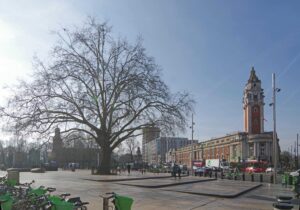
From Stockwell’s early 19th century commuter homes cross over to Brixton where Victorian estates have been rebuilt not just once – in the 1970s – but again a generation later.
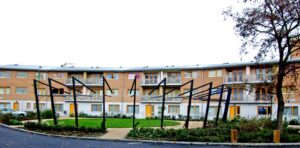
Angell Town’s community-led rebuild supplanted the previous design disaster. Next door it was also community pressure that stopped a Victorian street’s disappearance. Brixton market is calling.
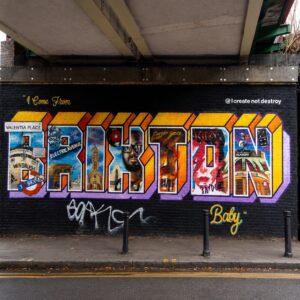
A bold tribute to Brixton. This celebrated mural weaves together the neighbourhood’s history, markets, music, Windrush legacy and unmistakable energy into one unforgettable piece of street art.
Now Brixton Village, it has changed and thrived.
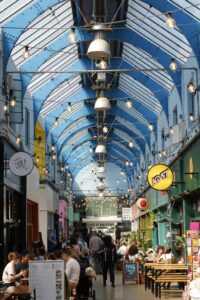
Today maybe the array of foods on the stalls is not as wide as it once was, yet amongst the plethora of new eateries there are plenty of foods and goods that cross cultures. Come out onto Brixton’s central pivot…
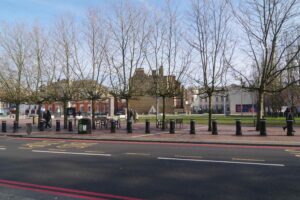
Windrush Square – where the Black Cultural Archives face onto the Town Hall clocktower. It’s a fitting setting for the memorial to those from Africa and the Caribbean who served in World War 2. St Matthew’s church strikes a presence on the fork between the southbound roads both neatly hemmed by Rush Common.
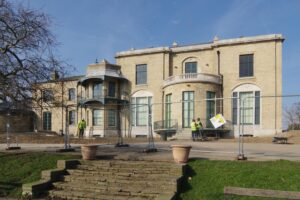
Reaching Brockwell Park – renowned for its lido and Country Show – go up the slope to take the view from the recently revamped Brockwell Hall. With its walled garden nearby it’s easy to see why this was the Regency retreat of a very successful City glassmaker.
IT ALL COMES DOWN TO THE GUIDING
A B A –
Section 9 of the Ultimate London Walk in September 2026.
If I could only do one part of the Ultimate London Walk, this would be my choice. It is the embodiment of a London walk—eye-opening and perception-changing. It wonderfully combines the vibrant community of Brixton with a finish in a fabulous park featuring stunning views to the north.
The pre-walk information was excellent. The detailed email regarding meeting points, potential toilet stops, and terrain made it easy to prepare and pack appropriately. Additionally, the group size was ideal, allowing everyone to hear clearly and walk at their own pace without feeling rushed.
Finally, our guide, Charlie, was outstanding. He was attentive, passionate about sharing his knowledge, and very open to input from the group.
Jacky –
Sections 9 & 10: Stockwell to Sydenham Hill
I am doing the Ultimate London Walk, 14 walks over 7 days, with a group of like-minded people and our guide, Charlie.
Meeting at Stockwell tube and thence to Brixton, we start to feel we are indeed “in the south”. As we traverse the streets Charlie points out the different architectural styles of the housing and explains how this part of London has developed (and been redeveloped!) over time.
The history of the Windrush generation, the history of the Brixton uprisings (or riots, depending on your point of view), and the proposed redevelopment of parts of Brixton Market form the bulk of our morning. Charlie is an enthusiastic and engaging guide.
On an earlier walk in this series we passed through the Burlington Arcade in Mayfair, with its shops of fine jewellery and designer accessories patrolled by uniformed doormen. In Brixton we were treated to the Reliance Arcade, with micro shops barely 6 feet deep, featuring spice merchants, hair stylists and African fabrics.
We soon leave the buzz of Brixton and walk through the oasis of Brockwell Park and to the friendly café for lunch.
Melanie Goodwin –
Another example of how these walks take you to both places you didn’t know existed and to those that you might not have thought of spending time in. On the way to Brixton there was more wonderful architecture and characters to learn about, then Brixton itself with all of its vibrant colour before heading to Brockwell Park with its amazing views of London and its secret garden. Another Charlie triumph!
Dorothy MacDonald –
Yet another fascinating area of London and such a variety in the walk, the bustle and activity of the market and the immense and beautiful Brockwell park with its lovely peaceful rose garden among it’s many amenities. All the developments in housing and transport over the years as London grew are so well covered by Charlie.