
The image that shocked London
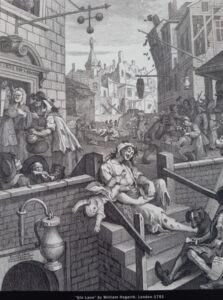
Gin Lane, 1751. Hogarth holds up a very dirty mirror to Georgian London.
Mother’s Ruin. Hogarth’s warning. London’s original drinks crisis.
In 1751 William Hogarth unleashed two explosive prints on London: Beer Street and the far more notorious Gin Lane.
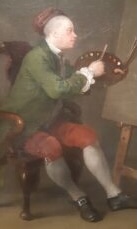
William Hogarth at work in London. In 1751 he unleashed Gin Lane on an unsuspecting city.
They were not polite artworks. They were social grenades.
Our walk goes straight to the epicentre of the Gin Craze. We begin in Leicester Square at the site of Hogarth’s home and painting room, where he sold the prints cheaply, determined that every Londoner should see the “horrid effects” of gin.
From there we thread into Covent Garden’s backstreets.
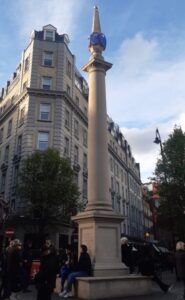
Backstreets where eighteenth-century Londoners could buy a dram for a penny and ruin themselves for tuppence. Along the way we meet the reformers who tried to slam the brakes on the craze, most notably Henry Fielding and his formidable half-brother John Fielding. Magistrates, moralists and panic-stricken politicians all make their appearance.
And presiding over it all, like a wicked stage manager, is Hogarth himself.
Your guide is a former Time Out editor. Tack sharp. Fast on her feet. And very good company in dangerous eighteenth-century territory.
Ronnie. Former Time Out editor. Diamond-sharp London Walks guide.
Gin had a thousand nicknames in eighteenth-century London. Madam Juniper. Mother Jenever. Mother’s Ruin. Hogarth called it the “cursed Fiend…that on the vitals preys.” Whatever you called it, London could not get enough of it.
In the early 1700s gin began as a patriotic, Protestant alternative to French brandy. Within a generation it had become the cheap anaesthetic of the urban poor. By the late 1740s the capital was in the grip of what contemporaries genuinely feared was a national catastrophe.
Hogarth’s Gin Lane remains one of the most shocking images in British art. The collapsing buildings. The skeletal drunkards. And at the centre, the gin-soaked mother letting her baby slip from her arms. It is propaganda of the highest order, and it worked.
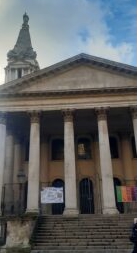
St George’s Bloomsbury. Its distinctive steeple rises above the skyline in Hogarth’s Gin Lane.
This walk follows the real London that produced that image. From Hogarth’s Leicester Square base we move through Covent Garden, once thick with chandlers’ shops, stews and taverns where gin flowed freely and cheaply.
You will hear how every shop seemed to sell the stuff. How Parliament repeatedly tried to regulate it. And how London’s ruling classes began to fear not just drunkenness but social collapse.
Was the panic purely moral outrage. Or was something more complicated stirring beneath the surface. Fear of the poor. Fear of disorder. Fear of what London itself was becoming.
By the time we reach the notorious rookeries of St Giles, the story has taken a very dark turn. Because this is not just the story of a drink. It is the story of London in one of its most combustible moments.
And just as nobody tells it better than Hogarth, nobody walks it better than Ronnie.
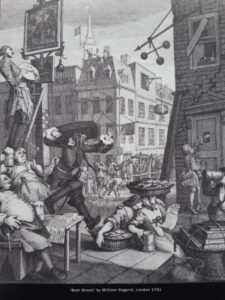
Beer Street, 1751. Hogarth’s vision of healthy, industrious London.
Listen first. Then walk it.
Mother’s Ruin, our short podcast on the Gin Craze, is the perfect scene-setter for this walk.
Debbie Walker –
Love a London Walk and this one did not disappoint. Really interesting to learn another side of the ‘Gin Lane’ story, a very enjoyable couple of hours with Ronnie.
Jane –
An interesting new tour. A part of London’s history I was not familiar with. Ronnie can recite great poems and delightfully entertaining.
Christoph Karner –
A very good and highly interesting walk and very well presented.
Ronnie really makes us understand what happened in the first halve of the 18th century, brings art, politics, life, disease, geographie of this part of London and much more to life in front of our eyes.
The walk can be highly recommended.