
London Food Tours
London’s story can be told through what it ate.
Join us on a London food tour through the streets of the capital and discover the delicious history of what Londoners have eaten over the centuries. From roast beef and jellied eels to Pimm’s No. 1 and Peach Melba – every dish has a story to tell.
London’s culinary life has always been wonderfully varied. Grand restaurants, bustling markets and humble street stalls have all played their part in feeding the city. Remember Covent Garden when it was the largest fruit and vegetable market in the country? Soho, now edgy and fashionable, was once the place to hunt down exciting international ingredients. And in the City of London, chophouses and taverns hosted hearty meals and extravagant banquets.
On our food walks the streets come alive through the stories of the cooks who prepared the food and the Londoners who ate it.
The walks take us through some of London’s most delicious neighbourhoods – the Strand and Covent Garden, the West End, Borough Market and the City. Along the way we explore the rich and often surprising history of butter, British cheese, markets, restaurants and street food.
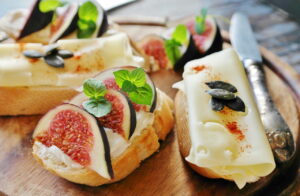
Simple pleasures – cheese and figs.
And because a food walk inevitably stirs the appetite, your guide will also share some excellent suggestions for lunch. Perhaps tapas in Soho, the irresistible stalls of Borough Market, a historic chop house in the City, or one of the West End’s outstanding international restaurants.
By the end of the walk you’ll know exactly where to eat next.
Practicalities
Our food tours cost £20, or £15 for Super Adults (over 65s), full-time students and London Walks Loyalty Card holders. Concession Loyalty Card holders pay £10. Children aged 8–15 are £5, and tinies go free.
Walks last about two hours.
Food tasting is not included – but by the end you’ll have the best culinary address book in London.
Contents
hide
Epicureans, Gourmets & Foodies’ London
London’s history can be told through what it ate. From the smoky kitchens of Tudor palaces to the bustling stalls of Borough Market, this walk uncovers the flavours, fashions and food fads that shaped the city.
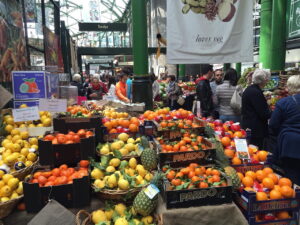
Borough Market – London’s most famous food market, a feast of colour, flavour and centuries of culinary tradition.
Our Epicureans, Gourmets & Foodies’ London Walk next takes place at 10.45 am on Saturday, June 20th. We meet just outside Monument Underground Station (Fish Street Hill exit).
We begin beneath the Monument, that towering reminder of the Great Fire of 1666. Some said the blaze was divine punishment for the gluttony of Londoners. After all, it started in Pudding Lane… and ended in Pie Corner. The most deliciously named bookends in London history. You almost suspect the City had it coming.
There’s no fire on this walk – unless you count the cooking kind – but there are plenty of delicious discoveries.
Along the way we’ll savour the surprising story of London’s appetite through the centuries. From street food favourites such as jellied eels and hot sheep’s feet – beloved in Jack the Ripper’s day – to the dining habits of kings and courtiers. Henry VIII had strong views on fruit and vegetables. Garlic, for example, was to be avoided if you hoped to charm the ladies. Salads could be risky business. And yes, we’ll even consider the curious history of the Tudor banana.
Then there’s the pineapple – once the most fashionable fruit in Britain. So prized that if you couldn’t grow one yourself, you could hire a pineapple as the centrepiece for your dinner table – a show-stopping symbol of wealth and hospitality.
We’ll pause beside the Thames to discover why Londoners once ate astonishing quantities of fish. On London Bridge we’ll look downriver to the wharves where food once arrived daily to feed the city. Some of those old riverside landing places can still be seen today. For centuries the Thames was London’s great food highway. Then the railways arrived – bringing fresh “railway milk” to London breakfasts and, occasionally, indigestion to travellers.
We’ll also explore the rich and often surprising history of butter, British cheese, and London’s great food markets.
Finally we arrive at Borough Market, still one of the great food bazaars of Europe. Here your guide will share the inside story of this foodie paradise – along with tips on the stalls that simply must not be missed.
Come hungry for stories. Leave with a sharper appetite for London.
Biscuits and Banquets
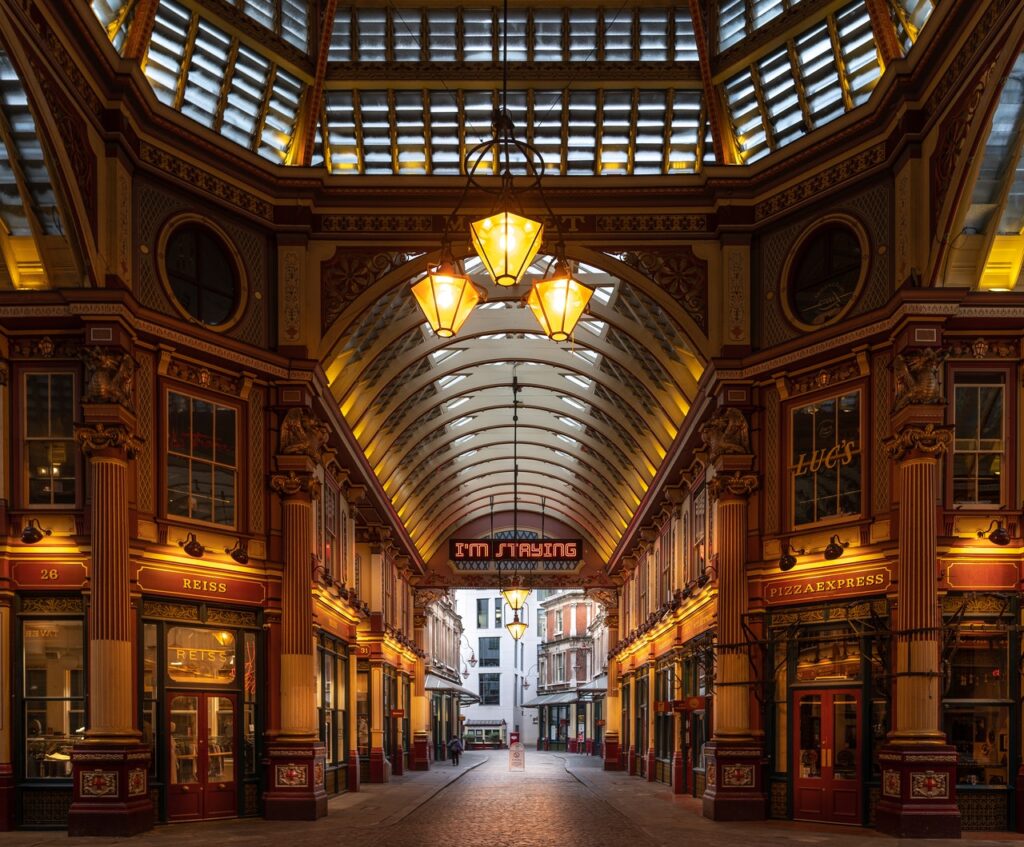
Photo by Pierre Blaché from Pexels
Biscuits & Banquets next takes place at 10.45 am on Wednesday, September 9th Meeting point is: just outside the exit of Cannon Street Underground station.
Retrace the steps of Londoners’ dinners through the ages in the narrow lanes of the City of London. This was a place for grand banquets, held in the Guildhall by the Lord Mayor. The fishmongers, grocers, vintners, distillers, bakers all controlled their trade in the City and grew wealthy as a result. But it was also home to Victorian chop houses, where office clerks could get a quick lunch.
In the 1660’s Samuel Pepys heard a lecture on the French way to make the best bread, and tasted claret from Bordeaux for the first time. And the first biscuit factory started baking in the City and businessmen queued to get the first batch from the oven. Its biscuits drew praise for their ‘crisp manufacture’.
Mr Pimm devised a drink for his oyster bar which would go down in history as Pimms no.1. Englishmen who’d worked in India brought back a taste for gin and tonic and curry. Admire the Victorian splendour of lovely Leadenhall Market where Londoners used to buy meat. Charles Dickens’s Scrooge found his turkey here, and years later Harry Potter went shopping for his wand.
Pie Crust To Upper Crust
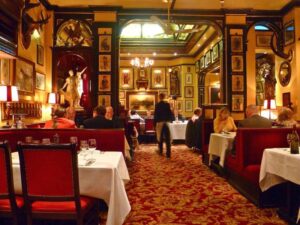
Foodies London – Pie Crust to Upper Crust will take place at 10.45 am on Thursday, July 9th. The meeting point is Embankment Underground Station, London (Villiers Street exit). This walk showcases London’s foodie history in and around the Covent Garden district. Best known nowadays for shopping and eating, for centuries it was the biggest market in the country for fruit and veg. While the lower classes might get a snack or a pie from a market stall, the upper crust were dining nearby at Simpsons or Rules for traditional English food. Even Lady Mary from Downton Abbey dines at Rules. And maybe those upper classes went round the corner to the Savoy Hotel to sample Peach Melba, created by Auguste Escoffier, the king of chefs and chef of kings. As he said, good cooking is the foundation of real happiness. The first TV chef, the bestselling cookery author of all time and the muffin man of Drury Lane all make an appearance, as does that most famous of English dishes, roast beef.
We’ll avoid the crowd by taking some of the peaceful back streets and alleyways, and end at Twinings, who’ve been selling tea since 1706. Jane Austen, one of England’s most famous authors, was a customer, Earl Grey gave them his special recipe. How to make a proper cup of English tea? Victorian cookery book supremo Isabella Beeton will explain exactly how to go about it. All of the United Kingdom’s most upper-crust characters in one fascinating food tour.
West End Food Tour
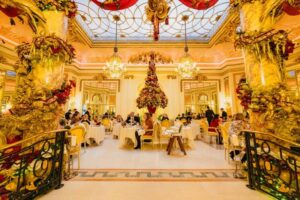
Foodies’ London – the West End next takes place at 10.45 am on Friday, 7th of August. Meeting point is just outside Green Park Underground station, London (Green Park exit, by the fountain)
What did Oscar Wilde have for lunch? Who bought their beef tea at Fortnums? Which king took a roast chicken to bed for a nighttime snack (and that’s after 11 courses at dinner)? One of our secret food tours is where you find out all of the answers. Leave the busy shopping streets to find Winston Churchill’s favourite award-winning cheese shop, in business for 250 years, and drool over some of the finest British cheeses.
And for chocolate lovers there’sthe chocolate shop that supplied the late Queen, where you can still buy her mother’s favourite violet creams and their chocolate truffles, first made more than a century ago, were favourites of children’s writer Roald Dahl. A chocolate tour in itself.
Soho was once the place to go for your exotic ingredients. Now it’s full of places to eat. But you can still find very special shops – the coffee store that’s been in business since 1887, the shop selling dozens of different sorts of gin, the Italian deli selling homemade pasta. These are London’s true hidden gems.
For many visitors afternoon tea at the Ritz, in London’s Mayfair is a must. But when did it start? And why? For the answer to these and many other foodie questions – and for a foodie look at Chinatown, join Foodies’ London – the West End.
——————————————–
Eating Christmas
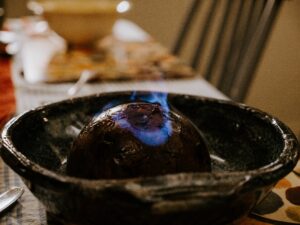
Eating Christmas – Ann’s seasonal foodies tour – will take place at 10.45 am on Wednesday December 3rd, Saturday December 13th, Wednesday December 17th and Saturday December 20th and Tuesday December 23rd. The meeting point is just outside Exit 3 (in front of the Royal Exchange) of Bank Underground Station.
Turkey, stuffing, bread sauce, Brussels sprouts. Xmas pudding, Xmas cake, mince pies…you’ll be eating them soon. Pick up all sorts of titbits to astonish your Xmas dining companions – the turkeys that walked to London, the chequered history of the sprout, the rise and fall of the goose. Salivate over grand pudding recipes, shudder over workhouse Xmas fare. And the meaty past of the mince pie – make sure you eat 12 of them next month…and we end at that feast for the senses, Borough Market, where you can stock up on Xmas supplies.
About your tour guide

“A man may travel all around the world, and never find anything more interesting than his dinner.”
Ann has had a lifetime’s interest in food – reading about it, shopping for it, cooking it and, of course, eating it. After spending years as a journalist checking out news and politics, she can now investigate the fascinating history of food. Food is social history – how much people ate, or how little. What they ate, and when. What did Captain Cook order for a farewell dinner in the City? What was Sir Christopher Wren’s recipe for homemade wine? Then there’s the story of foods we now take for granted – there was a time when bananas, tomatoes and potatoes were viewed with suspicion. Beetroot was good for brain disorders, garlic for shrew bites.
What people ate tells you as much about society as the houses they built or the laws they passed. You might not build yourself a medieval house, but you can always cook and enjoy the same meal our ancestors enjoyed centuries ago.
Don’t just take it from us
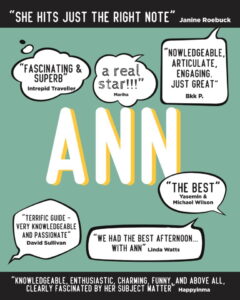
London Walks guide Ann – bringing London’s rich culinary history to life on our food walks.
Private tours
Book your own private food tour, devised for your special interests. Perhaps, to hear the histories of famous food markets such as Borough Market, with shopping tips, sightseeing and street food on the way.
To enquire about a Private Walk call or email Mary, Fiona or Peter on 020 7624 3978 or email us at [email protected].
Our foodie recommendations
For our foodie recommendations, we’re going beyond TripAdvisor, to the London eateries you simply mustn’t miss.
East London
- Rochelle Canteen, Shoreditch – Not a canteen, but a restaurant serving really interesting food. (They have another branch at the ICA in central London). Think British food with a twist – pork with lentils and watercress, ginger loaf and butterscotch.
- E.Pellicci’s, Bethnal Green – Family-run East End café, serving hungry Londoners since 1900. The place for a full English breakfast (classic veggie if you prefer).Then there’s homemade pasta for lunch, with a glass of Italian beer.
- Beigel Bake, Brick Lane, Shoreditch – Baking for nearly 50 years, producing traditional bagels 24 hours a day. Long popular with the local Jewish community, it’s now everyone’s favourite stop-off for a snack – enjoy a fresh bagel, and add smoked salmon, chopped herring or cream cheese.
Central London
- Masters Superfish – Just minutes away from Waterloo Station and the Old Vic theatre. Genuine no frills chippy with plastic-covered tables. A favourite of taxi drivers for its first-class fish and chips – have your fish battered or grilled, your chips golden and freshly cooked. Served with traditional mushy peas or very un-traditional salad.
- Brown’s Hotel, off Piccadilly – Award-winning afternoon tea in a competitive market. Dainty sandwiches, scones with jam and cream, elegant patisserie, all served in a cosy and elegant hotel lounge. Come here to recover after your West End shopping. Brown’s was opened in 1837 by Mr. James Brown, who had been Lord Byron’s butler, and has had a glitzy guest list ever since.